





17th c. lead ingots found at offshore wind farm site
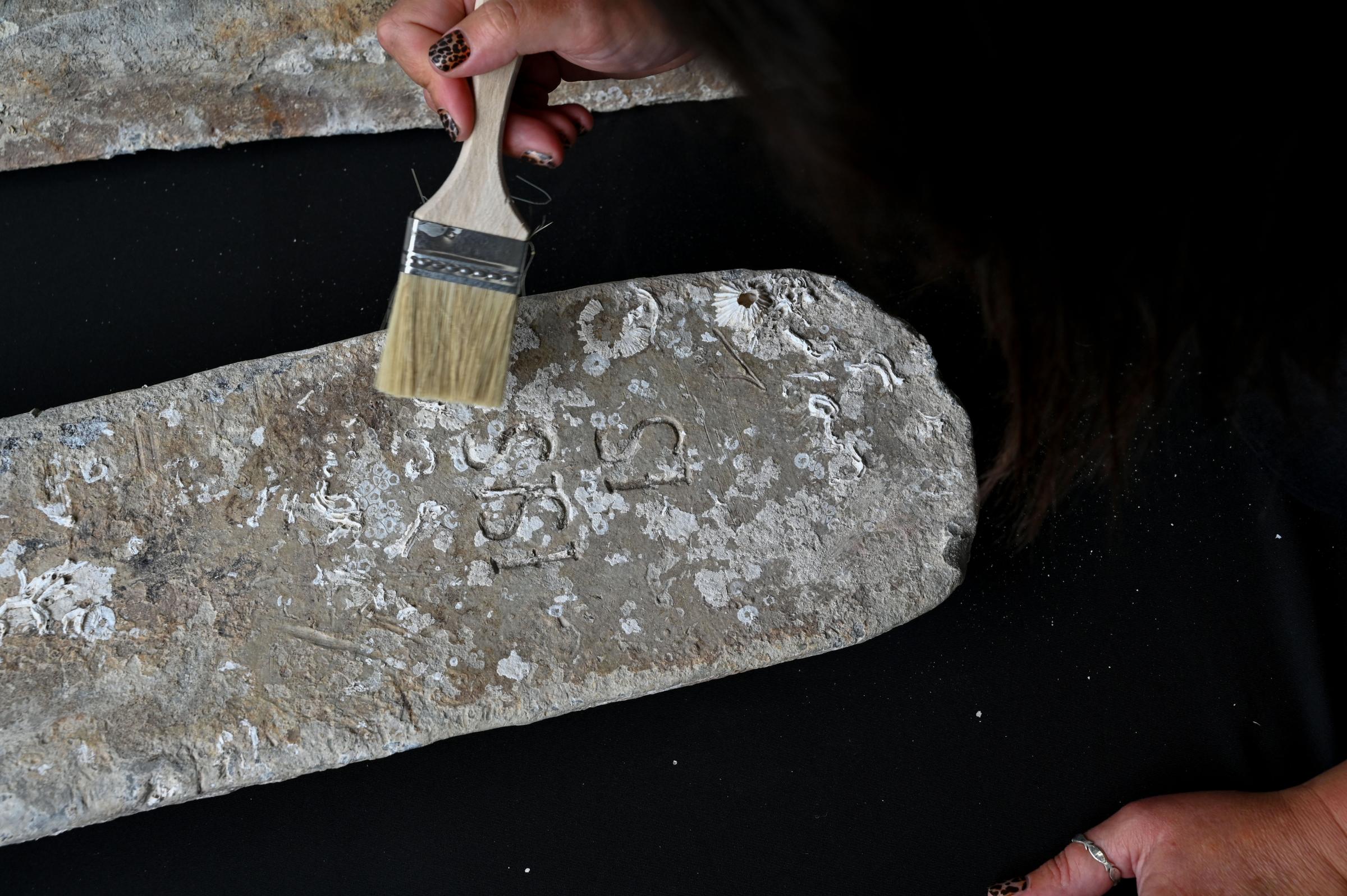
The ingots were discovered at the site of Hornsea 3 in the North Sea which when completed will be the largest offshore wind farm in the world. The seabed of the entire site is being extensively investigated before construction begins. Investigators gather detailed information from soil composition, to environmental data to marine life surveys in order to identify sensitive areas and potential hazards.
Marine investigators discovered the ingots at a depth of 130 feet while scanning the bed for unexploded ordnance. Instead of bombs, they found three lead ingots stacked in their original position on the ship. The wreck itself was gone, with only a few surviving timbers visible under the ingots.
Each ingot is stamped with a different mark – ‘IS’, ‘EB’ and ‘H’ – similar to ingots found on the 1664 wreck of the Dutch East Indiaman Kennemerland off the Shetland Islands. The Hornsea 3 vessel might also have been from the Netherlands.
At the time England produced vast quantities of lead, in particular from Derbyshire and Peak District mines, with much of it shipped across the North Sea from Hull and London to Amsterdam and Rotterdam. The wreck found at Hornsea 3 lies directly on the Hull-Netherlands route.

Lead has been mined in Derbyshire since the Roman period. The Peak District mines were the primary lead producers in Europe during the Middle Ages. By the 17th century, the mining and selling lead was Britain’s second most important trade (wool was number one). It was used in every building from roof to window to pipes, and the raw ore formed into ingots for the export market.
The Hornsea 3 ingots will be housed at the Peak District Mining Museum in Matlock, Derbyshire, which is dedicated to the region’s millennia-old mining history.
* This article was originally published here
Tag:


No comments:
Post a Comment