





Anglo-Saxon die stamp of horned figure found in Kent

The complete copper alloy die stamp was discovered in 2024 by metal detectorist Stephen Newbury near the village of Lynsted. It depicts an anthropomorphic figure wearing a headdress with horns that curve towards each other terminating in birds’ heads. Beneath the horns are two large triangular ear pieces. The figure is wearing is a bead-bordered belt. The legs are bent at the knees and separated in a pose that suggests leftward movement, maybe walking or dancing. He holds two spears, points upwards, clutched in the right hand and a sword, blade downwards, in a sheath in his left. What looks like a sword-ring is attached to the pommel.

These figures are known as “weapon dancers” and may have had some connection to the worship of Odin. They are most commonly found decorating foils, brooches, pendants and, more rarely, dies Denmark, Sweden and England.
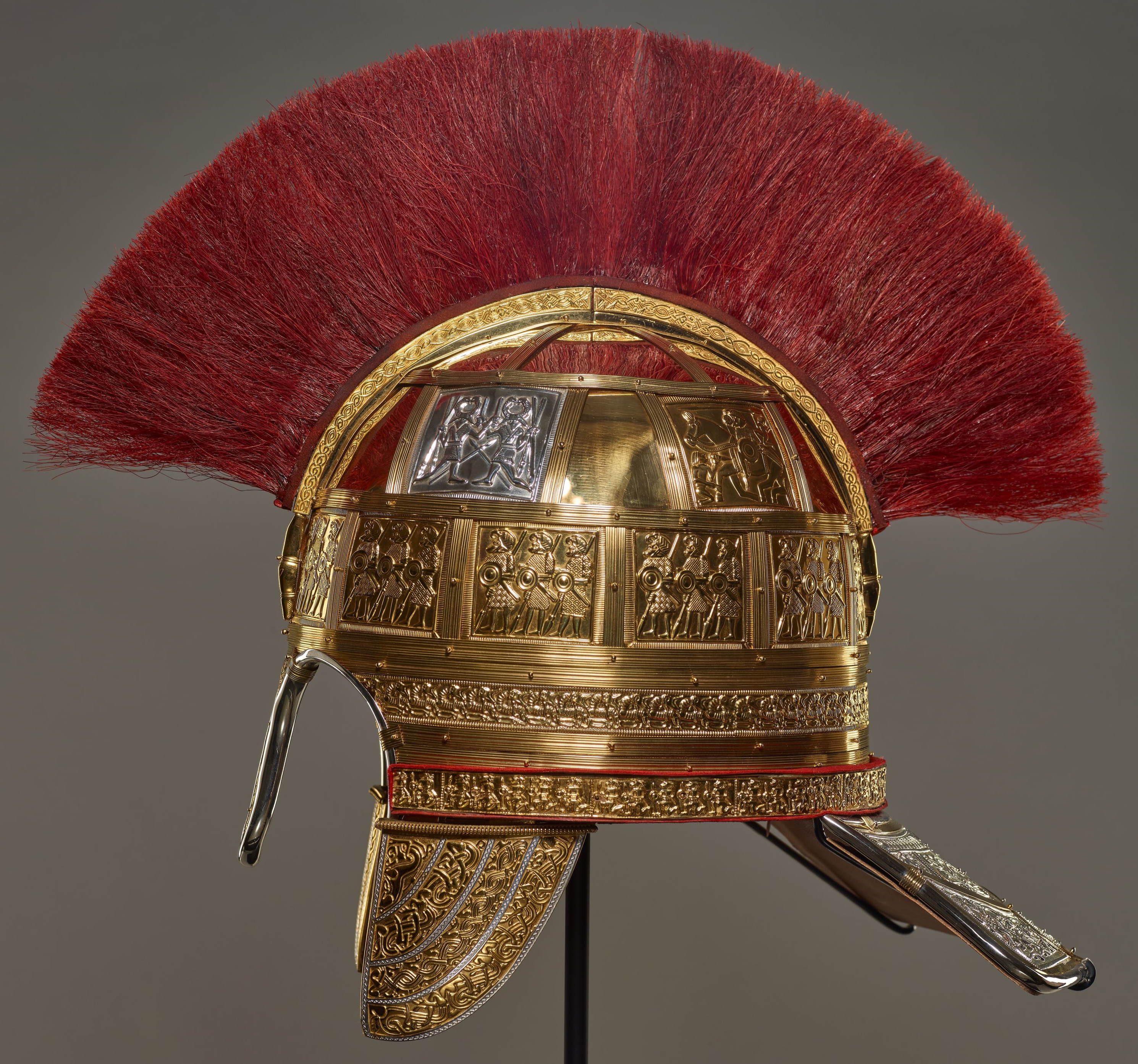
Before this discovery, both the Sutton Hoo and Staffordshire Hoard helmets, the only Anglo-Saxon era helmets with pressblech foils found in England, were thought to have been imported, made in Sweden or Denmark. While their foils do not match the Lynsted die, its existence is evidence that in fact such refined examples of high-end metallurgy could have been manufactured in England. Of course, the die itself could have been imported, but the iconography does diverge in a key way from depictions of the horned figure found on Scandinavian artifacts: the spears point upwards, a feature found in English examples of the horned figure.
KCC finds liaison officer and Kent officer for the Portable Antiquities Scheme Dr Andrew Richardson said: “This small but remarkable find provides important evidence that helmets like the Sutton Hoo example could have been made in Kent, highlighting the skill and connections of early medieval craftworkers in the county.”
The die stamp has been declared Treasure and will now be assessed by the valuation committee. Once its market value is determined, a local museum will have the opportunity to acquire it for that sum. The Beaney House of Art and Knowledge in Canterbury is hoping to secure it for display close to where it was found.
* This article was originally published here
Tag:


No comments:
Post a Comment