
An ancient shipwreck with a huge cargo of 600-650 amphorae has been discovered off the Greek island of Andros. The types of amphorae date the shipwreck to the late 5th or early 4th century B.C., a period where archaeological remains of maritime activity Aegean is rare.
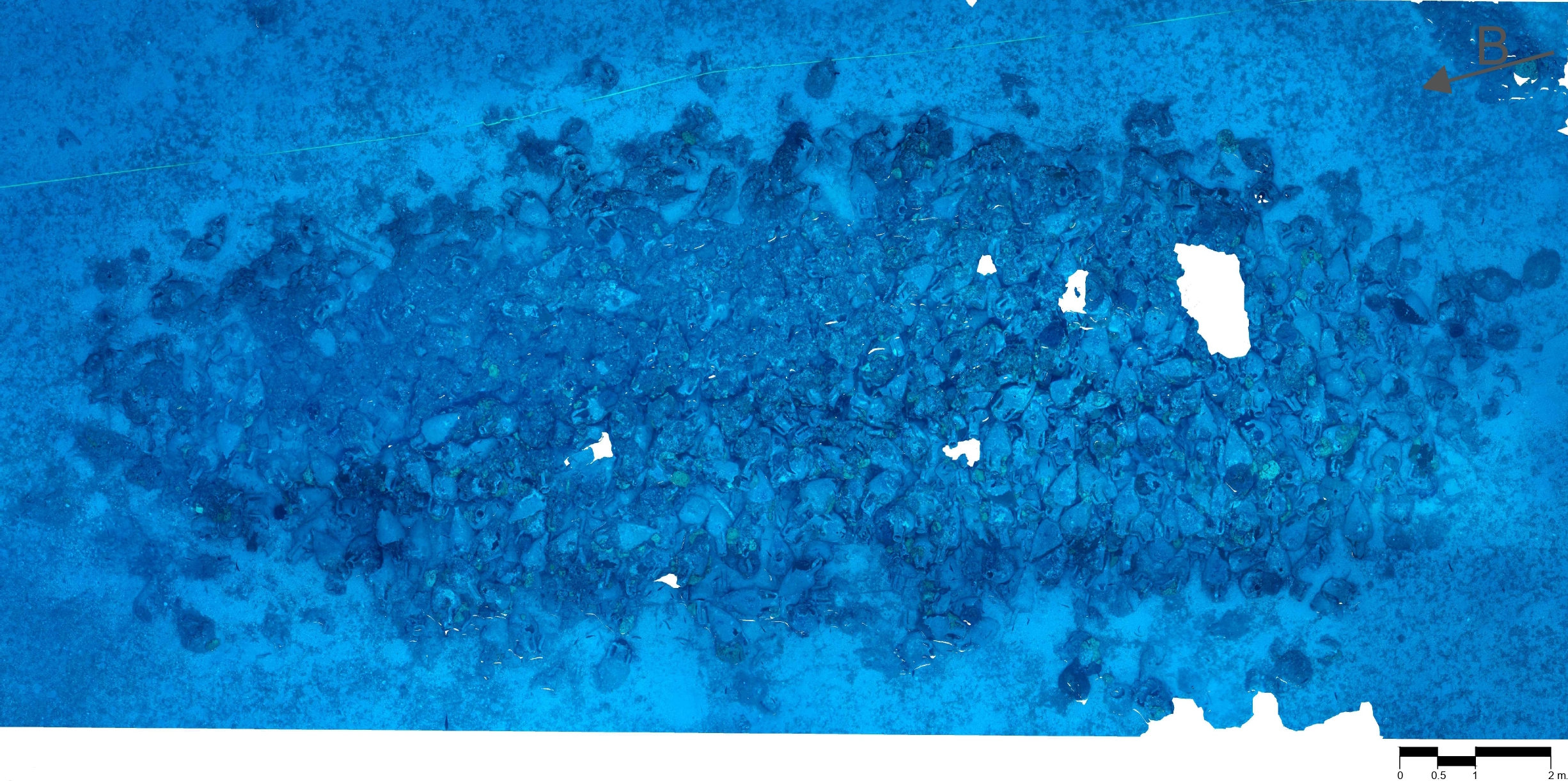
The Ephorate of Underwater Antiquities was alerted to the existence of the wreck by a private individual and dispatched a team of divers to explore the site. They found the intact cargo of the vessel at a depth of 39-44 meters (128-144 feet). They are all pointed-bottom amphorae but divers were able to identify at least three different types and recovered a sample of each of the three types for analysis.


- Mendaean amphorae made in Mende, an ancient city on the Chalcidice peninsula, used to transport high-quality wine,
- Peparethian amphorae, made on the Aegean island of Peparethos (modern-day Skopelos) that was known in antiquity for its agricultural production, including high-quality wines,
- Solokha 2 amphorae, widespread transport containers along Aegean and Black Sea trade routes in the late Classical period.
Further conservation and study of the samples will investigate the source of the clay used to make the amphorae, discover any marks identifying the workshops that produced them, and residue analysis to determine what they carried.
* This article was originally published here

No comments:
Post a Comment