
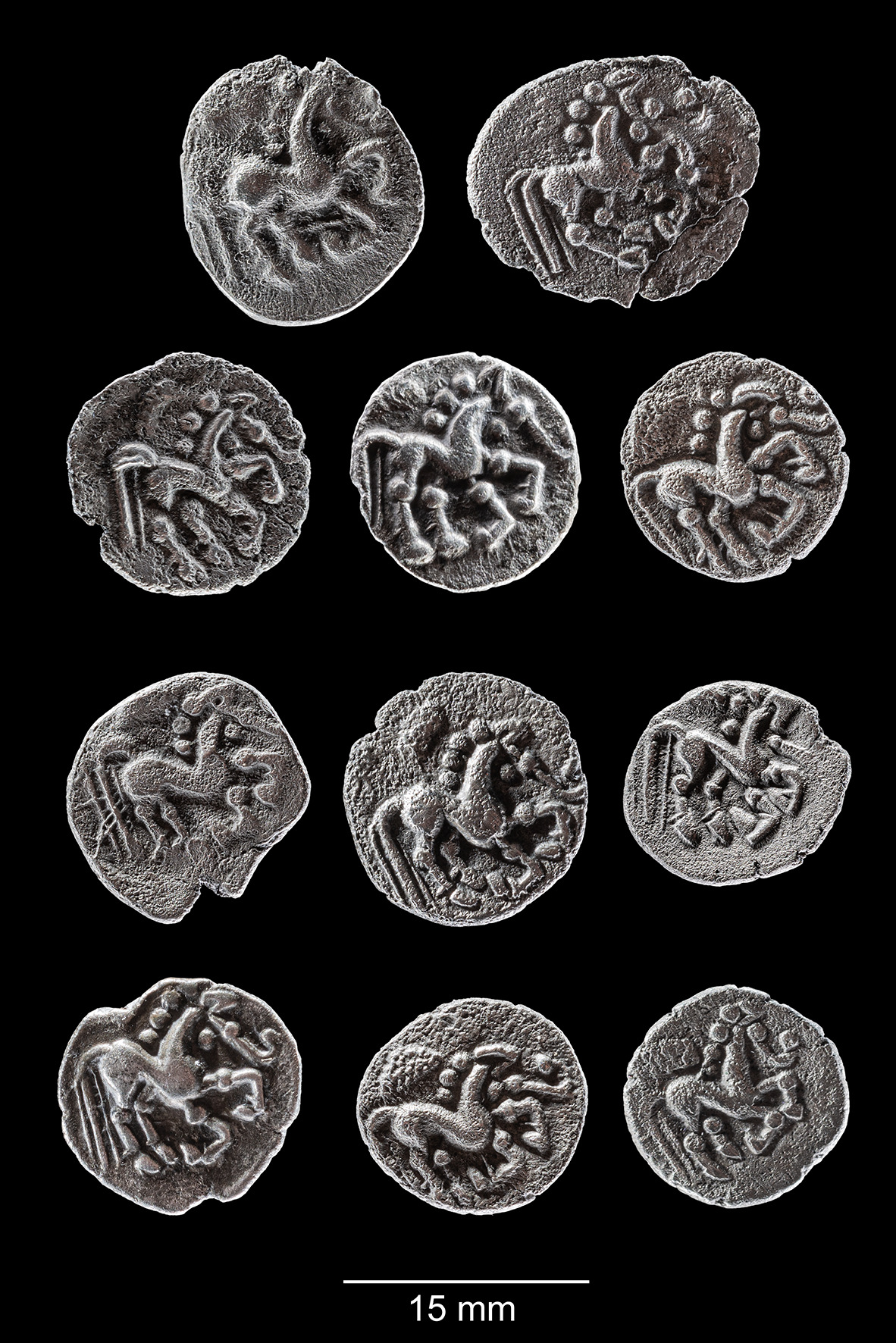
The coins emerged in an archaeological survey of the former sports field in advance of construction of a new fire station. The first individual finds were unearthed in July and August of last year when construction was being overseen by archaeologists. A targeted excavation at the site last month uncovered the rest. The excavation revealed that the 11 coins were a single deposit that had been scattered by later agricultural work.
The original container has vanished. Researchers found no pottery fragments, leading them to believe the coins were probably kept in something made from organic material, perhaps a small pouch or another container that decayed long ago.
The coins were no longer lying where their owner had placed them. Centuries of ploughing had dragged them across an area measuring roughly 5.8 by 1.5 meters. Careful documentation nevertheless allowed archaeologists to reconstruct their relationship and distinguish the hoard from later objects found nearby.
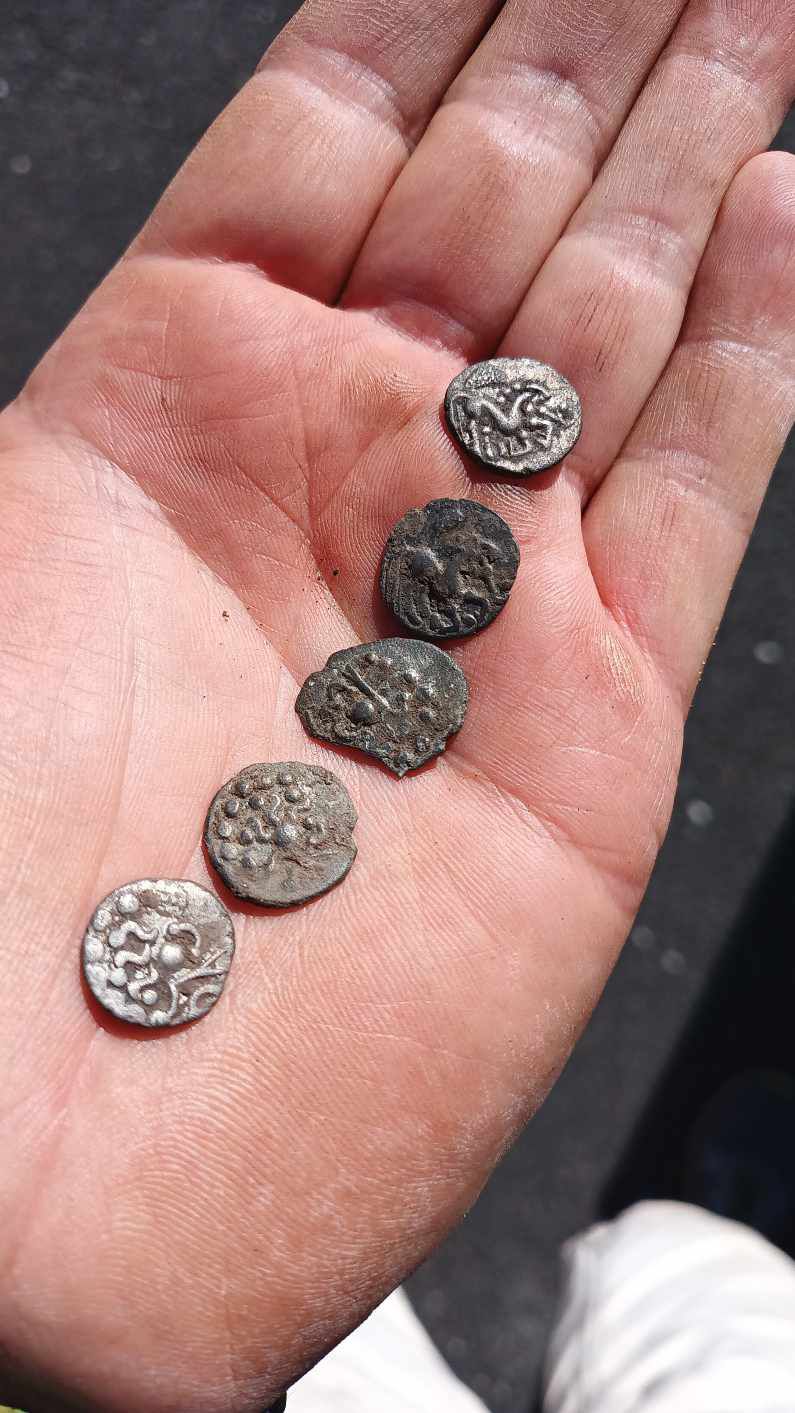
Numismatists believe the quinarii may have been locally produced in the Gotha region just northwest of Singen. The find site is located between Gotha and a concentration of Celtic settlements, including Steinsburg which was one of the most important Celtic settlements in the region and was known for its craft production.
That makes the Singen hoard more than an isolated cache of silver. Its location adds another point to the archaeological map, helping researchers trace possible connections between production centers, settlements and the routes along which coins and other goods moved through Iron Age Thuringia.
The Thuringian State Office for Heritage Management and Archaeology says the discovery has significantly expanded what is known about these regional connections.
* This article was originally published here

No comments:
Post a Comment