A rare set of Celtic shield fittings and spearhead has been discovered near the village of Erdőbénye in northeastern Hungary. It is the first of its kind from the region and will shed new light on Celtic communities in the area during the Iron Age.


Archaeologists and volunteers made the find during a community fieldwork as part of a multi-year project to systematically map known archaeological sites and identify previously-unknown ones in the Erdőbénye region. Led by archaeologists with the Hungarian National Museum, the community archaeology teams survey sites with metal detectors and excavate finds they encounter.
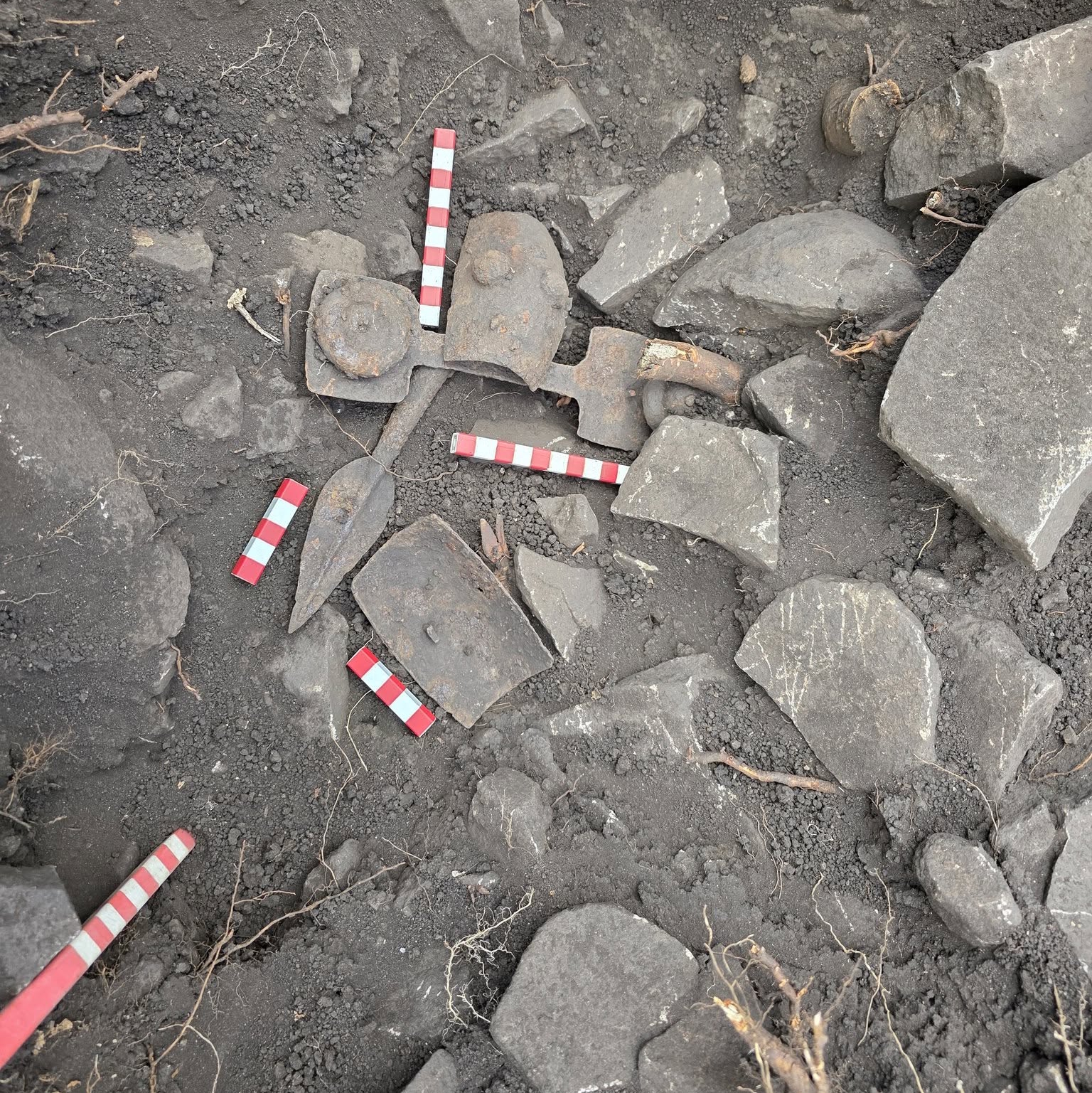
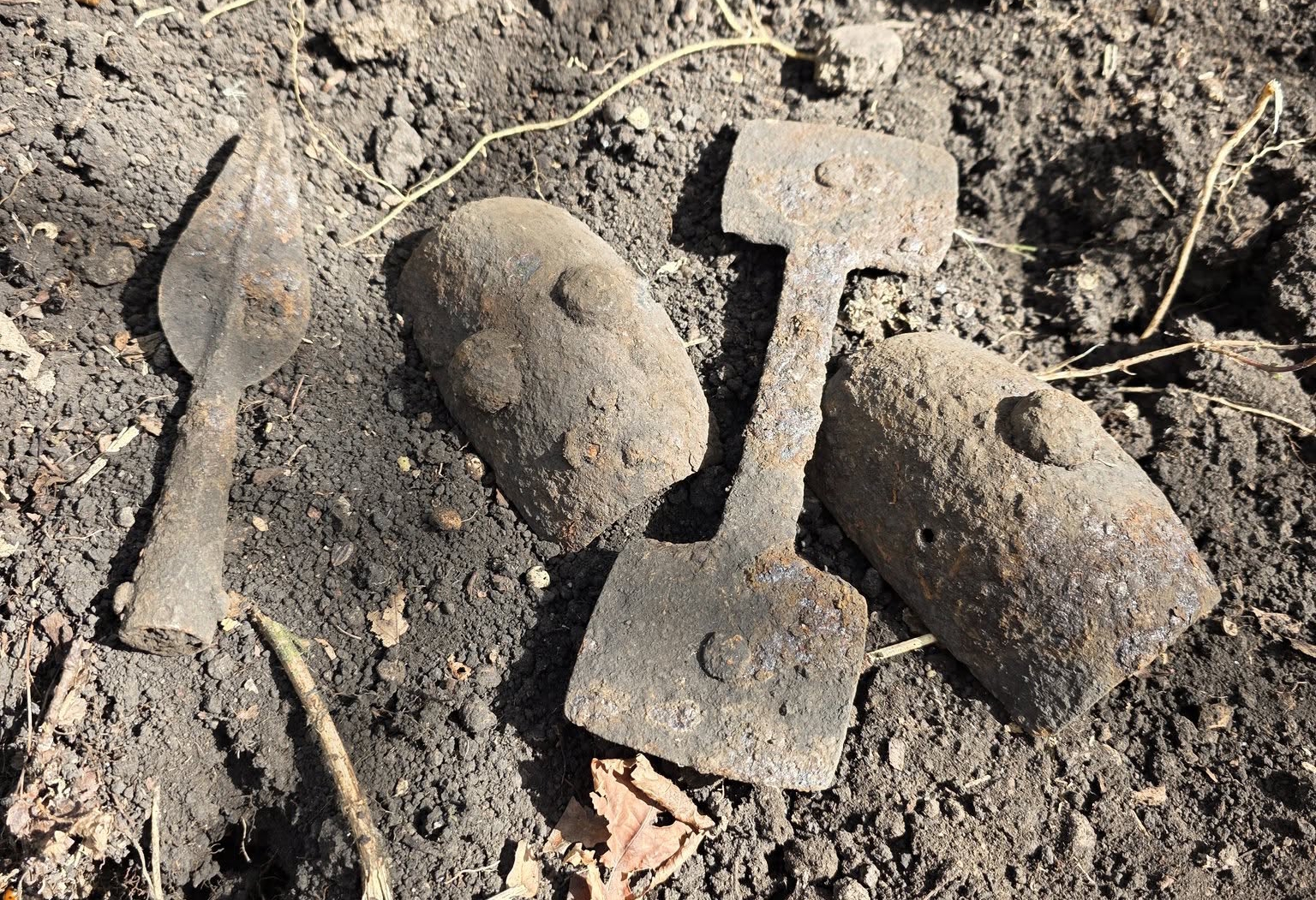
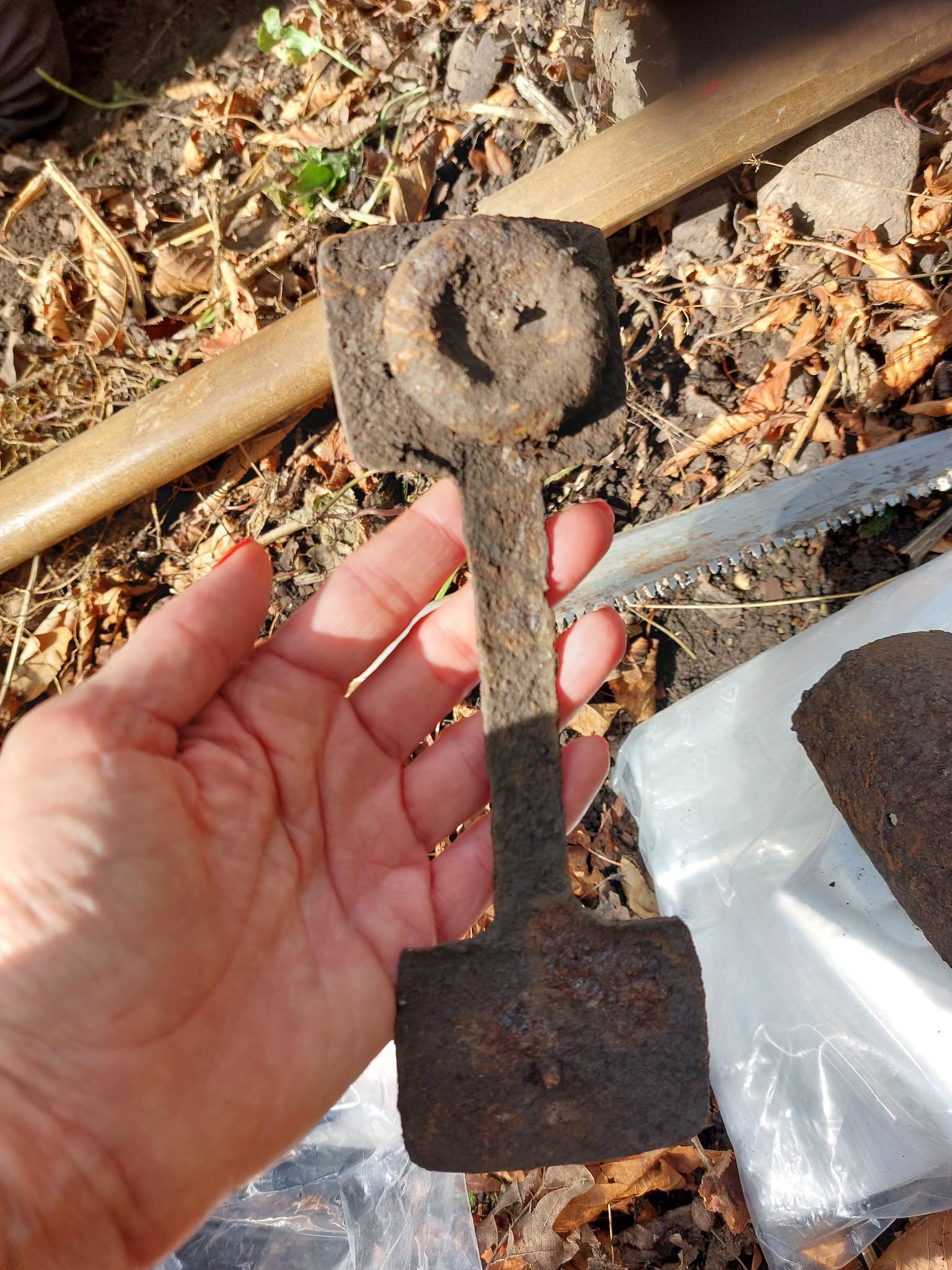
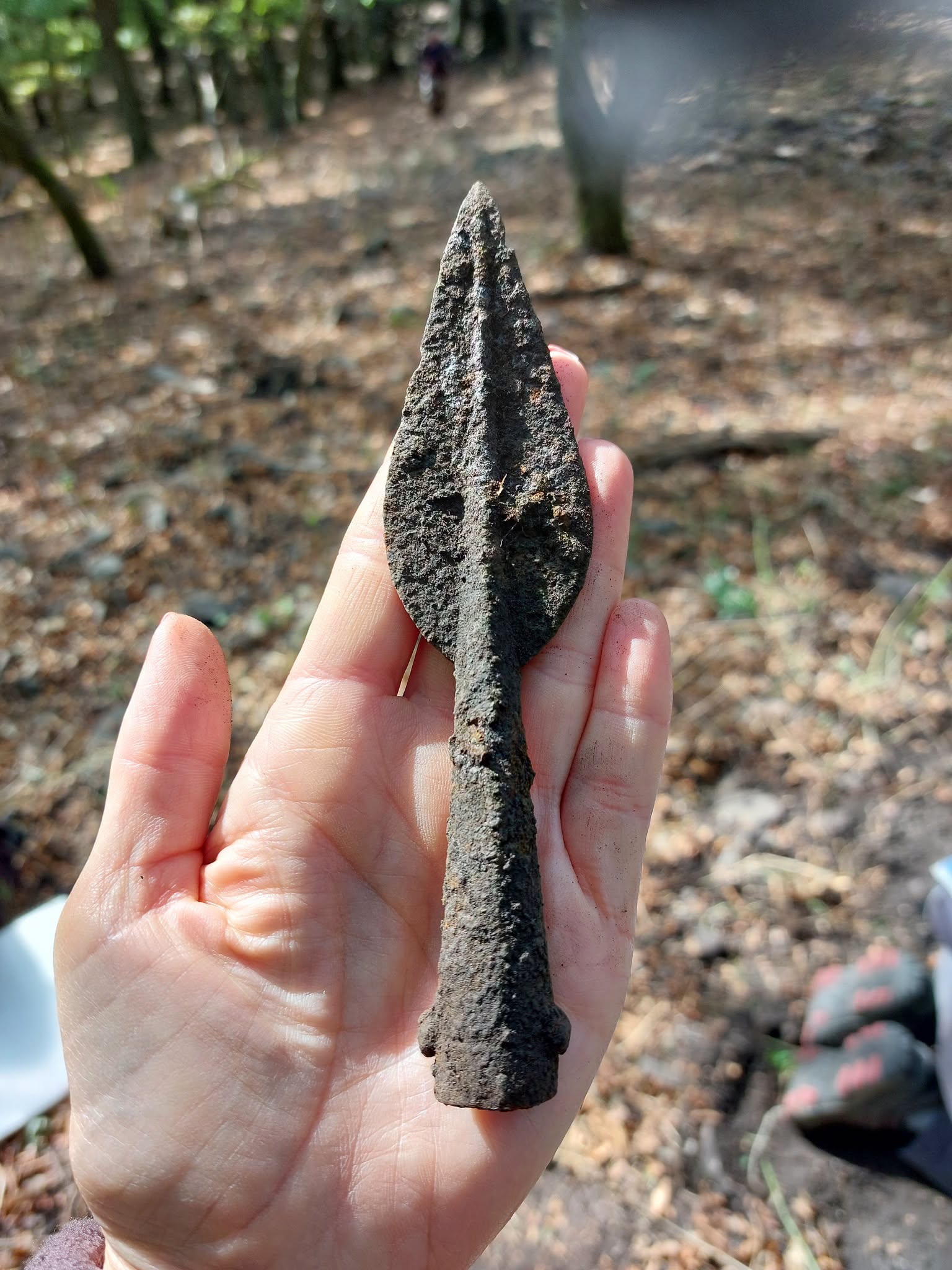
 This September, the fieldwork uncovered a complete assemblage of shield fittings next to a spearhead. The shield fittings include the handle that would have been in the back of the wooden shield and a matched pair of decorative metals from the front of the shield. The shield parts and spear were deposited together deliberately, in the 4th or 3rd century B.C. when Celtic La Tène culture peoples were settling the Carpathian Basin including what is now Hungary. There were civilian communities established and sometimes it was not a peaceful process. Large-scale movement of Celtic peoples led to the first Sack of Rome in 390 B.C. and the invasion of Greece in 279 B.C.
 Hungary’s location as the gateway to the Balkans from Central Europe made it a key route for the migrating Celtic peoples. Artifacts from the period found in Hungary, particularly ones that originated in the Mediterranean region, attest to how the settlers brought southern European culture to the area through trade, exchange of goods and military contact.
* This article was originally published here


No comments:
Post a Comment