
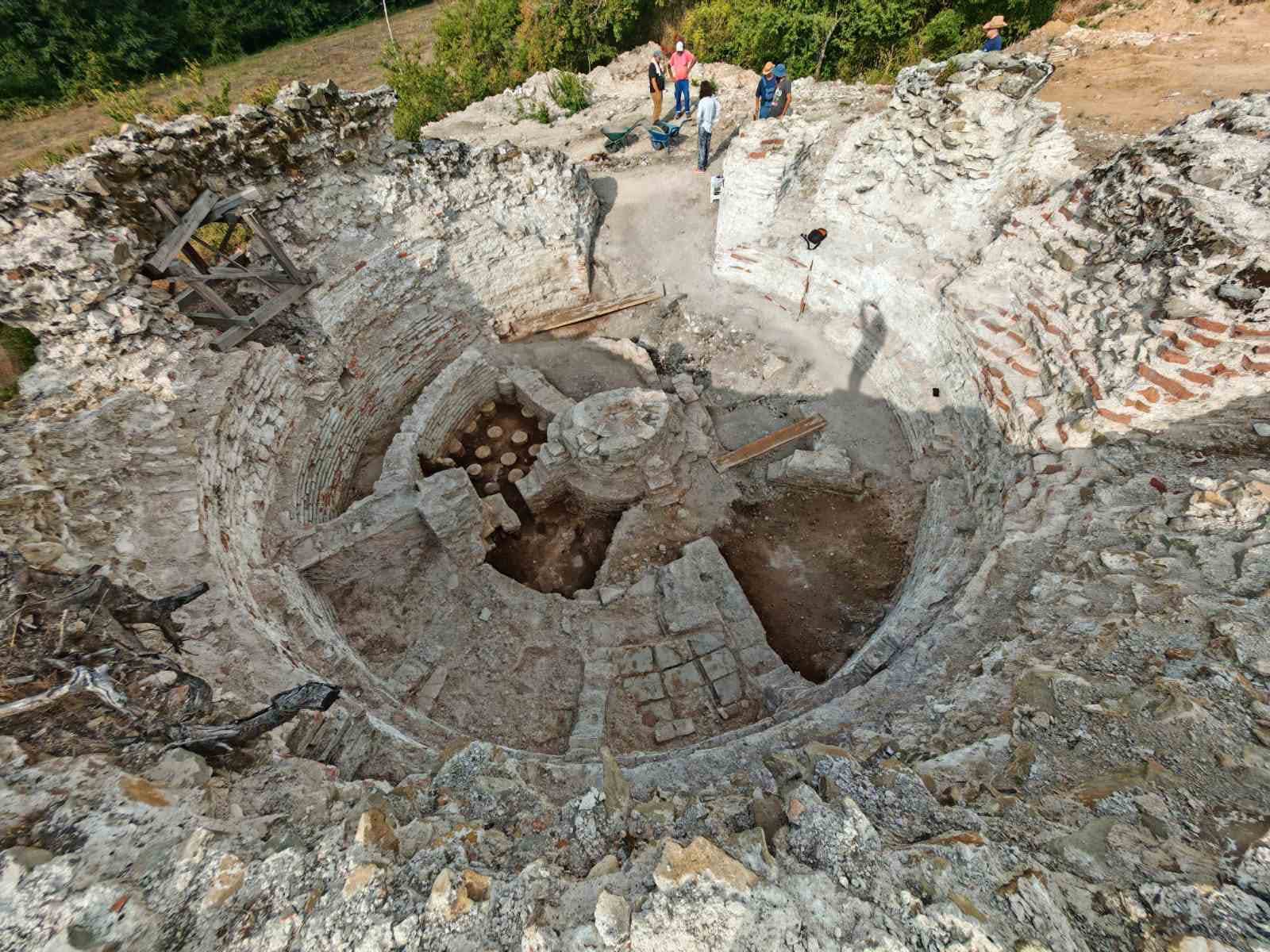
What makes this bath so unusual is its design: it is circular, like the tower itself, and was divided into two areas: an equipment room that contained all the heating mechanisms and a suite of rooms with three pools and a sudatorium (sauna or steam room). The technical section contained a praefurnium, the furnace chamber used to heat the floors of bathing rooms. The base of the copper boiler used to heat the water for the hot pools was discovered there, although the boiler is gone, probably melted down for reuse in antiquity.
Of particular importance is the exceptional state of preservation of the hypocaust system, with its circular pilae, through which hot air circulated under the floors of the various rooms. This level of preservation of the heating system, along with the very discovery of the imperial balneum, represents an extremely rare archaeological find and provides invaluable data for understanding the operation of the thermal complex. […]
The personnel in charge of maintaining the bath and feeding the praefurnium accessed the technical sector of the tower from the western side, through a monumental entrance. This layout allowed the service area to be separated from the part of the balneum intended for the residence’s occupants.


* This article was originally published here

No comments:
Post a Comment