 The remains of more than 30 dwellings from the early Iron Age have been unearthed at Galgenbichl in Italy’s autonomous Alpine region of the South Tyrol. They date to between 800 and 500 B.C. This is the first time a settlement of this size from this era has been archaeologically investigated, and it is now considered one of the most important early Iron Age sites in the Alpine region.
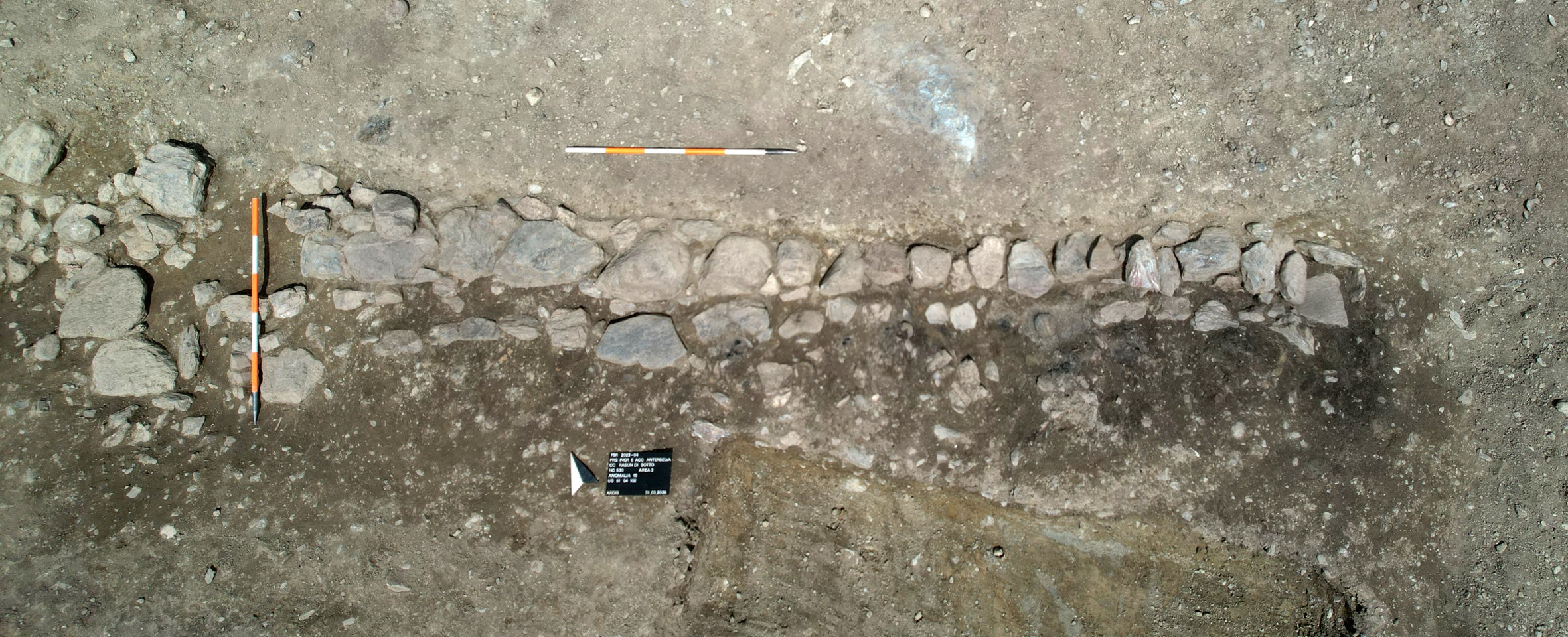
 In late 2025, the regional Office for Archaeology began exploratory investigations along the routes of new highway access roads and excavations of sites with archaeological material began in February of this year. When the topsoil was removed from the Galgenbichl site, the remains of different types of dwellings were uncovered. On the steep slope of the hillside, houses were made with heavy stone foundations topped by a log structure. On the valley side, homes were raised on wooden piles.
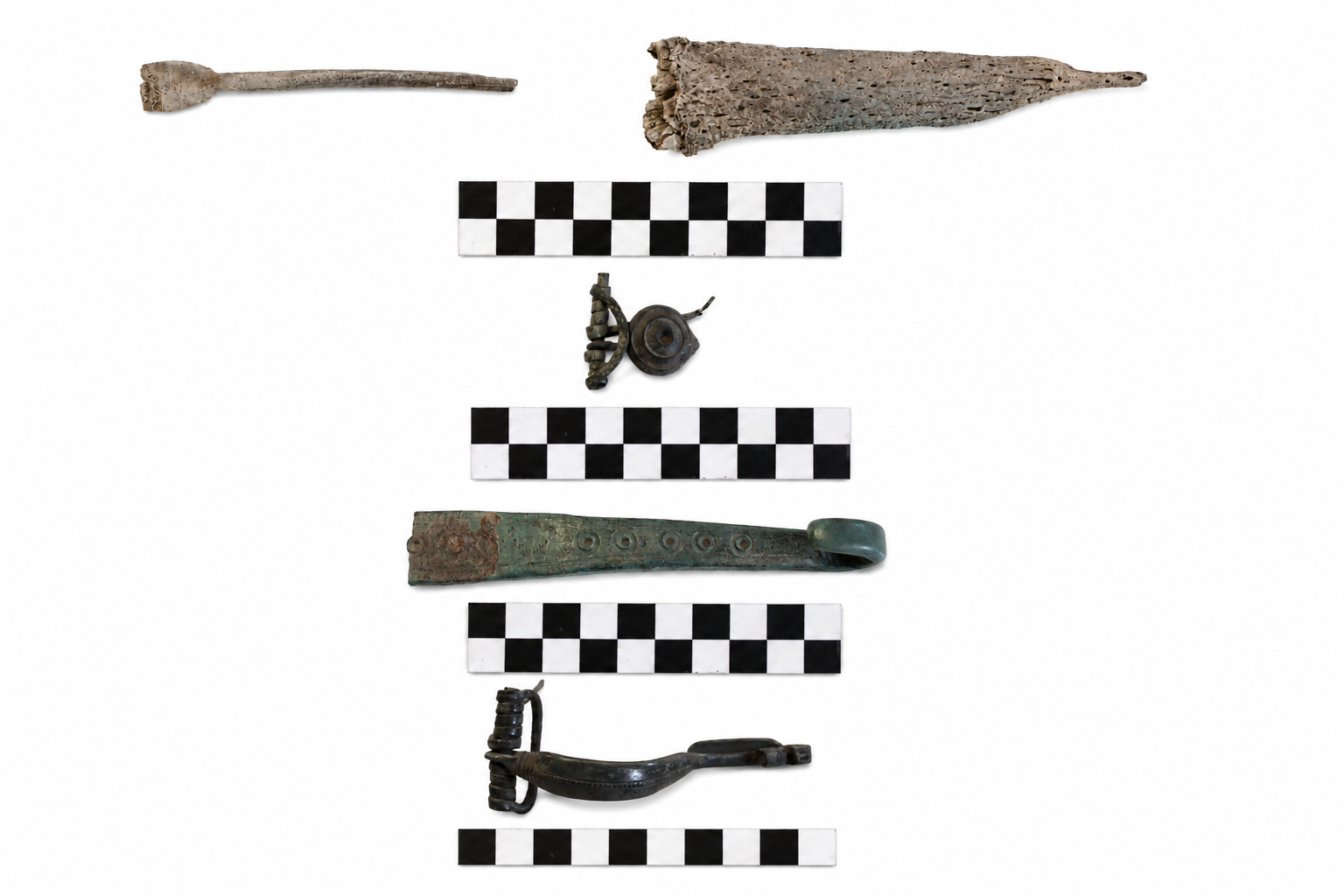
 Artifacts unearthed at the settlement include fragments of everyday ceramic vessels, bones of domestic animals, particularly cattle, evidence of bronze working, loom weights and spindle whorls for the home production of textiles and millstones indicating grain was processed there. The preponderance of cattle bones suggest a relatively high standard of living for the period, as do the facilities for metalworking and the grinding of grain.
A remarkable discovery concerns the treatment of deceased children. Within the settlement, a small burial ground was found containing only infants. Unlike the nearby cremation cemetery in Windschnur (also in Niederrasen), these children were not cremated but buried directly within the settlement. This suggests that there were apparently special forms of farewell and remembrance for them. At the same time, the find serves as a reminder of how high infant mortality was at that time: many children did not survive their first year, with mortality rates ranging from 20 to 35 percent.
The settlement was located on the east-west axis through the Puster Valley, a strategically important link connecting the Venetii of northern Italy with the Raetians of what is now Switzerland. It continued to be populated until the 1st century B.C. By that time the area had changed from a Raetian community to part of the Celtic kingdom of Noricum, but continued to have strategic significance. Layers of charcoal and the charred remains of wooden beams from the pile homes point to the settlement having been destroyed by fire.
* This article was originally published here



No comments:
Post a Comment