 The well-preserved remains of a warm-air underfloor heating system from a medieval convent have been unearthed in Basel, Switzerland. It dates to the 13th and 14th centuries, and its exceptional state of preservation makes it unique in Switzerland and one of the most important surviving examples in Europe.
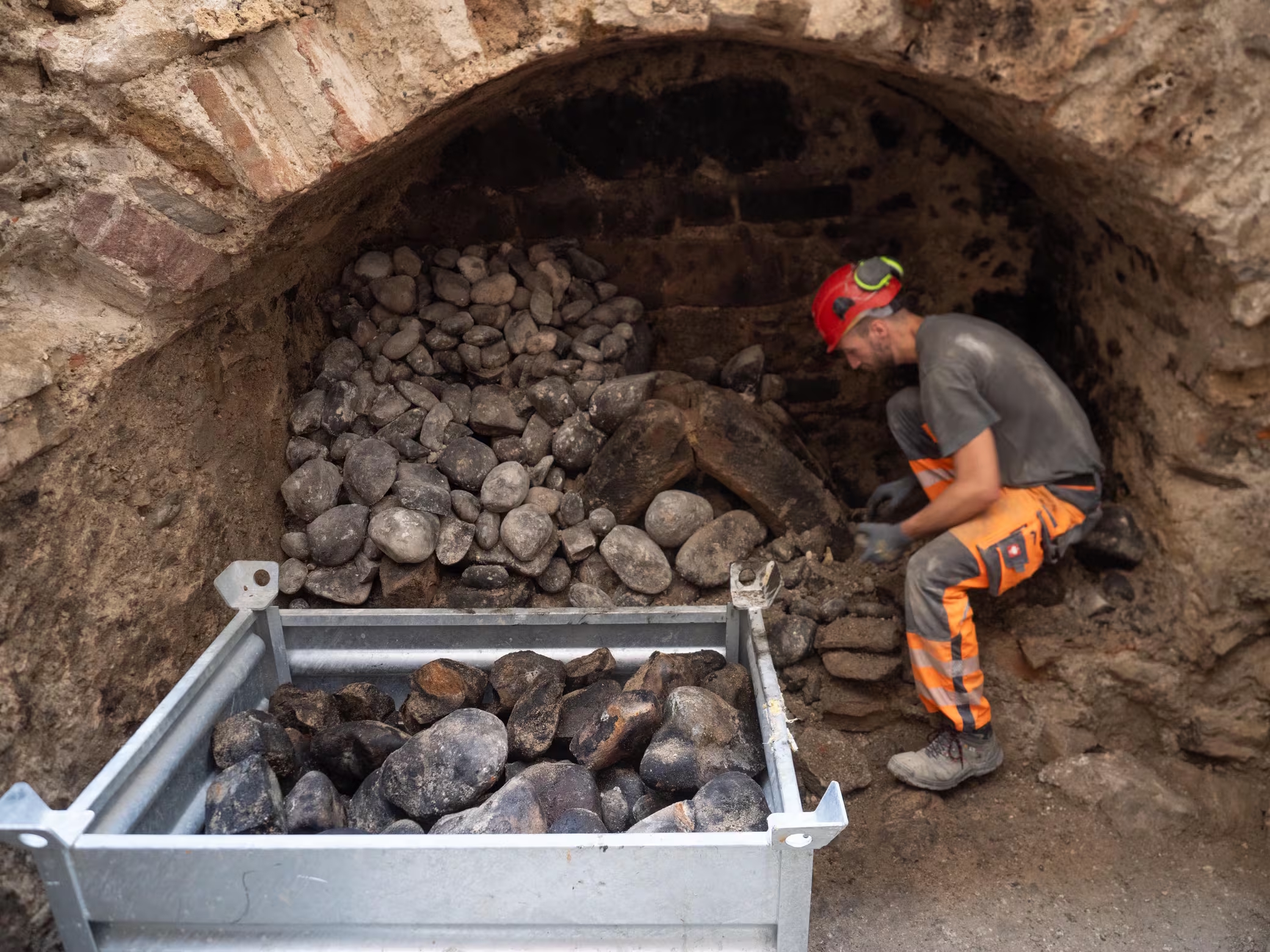
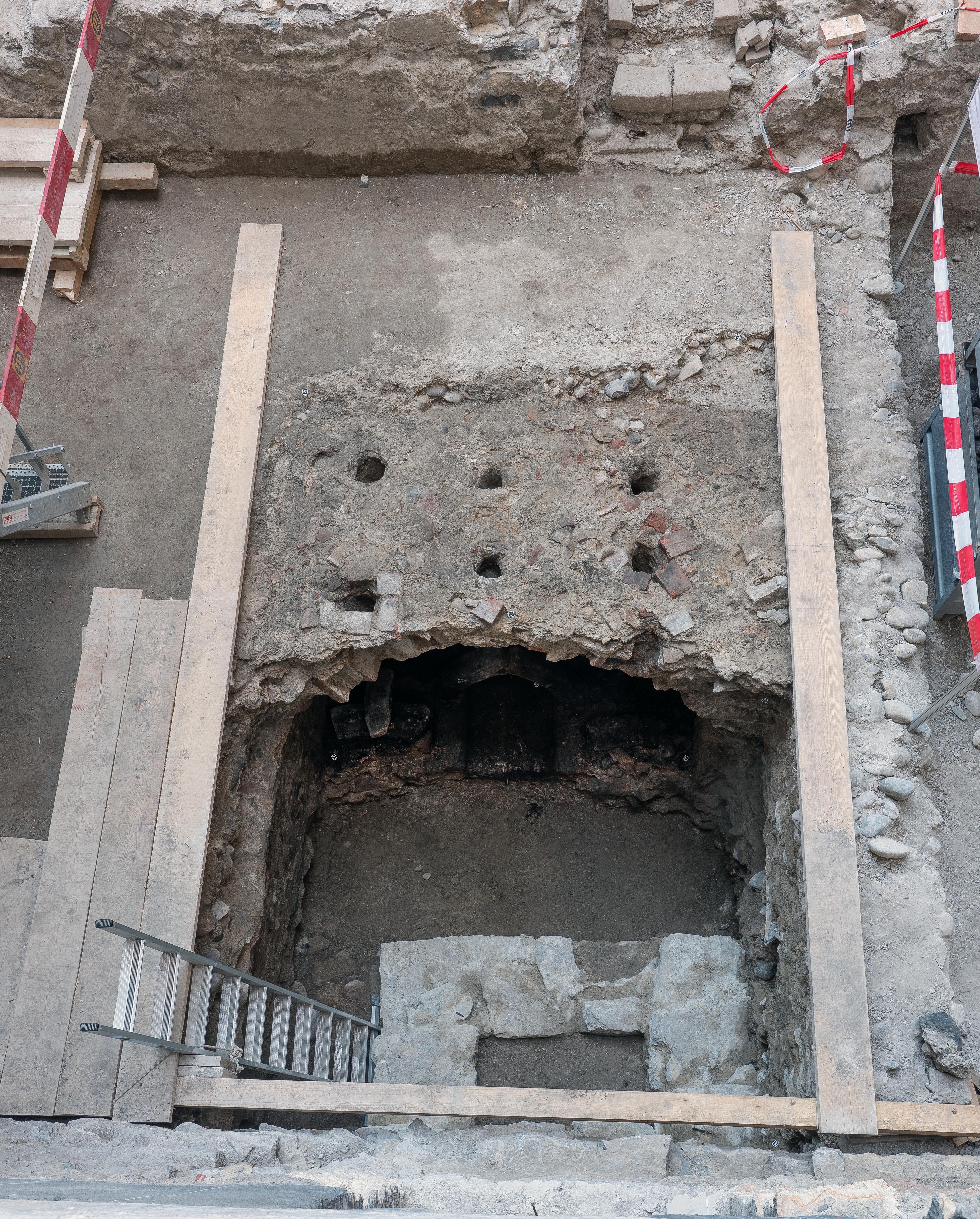
 The remains were discovered in the courtyard of a former vocational school that is on the site of the medieval Gnadental Monastery. The heating system was in the east wing of the monastery, underneath a large room believed to be the refectory, the monastic dining hall. Archaeologists uncovered an underground chamber filled with fieldstones. When the stones were removed, the combustion chamber made of ashlar blocks and bricks was revealed. Two angled stones tipped together in a v-shape were still in place in the furnace. They channeled the heat into the chamber packed with fieldstones.
 The fieldstones would be heated up and then slowly release their heat through holes in the floor above. A large section of the mortar floor of the refectory has survived, including eight closable openings. While the stones were being fired, the holes were closed to prevent smoke from filling the dining room. Once the smoke had cleared, the holes were opened and the heated air rose into the refectory through them.
Gnadental Convent was built around 1231 outside the city walls of the time for the Franciscans. But they moved to the newly founded Barfüsser Convent just 20 years later. The buildings then housed Cistercian nuns and Poor Clares. The monastery took its name in 1279 from lay sisters from Gnadenthal near Niederwil, Aargau. These were incorporated into the Order of the Poor Clares and remained there until the monastery was dissolved in the wake of the Reformation.
 After the Reformation, some of the convent buildings continued to be used. In 1573, for example, a granary was built using building materials from the convent, particularly from the church. At the end of the 19th century, the granary was demolished to make way for the vocational school. This marked the disappearance of the last visible remains of the monastery. It was only the recent excavations that brought these remains back to light.
The find has been thoroughly documented a 3D model created. The most effective way of preserving of this unique medieval heating system is currently under discussion. They remains will not be moved. They will be integrated into the renovated building at the site.
* This article was originally published here




No comments:
Post a Comment