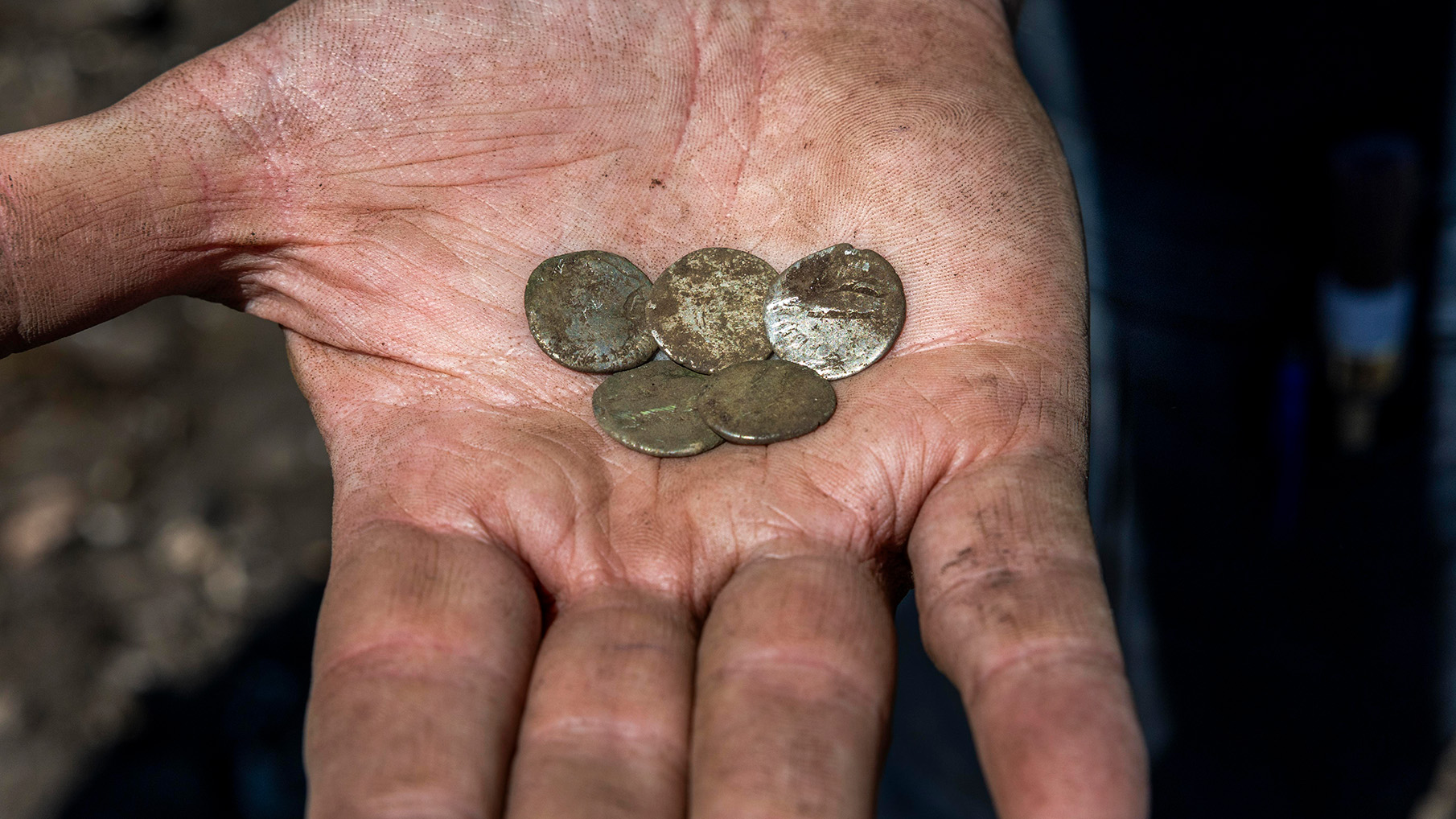
 A hoard of Roman silver coins has been discovered in Tofta on the Swedish island of Gotland. They range in date from the late 1st century to the late 2nd century A.D., but likely didn’t reach Gotland until the 4th century. The deposit includes one gold finger ring in a style typical of the mid-5th century.
Gotland’s location in the middle of the Baltic Sea made it strategically important for trade and military purposes. The earliest known fortifications on Gotland date back to 3rd century B.C., and since the 19th century the Swedish Armed Forces have had a significant presence in Gotland. The find site is next to the Tofta Shooting Range, a vast area of 2,700 hectares used for field exercises and weapons testing.
 Archaeologists have been investigating the site in advance of planned expansion of the Gotland Regiment. Previous excavations uncovered the remains of four ancient farm buildings. The current dig revealed remains of two more structures within the same complex. The coins were found outside one of the two buildings.
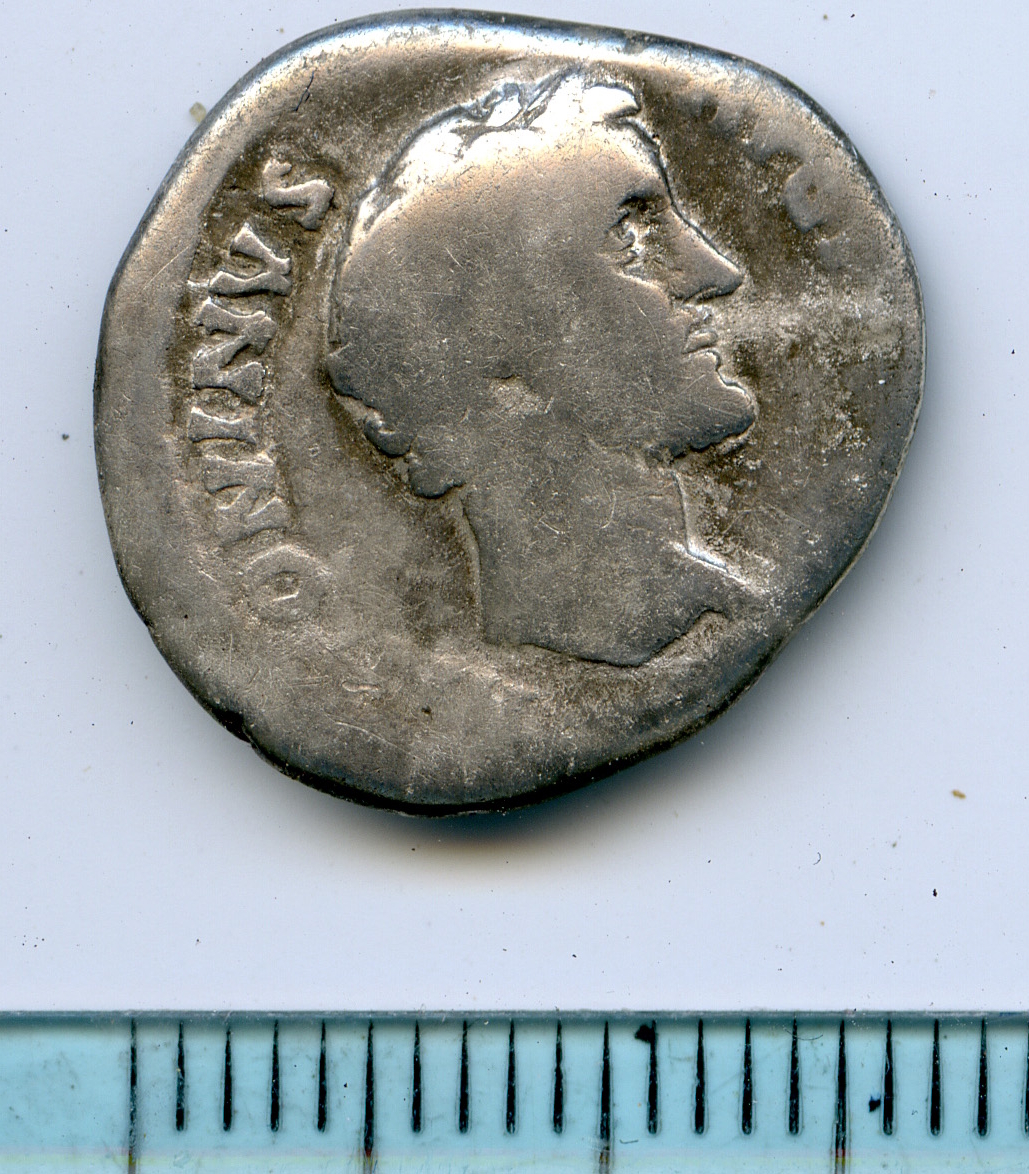
 The hoard consists of 45 silver denarii coins in the hoard were minted during the reigns of five emperors — Trajan, Hadrian, Antoninus Pius, Marcus Aurelius and Commodus — and four empresses — Sabina, Faustina I, Faustina II and Lucilla. They are heavily worn from centuries of use, evidence they had been in active circulation for more than a century before they made their way to Gotland.
 Bones found in one of the houses were radiocarbon dated and the results found they date to the 5th century. Between the carbon-14 dates and the dating of the gold ring type, archaeologist believe the hoard was buried around 450 A.D.
* This article was originally published here




No comments:
Post a Comment