
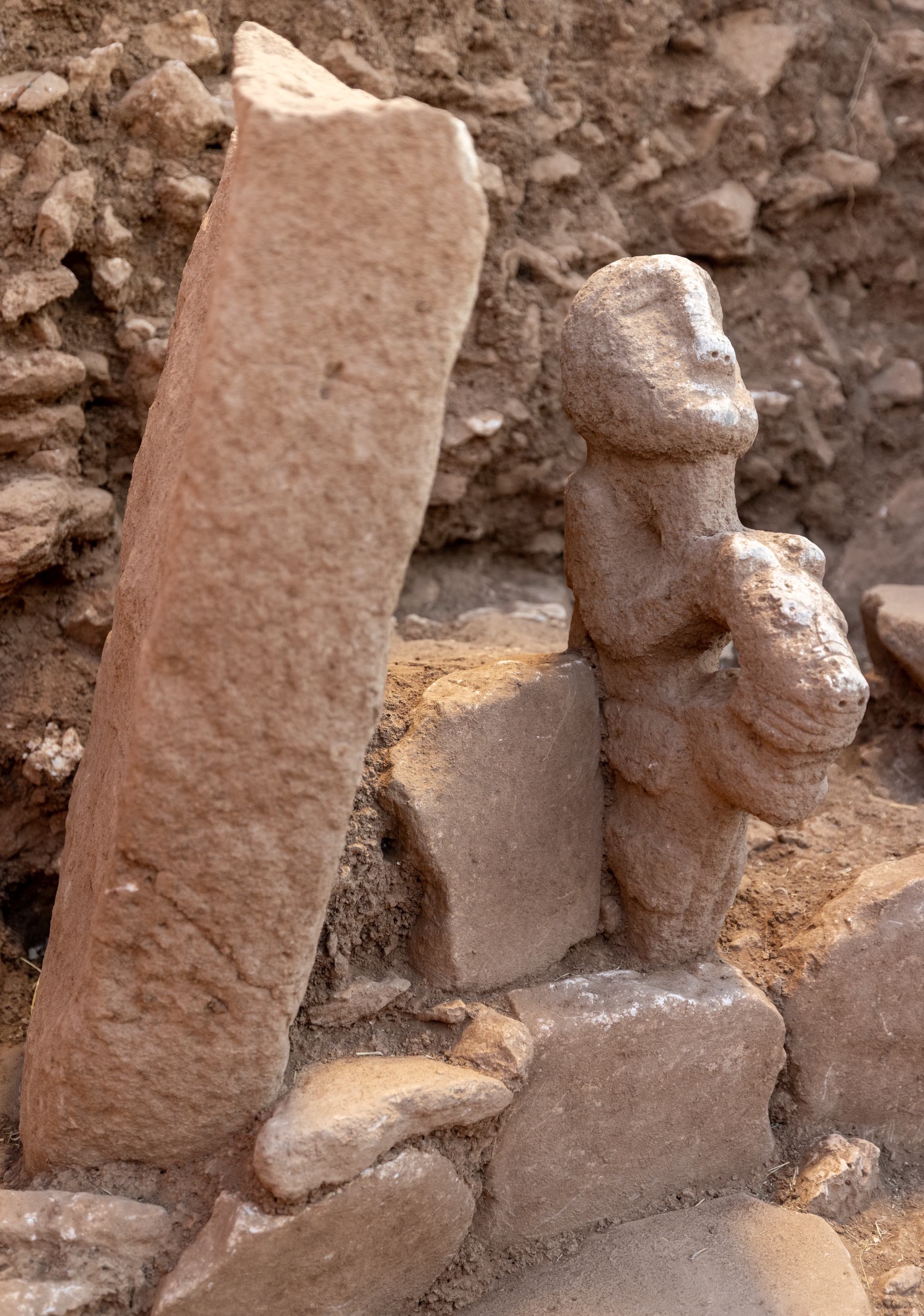
Karahan Tepe is approximately 30 miles east of Göbekli Tepe, the Pre-Pottery Neolithic monumental complex. The two sites both share structures in common, characteristic T-shaped pillars, more than 250 of which have been found at Karahan Tepe, and similar animal iconography representations that suggest they were related. Karahan Tepe has its own distinctive features, however, especially in the preponderance of rock-cut spaces and human figures carved in three dimensions.
Since systematic excavations began in 2019, a number of anthropomorphic and zoomorphic figural sculptures have been found at Karahan Tepe, often in unusual combinations. Several examples of a human carrying a leopard on his back. The leopards in these sculptures are not slung on the man’s back as if he had killed them in the hunt or tamed them enough to carry them, but rather are depicted snarling, with teeth bared, very much alive and very much unfriendly.
The newly announced sculpture appears to reverse that visual formula. Instead of the human carrying the leopard, the human is seated on the animal. Whether that reversal conveyed a different narrative, status or symbolic relationship cannot yet be determined, but the composition gives archaeologists another piece of evidence for examining how Karahantepe’s inhabitants imagined the boundary between humans and powerful wild animals.
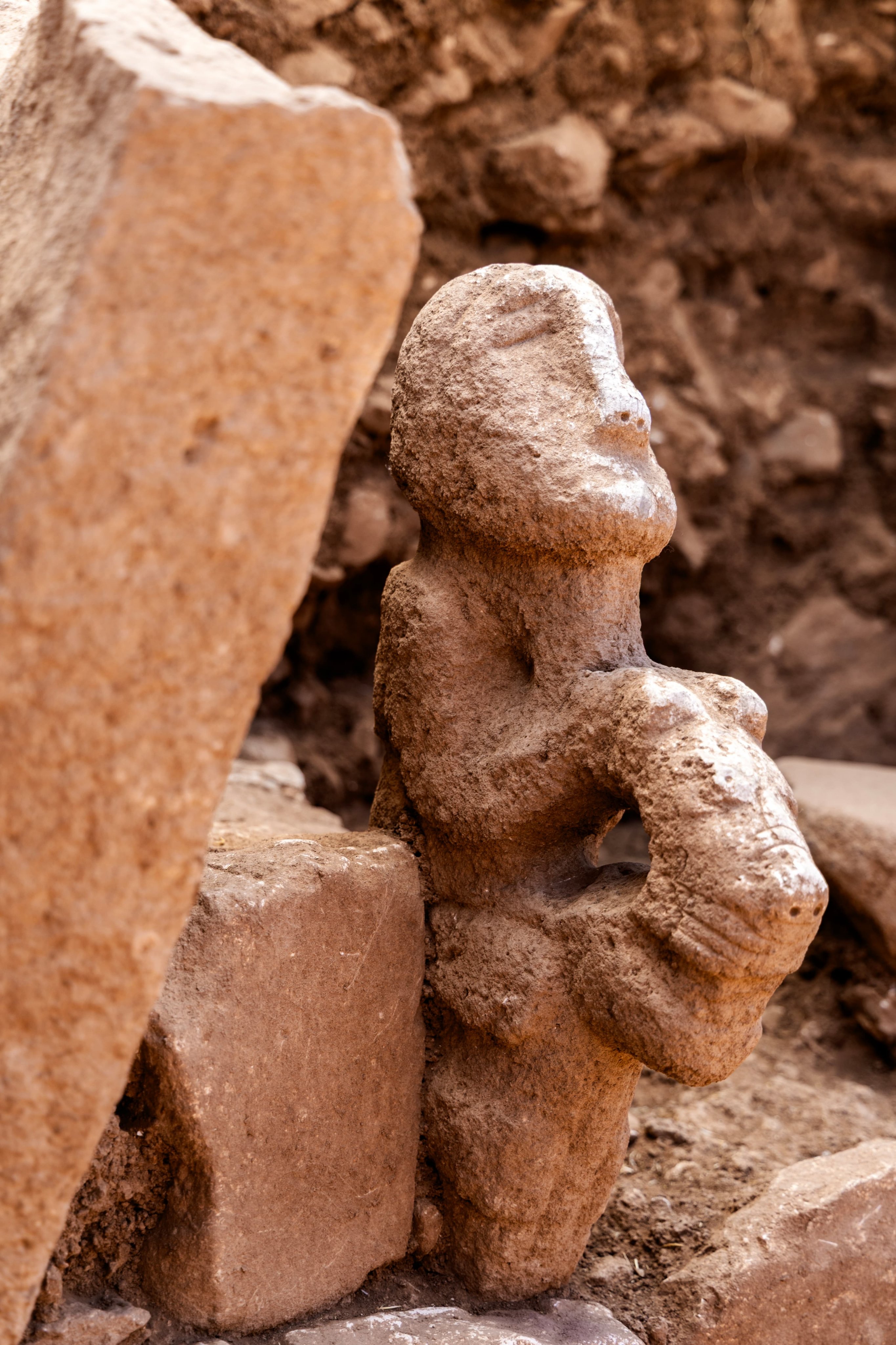
Leopards feature prominently in the iconography of Karahan Tepe, both in combination with humans and on their own. Leopard heads and figurines have been unearthed, as have leopards incised on the megalithic standing stones of the site. Less than 12 miles away from Karahan Tepe, a high relief of a man gripping his phallus flanked by two roaring/biting leopards carved into the stone is the earliest narrative scene ever discovered.
The location of the sculpture on the platform against the wall suggests it was meant to be visible and accessible, although there’s no evidence yet to indicate whether the the man-on-leopard was located there from the beginning or moved there when the space was deliberately closed.
* This article was originally published here

No comments:
Post a Comment