
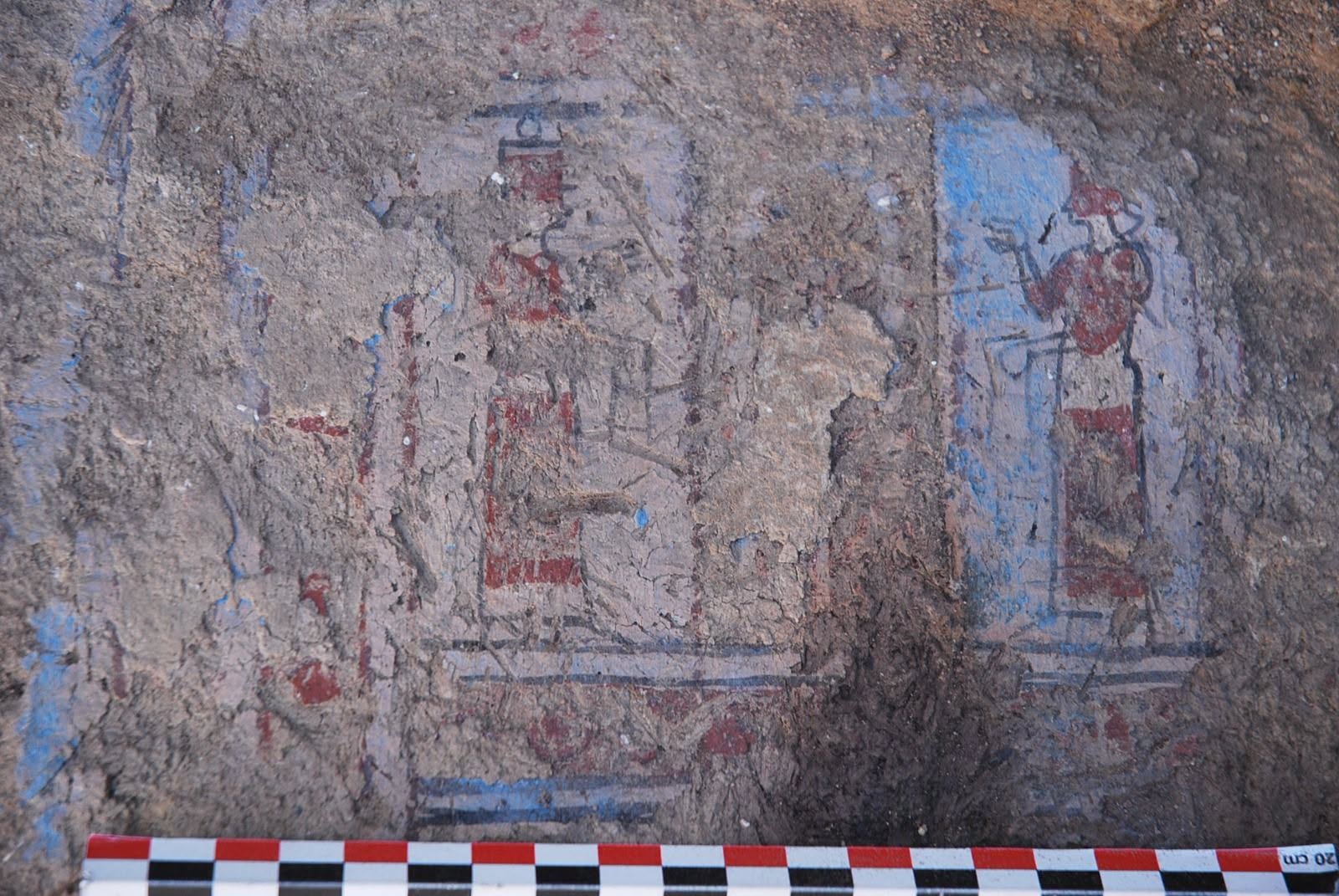
A fragment of a polychrome mural from the Kingdom of Urartu has been discovered at the Erebuni archaeological site in Yerevan, Armenia. It dates to between the second half of the 7th century B.C. or the beginning of the 6th century B.C.
The new fragment was discovered by the French-Armenian archaeological mission. It is exceptionally well-preserved, with vivid colors and bold black outlines. It appears to depict a religious ceremony.
The discovery offers archaeologists a valuable new glimpse into the artistic traditions and decorative practices of the ancient Kingdom of Urartu. Its unusually vivid pigments are expected to provide important material for further research into Urartian art, architecture and painting technique
The Erebuni Fortress was built in 782 B.C. by King Argishti I of Urartu, one of several fortified cities built on the northern border of the Urartu Kingdom. It was both a military stronghold, used as staging grounds for northern campaigns by successive kings, and one of the most important religious, political and commercial urban centers in the heart of the Urartian kingdom. It was abandoned in the 6th century when the kingdom was conquered by the Medes or Persians. The name of the modern city of Yerevan is a derivation of “Erebuni.”
The site was first excavated in the late 19th century. Excavations in the 1950s and 60s unearthed key inscriptions dedicated to the founding of the city and fragments of murals from the interior of King Argishti’s palace.
* This article was originally published here

No comments:
Post a Comment