
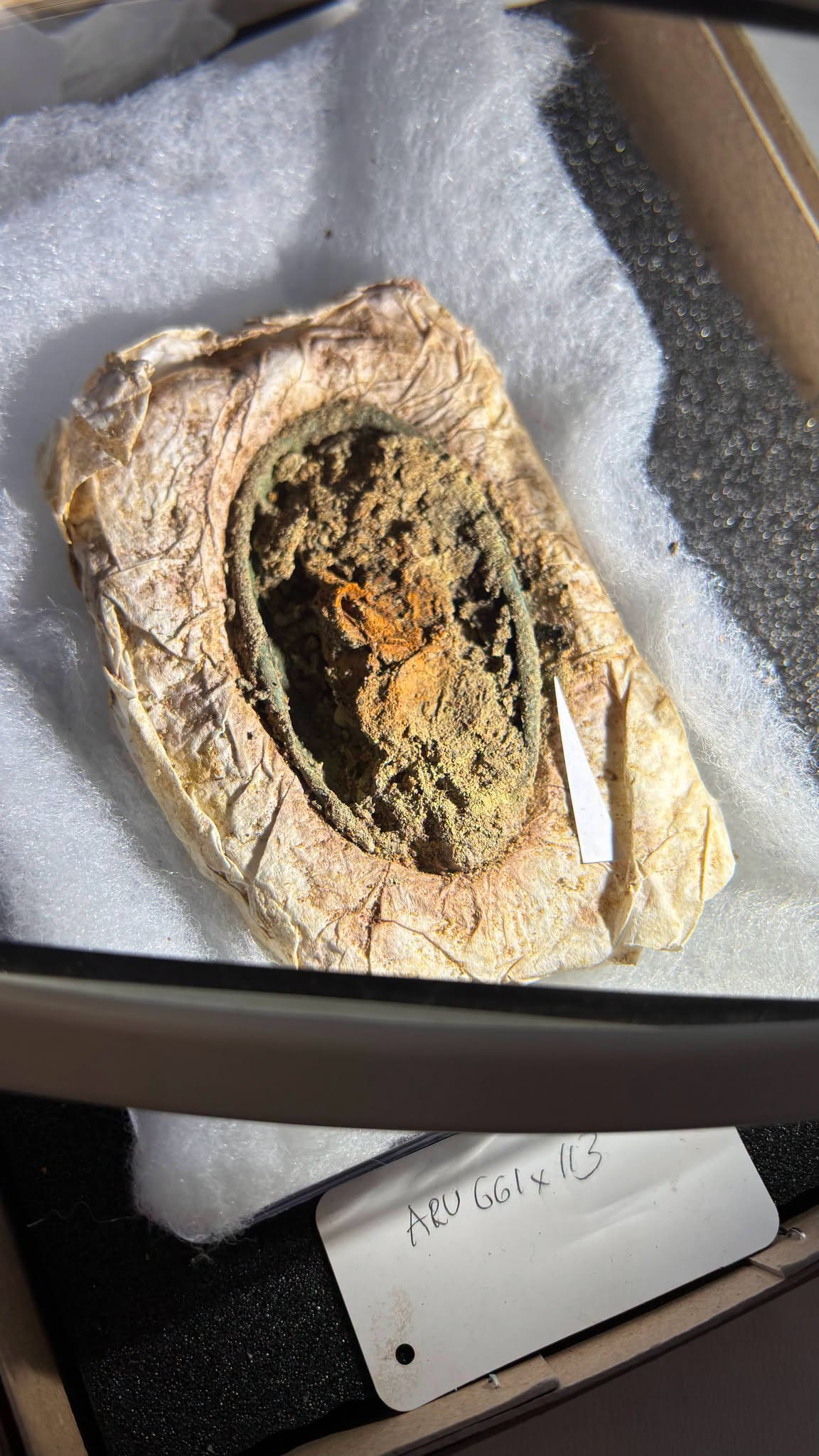
Skeletal remains rarely survive the highly acidic soil of Jutland, let alone fragile organic textiles. In this case, it was the young woman’s jewelry responsible for the unusual preservation. She was buried wearing two concave oval fibulae known as skålspænder (scoop brooches), typically used to fasten an apron dress at the shoulders. The corrosion of the bronze or silver in the brooches produced metallic salts that acted as preservatives and kept the garment’s fibers from decomposing.
Both of the skålspænder have remnants of fabric on both sides, giving archaeologists a unique opportunity to study two layers of Viking-era clothing: the undergarments in contact with the skin, and the outer visible layer. The area of the tomb with the jewelry and organic remains was removed in a soil 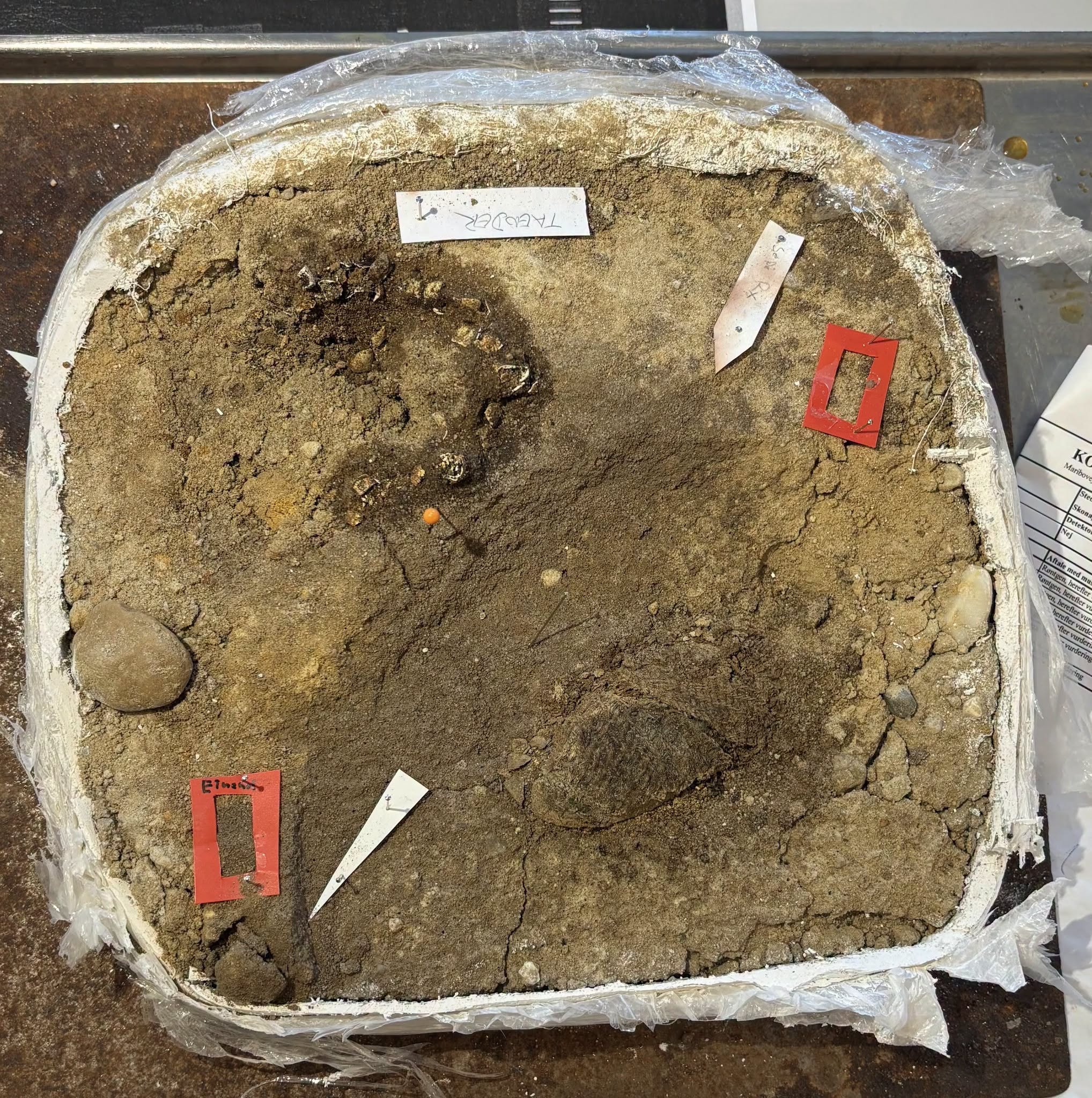
The study of these fragments will reveal new information about the textiles, how they were sewn and perhaps even the structure of the entire garment. The material will undergo chromatic analysis to identify the dyes used on the fibers, and hopefully determine the color of the clothing she was wearing. The color of a garment had social significance in the Viking era, so figuring out the colors she was buried in will also illuminate her position in the community.
The Vejle Conservation Center (Konserveringscenter Vejle) has taken on the delicate task of exhuming the funerary assemblage practically grain by grain, safeguarding the integrity of the fabrics and their contextual association with the bones and the ornaments. Meanwhile, ancient textile expert Lise Ræder Knudsen has been appointed to conduct a detailed analysis of the recovered fibers, aiming to identify the weaving techniques, patterns, and spinning quality that characterized this Viking Jutland garment. […]
However, dating the clothing presents an additional challenge that archaeologists hope to solve through cutting-edge science. Samples are planned to be taken for radiocarbon (C14) testing to obtain an absolute and precise dating of the textile assemblage. This dating is essential not only to chronologically place the garment but also to resolve a question that has sparked special interest among researchers: one of the scoop brooches shows clear signs of having been repaired in the past.
This feature suggests the possibility that the piece was not contemporary with the making of the dress but instead an heirloom passed down from a previous generation, an object with its own history that ultimately became part of the young woman’s grave goods. Comparing the dates obtained from the textile and the metal will be key to confirming whether both elements belong to the same era or if, on the contrary, the young woman wore a new dress with old jewelry.
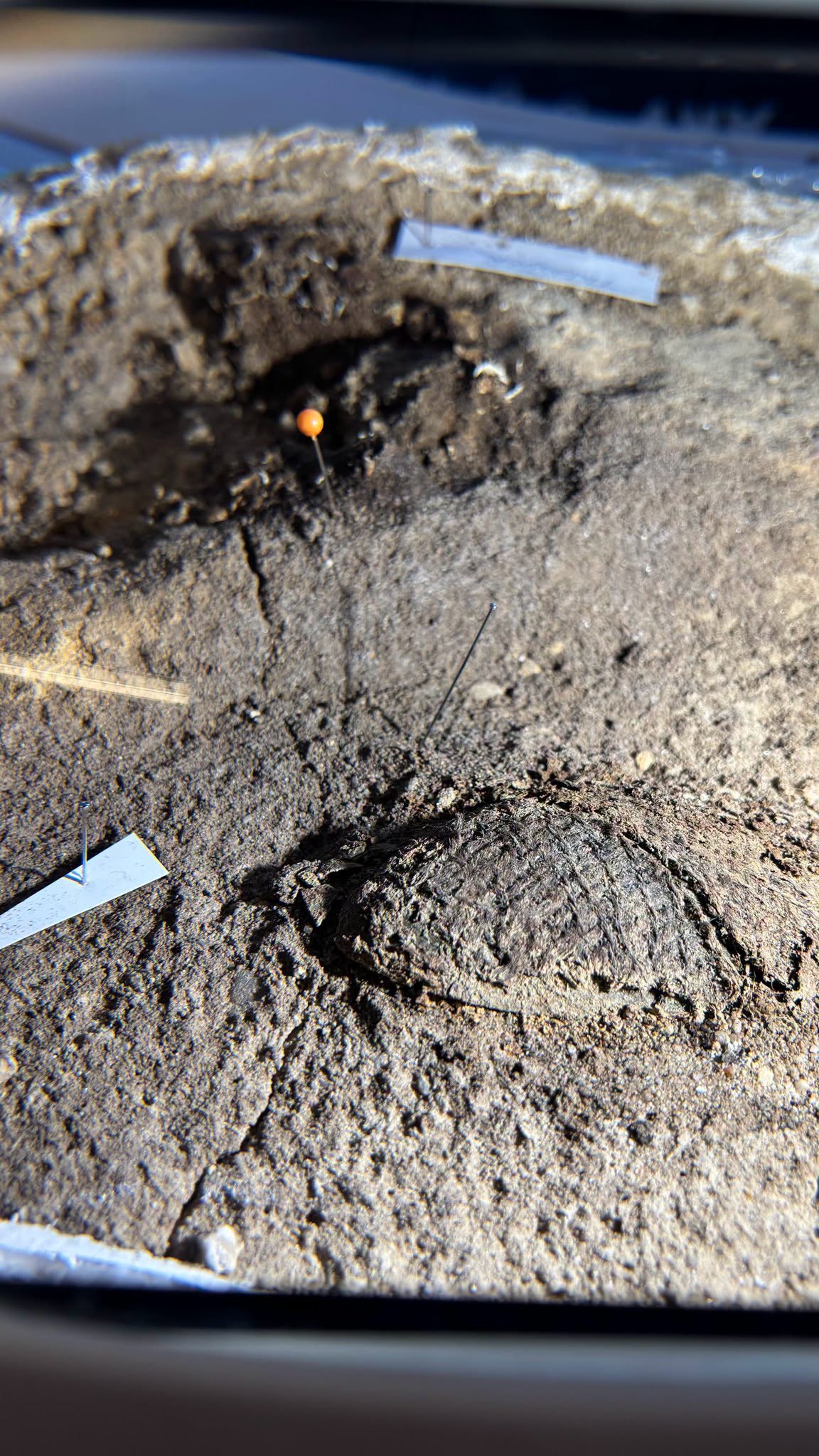
The skeletal remains will also be studied further. Her dental enamel will give information on nutritional stress she may have experienced as a child, and stable isotope analysis will provide information on whether she was raised locally or came from elsewhere.
* This article was originally published here

No comments:
Post a Comment