
A pair of polyhedral gold earrings and a 3rd century Roman coin have been discovered in a child’s grave in Stara Zagora, central Bulgaria.
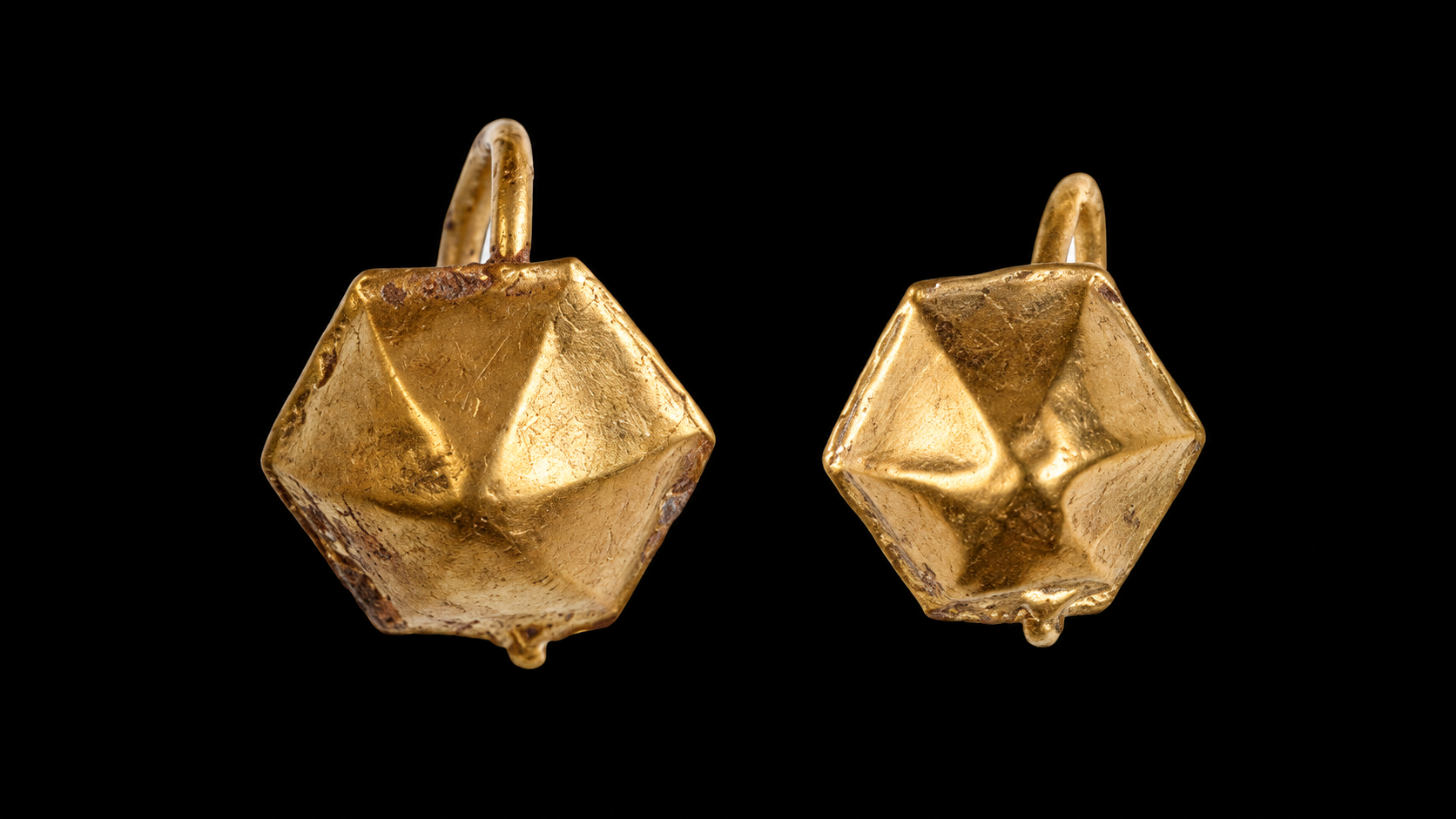
The child’s grave is oriented with the head pointing west and the feet east. The pair of gold earrings and one coin were the only grave goods. The coin in an Antoninian of Emperor Aurelian, minted in Serdica in 274-275 A.D. The grave dates to this time.
The child’s identity and circumstances of death remain unknown. The presence of gold jewelry suggests that valuable personal possessions accompanied the burial, although it is not enough to establish the family’s social standing.
The coin raises another interesting possibility. The coin may also have held a meaning beyond its monetary value. In ancient Greek and Roman funerary traditions, coins were sometimes placed with the deceased as payment to Charon, the mythical ferryman who carried souls to the underworld. Although its purpose in this particular burial remains unknown, the coin may reflect beliefs surrounding death and the journey into the afterlife.
Evidence of human settlements in the Stara Zagora area go back 8,000 years, but the first town was founded by Philip II of Macedon in the 5th-4th century B.C. The necropolis where the child’s grave was found was in use from the late 2nd through the 5th centuries. It contains 135 burials of several different types of graves: burial pits with cremated remains, covered with tegulae (roof tiles), covered with bricks, covered with stone slabs, uncovered and more. Most of them are inhumation burials.
* This article was originally published here

No comments:
Post a Comment