

It was discovered in November 2023 by a soldier detecting landmines at the site of a planned hiking trail at the summit of the mountain. The area has been restricted since 1966 when an anti-aircraft battery was installed there, and the military has been clearing landmines to make it safe for the general public again. The object was found just four inches deep beneath a rock.
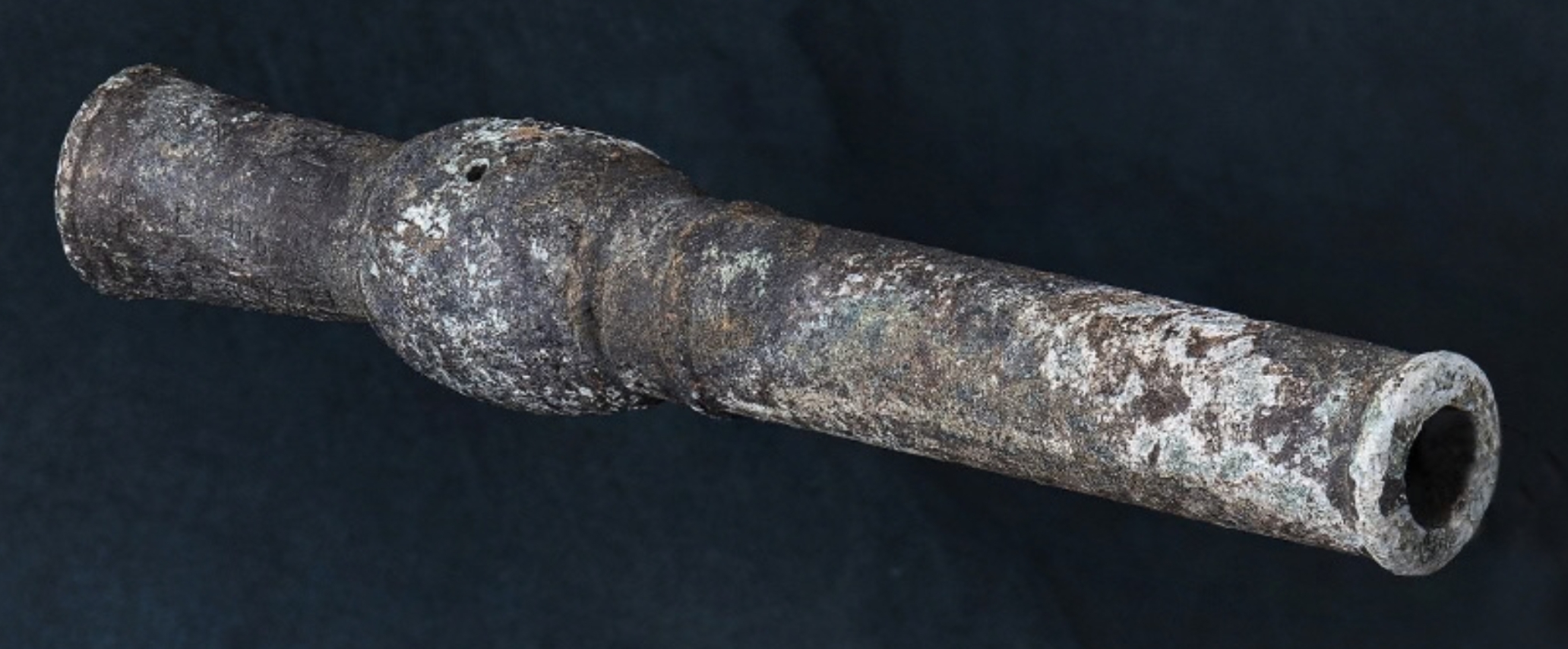
Known as a Hwangja Hwatong, meaning “Yellow-Character Hand Cannon,” the weapon is a cylinder that balloons out three thirds of the way down and ends in a slightly trumpet terminal that is a little wider in diameter that the straight cylindrical end. It is 23.75cm (9.35 inches) long with a bore diameter of 1.66 cm (.65 inches) and weighs 2.8 lbs. The trumpet end would have been mounted to the end of a long wooden staff and the device packed with gunpowder and a projectile (arrows or bullets) to fire out of the muzzle.
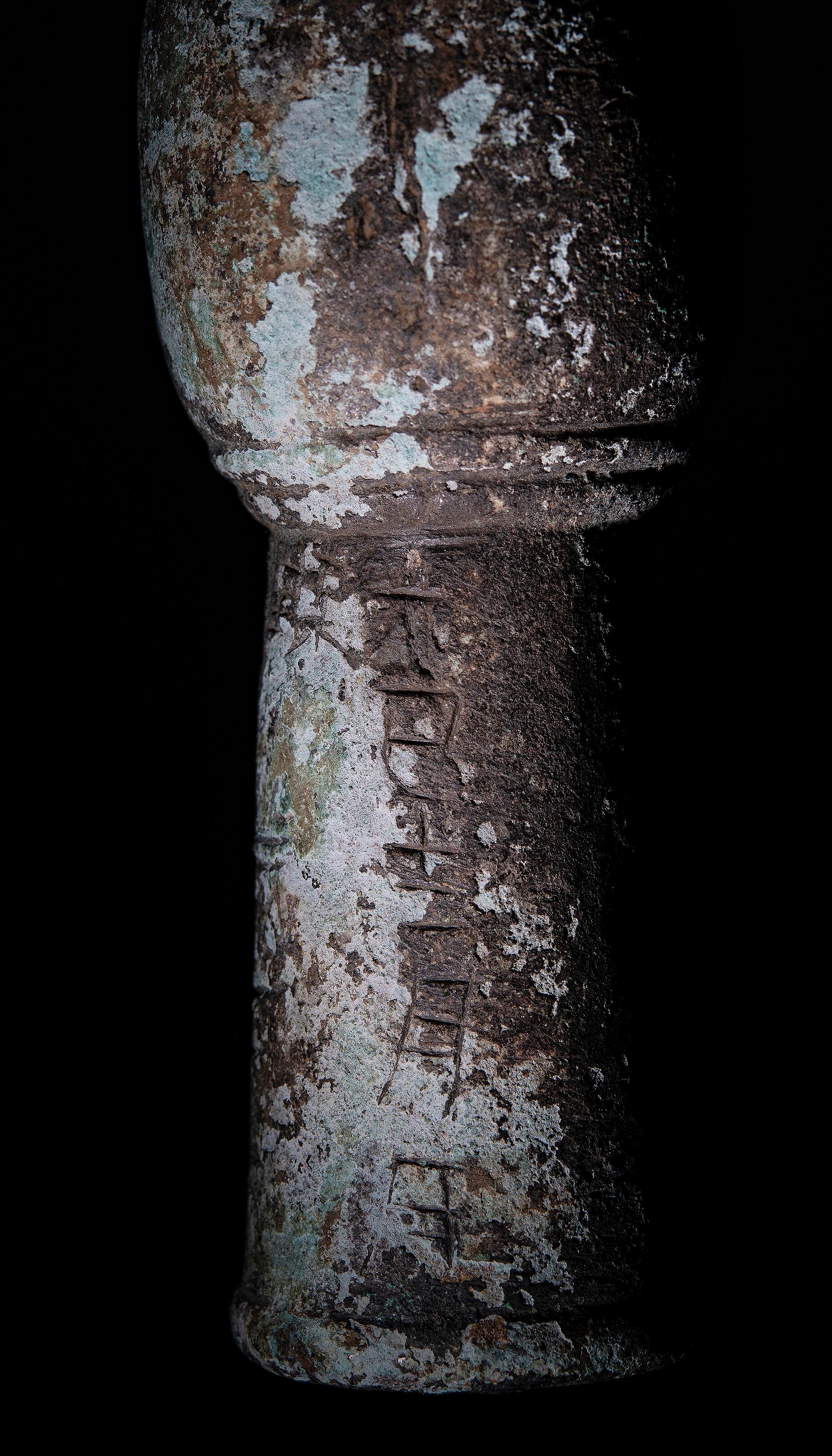
The inscription dates the weapon to a Jeongsa year, narrowing its creation to either December 1377 or December 1437. In 1377, the Goryeo Dynasty established its first state arms agency under the famed inventor Choe Mu-seon to counter naval raids by Japanese pirates. If it was forged in 1437, it originates from the golden age of King Sejong the Great, who spearheaded major artillery standardization.
Either timeline solidifies the hand cannon as the earliest verifiable firearm ever found on the Korean peninsula.
X-ray and metallurgical analyses revealed the cannon was cast from a traditional bronze alloy of copper, tin and lead. Researchers noted that the tin content was kept strictly below 10 percent — a precise engineering choice designed to give the barrel enough ductility to withstand explosive internal pressure without shattering. Residual traces of silver and sulfur further confirmed medieval smelting techniques rather than a modern reproduction.
The Hwangja Hwatong is now on display to the public for the first time at the National Palace Museum of Korea through November 22nd.
* This article was originally published here

No comments:
Post a Comment