
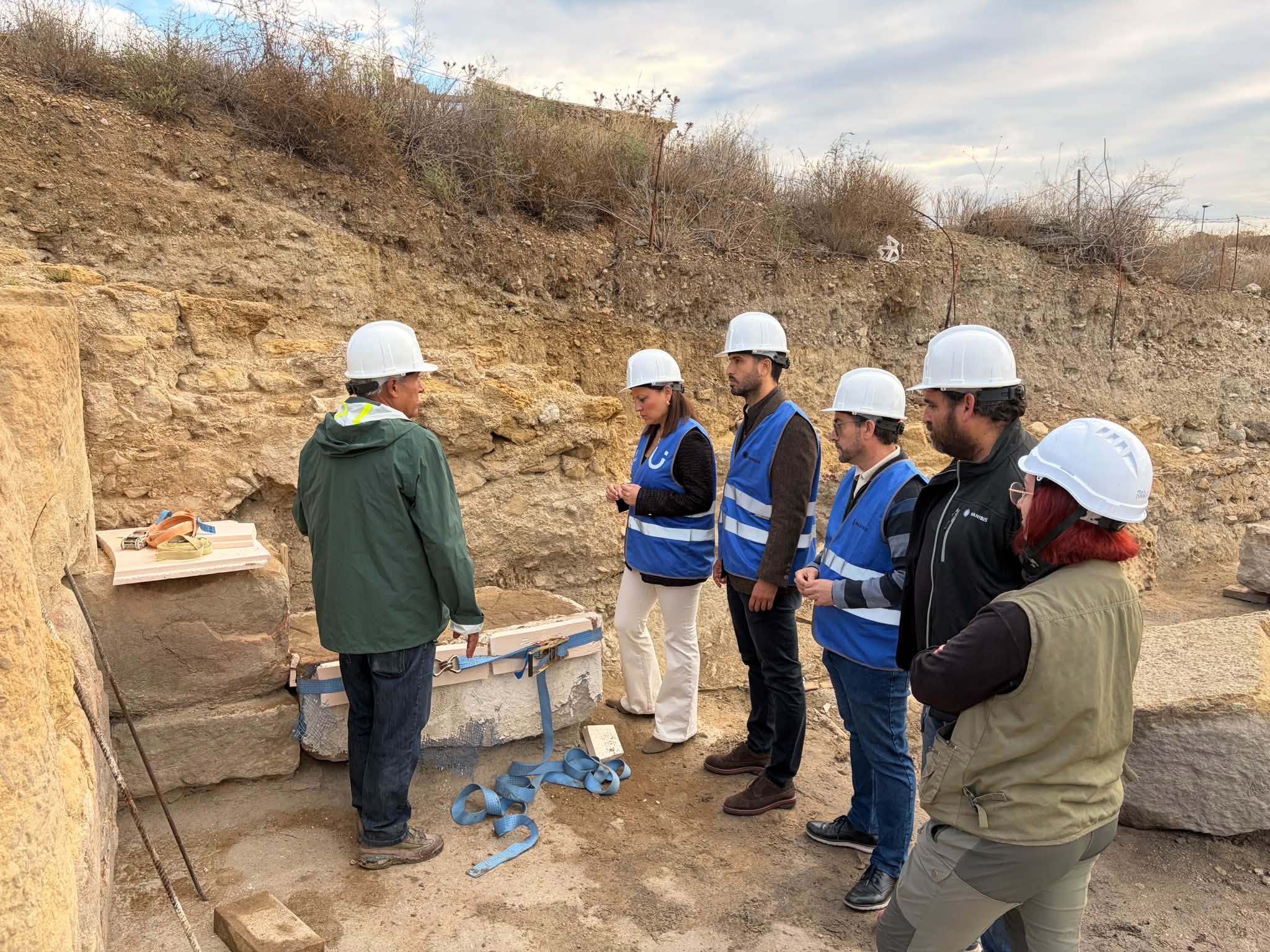
The ashlar block almost 1.2 meters (4 feet) long was discovered in the northern part of the Roman thermal complex. It was inside a wall that was not its original location, reused as building material in antiquity. Before the discovery, archaeologists thought that wall was part of the northern enclosure of the baths, but the reused stone means that it was built in a larger phase of construction.
There are two lines of text framed by decorative moldings with lettering in two sizes: the large 23 cm text on the top line and about 13 cm (5 inches) high on the line below. Text of these dimensions suggest the inscription was originally part of a large architectural feature, meant to be read from a distance.
Preliminary analysis has identified the end of a Roman name and writing characteristics that point to a chronology situated between the end of the 1st century BC and the 1st century AD, possibly during the period of Augustus.
Experts suggest that it may have been a commemorative inscription related to a monumental architectural work, although its exact function still needs to be determined.
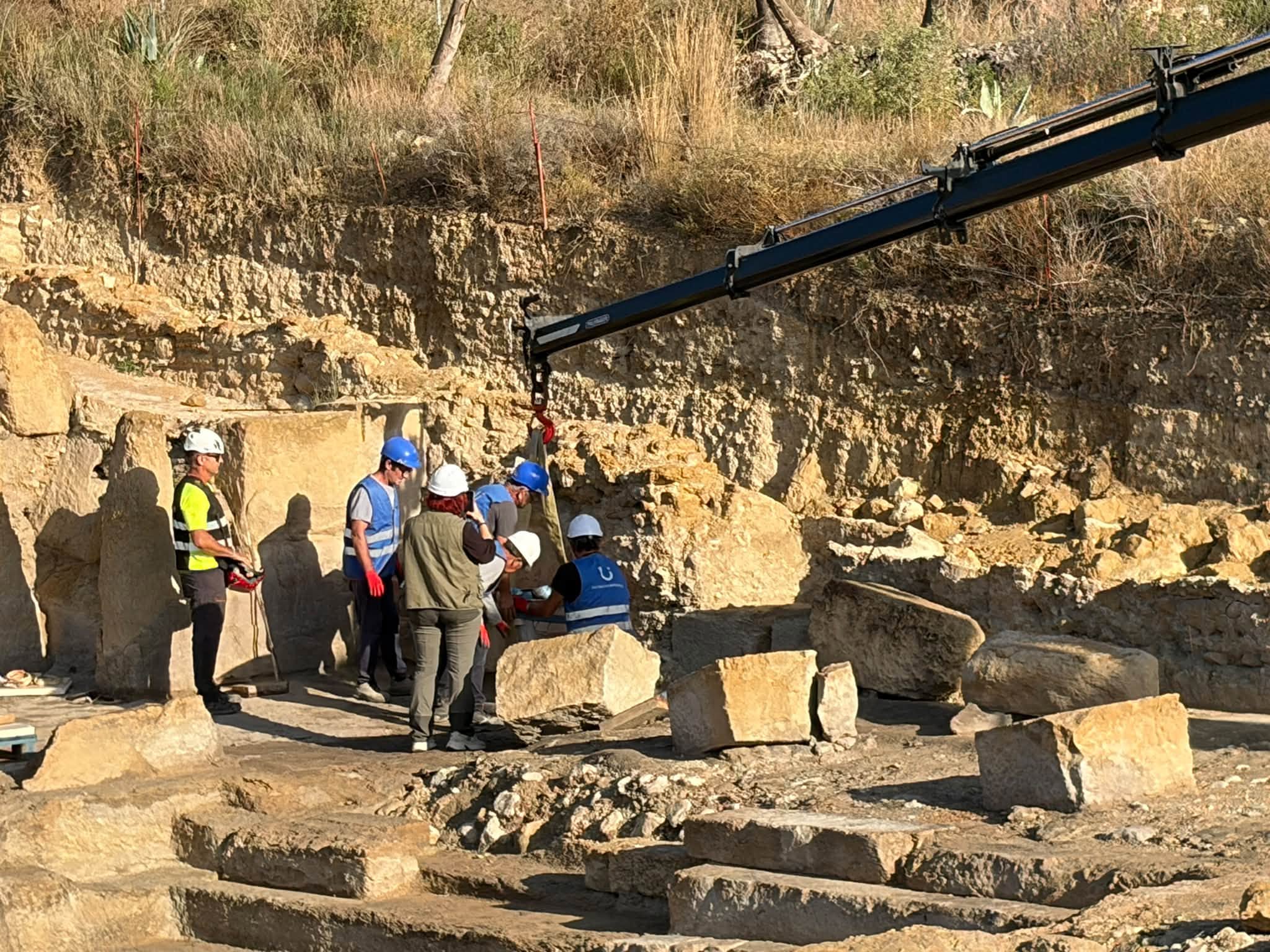
The ashlar has been raised and transferred to the Archaeological Museum of Murcia, where it will be studied, documented, and conserved.
* This article was originally published here

No comments:
Post a Comment