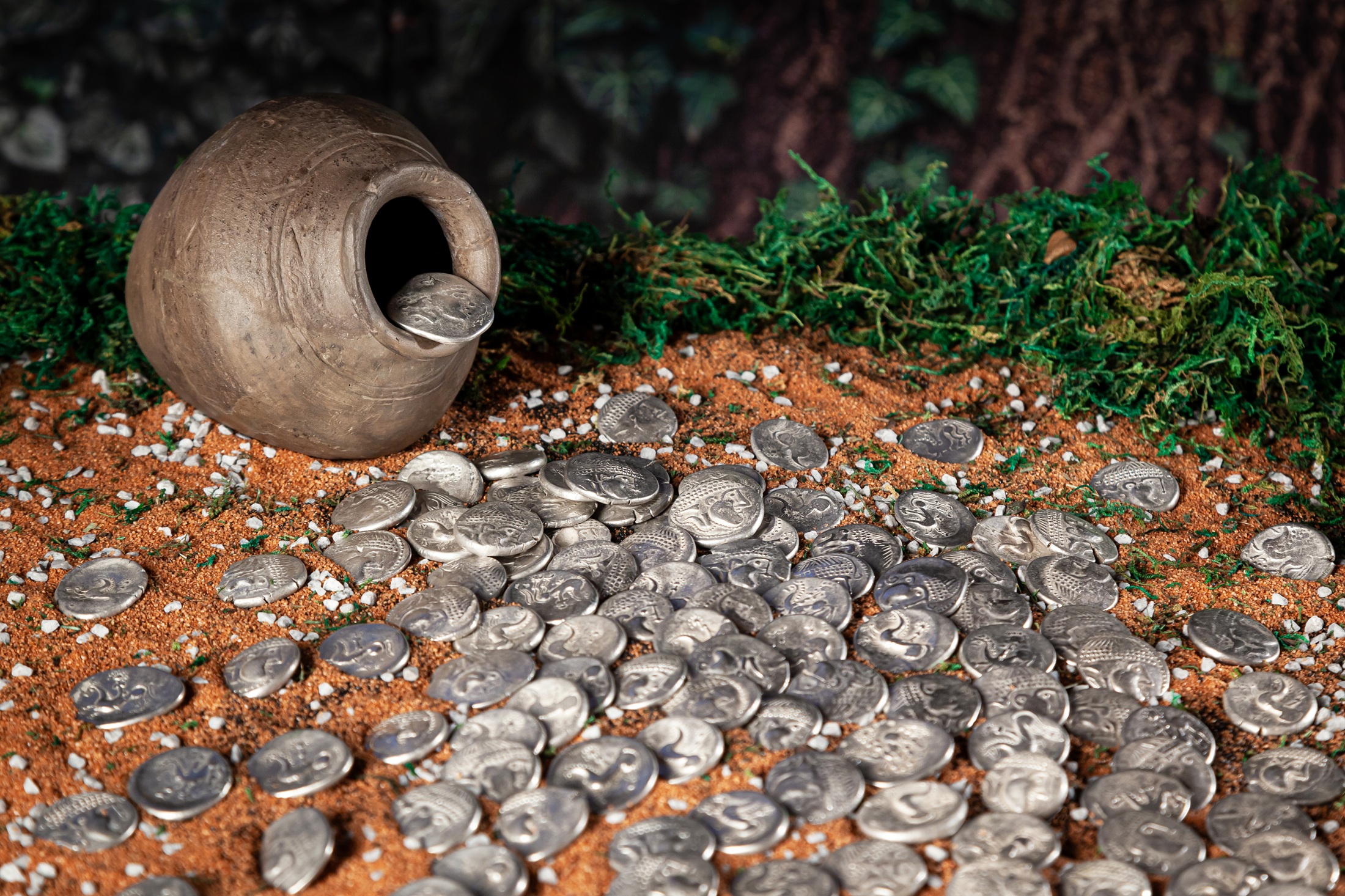
 A hoard of more than 200 Celtic silver coins has been discovered during construction of an electrical substation in Szombathely, Hungary. The new substation is being built on a site where archaeological remains have been found in the past, triggering a professional excavation before construction began. Less than 40 cm (16 inches) under the surface, the team from the National Archaeological Institute of the Hungarian National Museum Public Collection Center uncovered a few silver coins that had been scattered by agricultural work. Metal detectors then located the core of the hoard.
They were cached in a pit, some loose, some inside a small earthenware container. The coins are all Velem-type tetradrachms dating from the late 2nd century B.C. to the beginning of the 1st century B.C. On the obverse of the coins is a Celticized head in profile facing right bearing a pearl diadem and necklace. On the reverse is a stylized horse and rider wearing a crested helmet. They were probably minted in the Velem-Szentvid area, less than 10 miles from the find site.
Worth four drachmae a piece (hence “tetradrachms”), the denomination was widely used as trade coin and for state expenses throughout the Greco-Roman world. Their high silver content and large value made them unsuitable as a daily currency for individuals to spend, but perfect for them to store their wealth. The number of tetradrachms found in hoards attest to this usage.
 The coin hoard is not the only significant find made in the two years since excavations began. Archaeologists have found material remains and thousands of artifacts covering almost 7,000 years of history. The oldest object is a polished stone axe used to fell trees and work wood. Another stand-out piece is a peacock-eye glass bead from the Early Iron Age (7th-6th century B.C.). From the remains of a Roman building, archaeologists recovered a fragment of a brick with a dog pawprint. It’s a flat tile, perhaps from a pilae stack that raised the floor over a hypocaust heating system.
A selection of the finds from the excavation will be exhibited at the Savaria Museum in Szombathely.

* This article was originally published here



No comments:
Post a Comment