
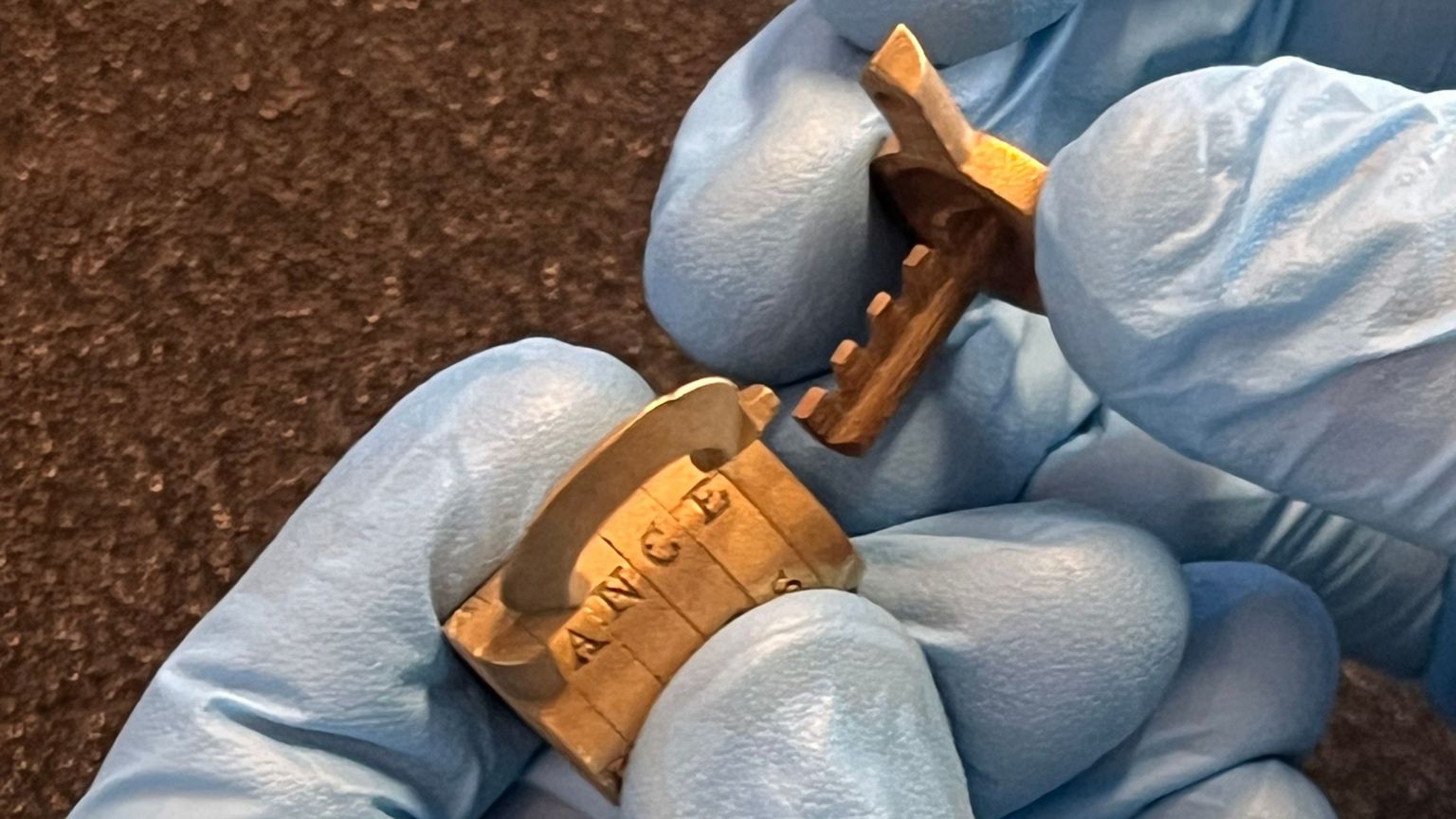
The Elizabethan merchant vessel Ann Francis went down in a storm on December 28th, 1583, on its way home to Norfolk from Spain. It was blown off course and ran aground on Margam Beach, near Port Talbot. Its incredibly rich cargo of almost 900 gold and silver coins, personal belongings, compasses, tools, eating and drinking utensils was buried under the sand for centuries. It was gradually discovered by metal detectorist Peter Hughes between 1996 and 2017. The Ann Francis treasure was acquired by Amgueddfa Cymru – Museum Wales earlier this year and is now on display at the National Waterfront Museum in Swansea.
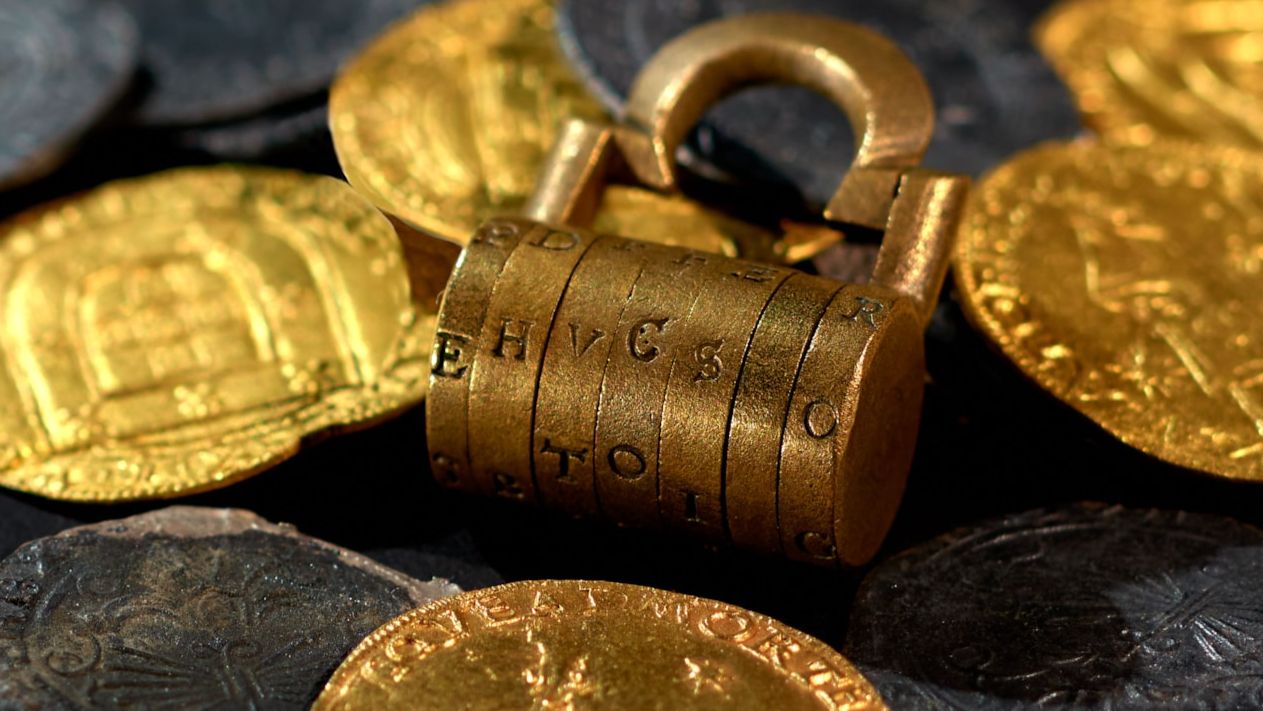
Experts from the museum worked with Cardiff University CT scanning specialists to non-invasively examine the internal mechanism of the lock.
“By creating a detailed 3D image of the internal mechanism, I could see how the notches lined up with the letters and identify the exact combination. We normally use this technology to study bones and other biological structures, so investigating a 400-year-old padlock was certainly a first for us. I had to wait until later that evening for the museum team to test the combination, so getting the message that we’d cracked it was incredibly satisfying.”
Dr David Williams
Post-Doctoral Research Associate
* This article was originally published here

No comments:
Post a Comment