

The tomb was found at Bir al-Shaghala, part of the necropolis of the ancient city of Mut, capital of the oasis in the Ptolemaic and Roman periods. One of seven major oases in Egypt, Dakhla covers 770 square miles in the deep desert about 465 miles southwest of Cairo and has been continuously inhabited for more than 2,000 years. The tomb is about 1,700 years old.

The stand-out feature among the funerary reliefs is on the lintel stone above the doorway. It depicts the sun god Ra’s nocturnal journey through the underworld as described in the Amduat, an important funerary text from the New Kingdom that was discovered carved on the walls of the tombs of pharaohs. It was exclusively used for pharaohs and very few select high officials until the 21st Dynasty (1077-943 B.C.).
This is the first time the Amduat scene has been found in the necropolis, and it is an extraordinary testament to the longevity of traditional pharaonic religion in Egyptian culture even after many centuries of Ptolemaic Greek and Roman rule.
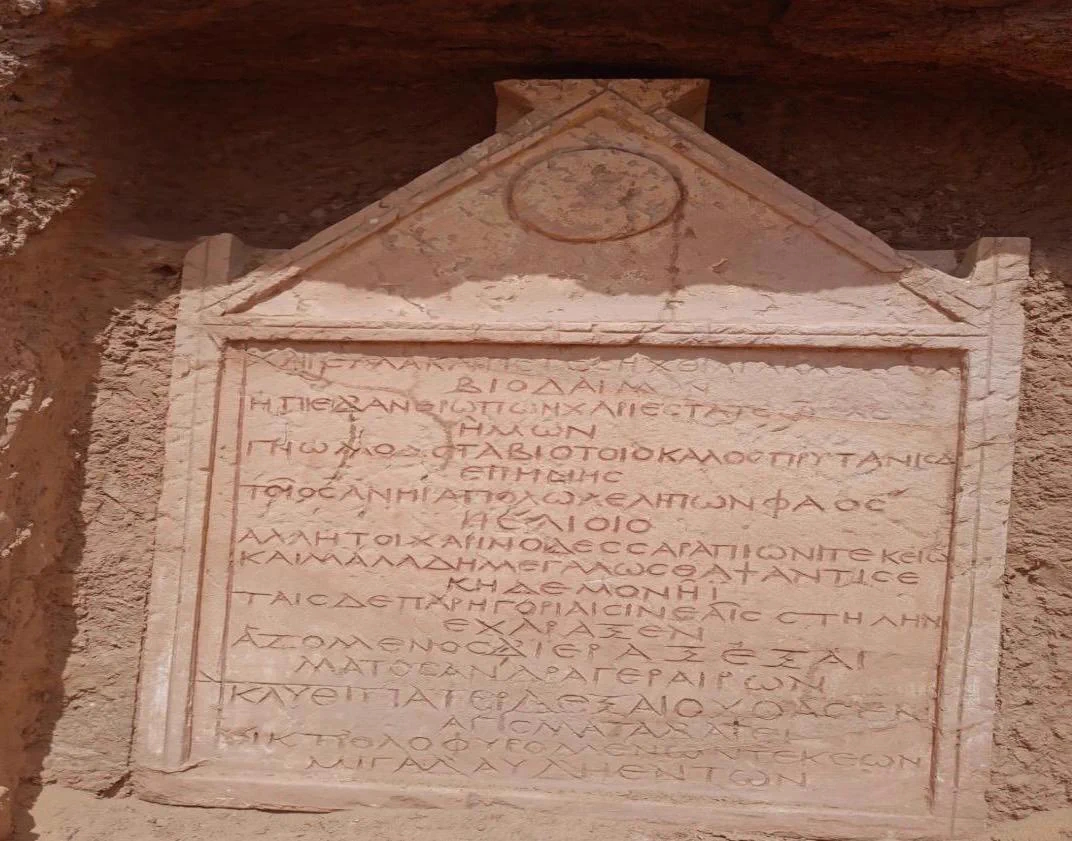
The excavation also uncovered a sandstone offering table positioned above a sandstone purification basin, a collection of pottery vessels, and a bronze coin bearing a relief depiction of the Roman Emperor Constantine.
Archaeologists also found evidence suggesting the tomb may have been reused later. A mudbrick chapel was discovered above the main entrance, with a funerary shrine in front of it consisting of four square mudbrick columns. […]
Hisham El-Leithy, Secretary-General of the SCA, said the tomb’s architectural features, inscriptions and funerary texts provide important information about funerary practices and the cultural and religious life of the Dakhla Oasis during the Roman period.
* This article was originally published here

No comments:
Post a Comment