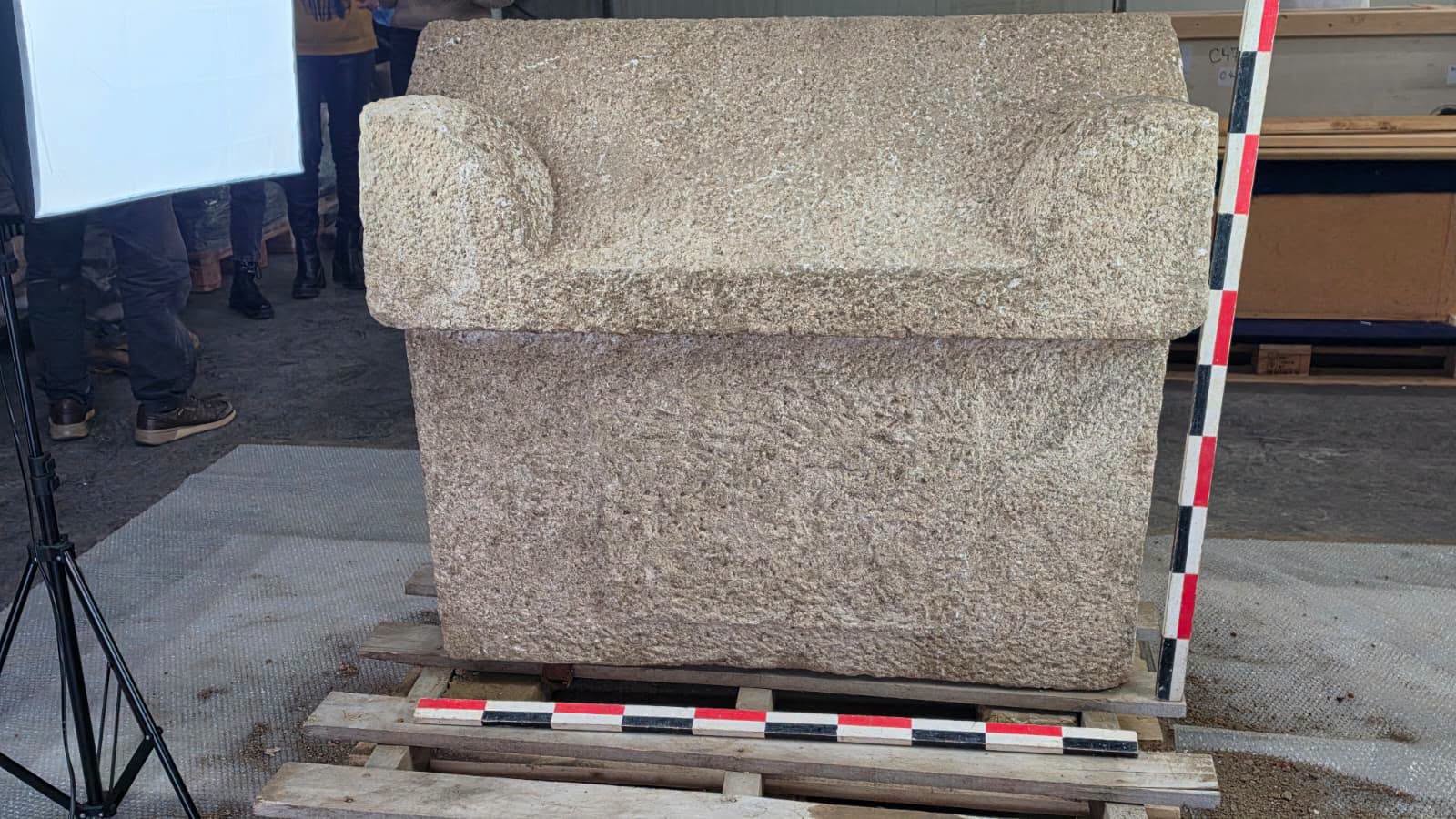
 The 1,800-year-old sarcophagus of a child still sealed with toys inside has been discovered in the ancient city of Tomis, Romania. It was found on the northern edge of the Roman necropolis, an area that was in use in the 2nd and 3rd centuries A.D., and is the first well-preserved sarcophagus of a child discovered at Tomis.
 Tomis, modern-day Constanța, was founded in the 6th century B.C. by Greek colonists from Miletus. Its harbor on the Black Sea and a direct inland route linking the sea to the Danube made it an advantageous location for trade, but it didn’t develop into a major city and center of regional commerce until after it was annexed by Rome in 29 B.C. The poet Ovid was banished there by Augustus in 8 A.D. and lamented what a remote backwater it was, but it prospered rapidly as one of Rome’s most important settlements on the Black Sea. It would become the capital of the province of Scythia Minor in the 3rd century.
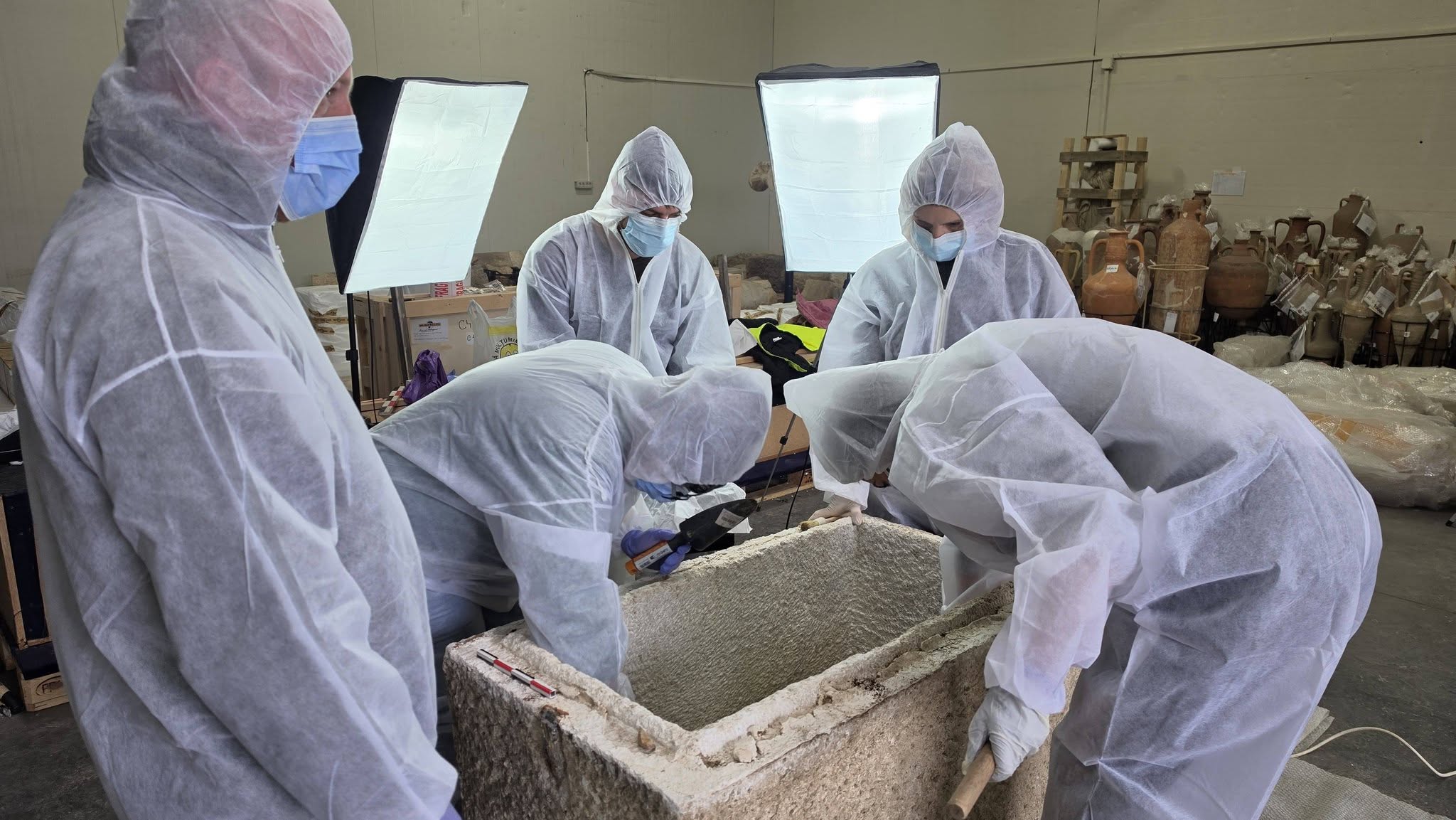
 The sarcophagus was unearthed last week by archaeologists from the Constanța Museum of National History and Archaeology in a preventative excavation before construction. It was small, suited for a child of around four of five, and intact with lead clamps and mortar sealing the lid in place. The entire unit was raised and removed to the museum so it could be opened and its contents examined.
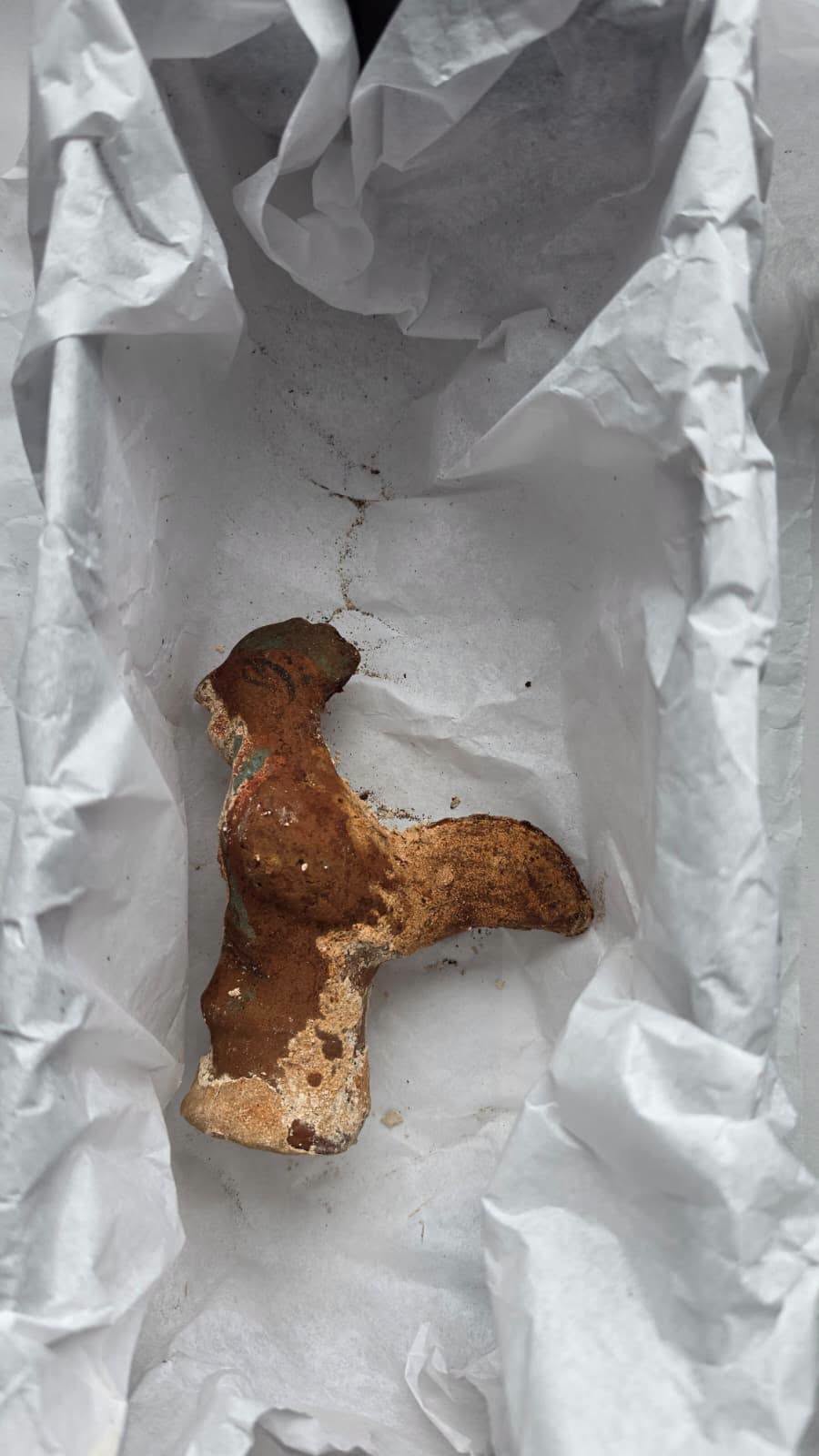
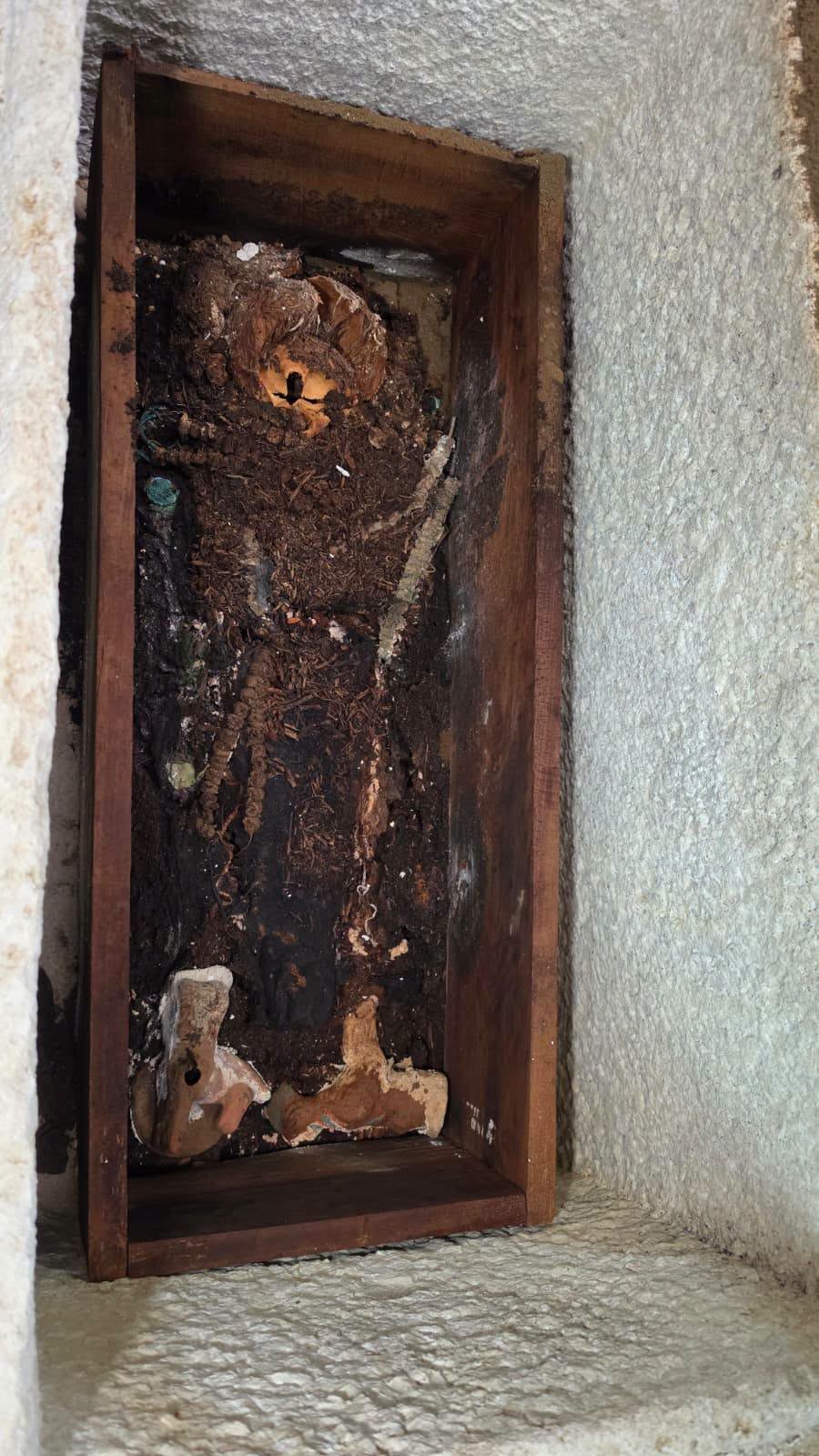
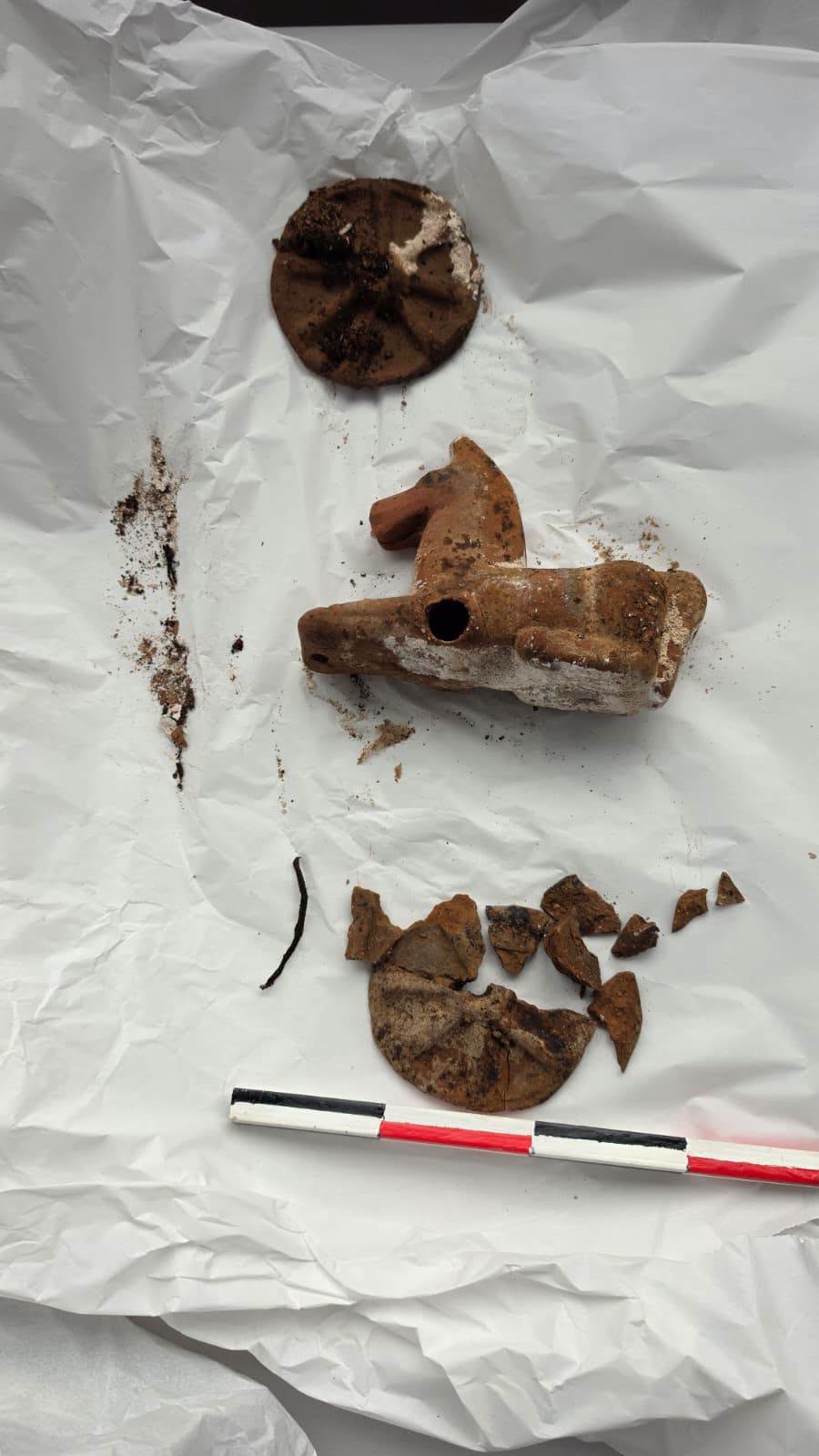
 On Tuesday, October 27th, the lid was raised, revealing the skeletal remains of a young child and exceptionally preserved organic remains including an inner wooden coffin, a burial shroud and floral offerings like leaves folded into small bundles. The coffin is so well-preserved its side panels are complete with their dovetail joints. Laid to rest with the baby were several bronze objects, coins and two clay toys: a horse on wheels and a rattle shaped like a rooster. Both toys have painted features and decoration surviving on the surface. The rooster still contains small objects that rattle when you shake it.
 The child was wearing bronze bracelets and two bullae pendants on a necklace. Bullae were usually worn by Roman boys, but the sex won’t be determined until the bones are thoroughly examined. The age is also to be determined, as despite the size of the sarcophagus, the rattle suggests a younger child than a four-year-old. The high quality of the sarcophagus and finery it contained indicate the child was from a family of means.
* This article was originally published here


No comments:
Post a Comment