
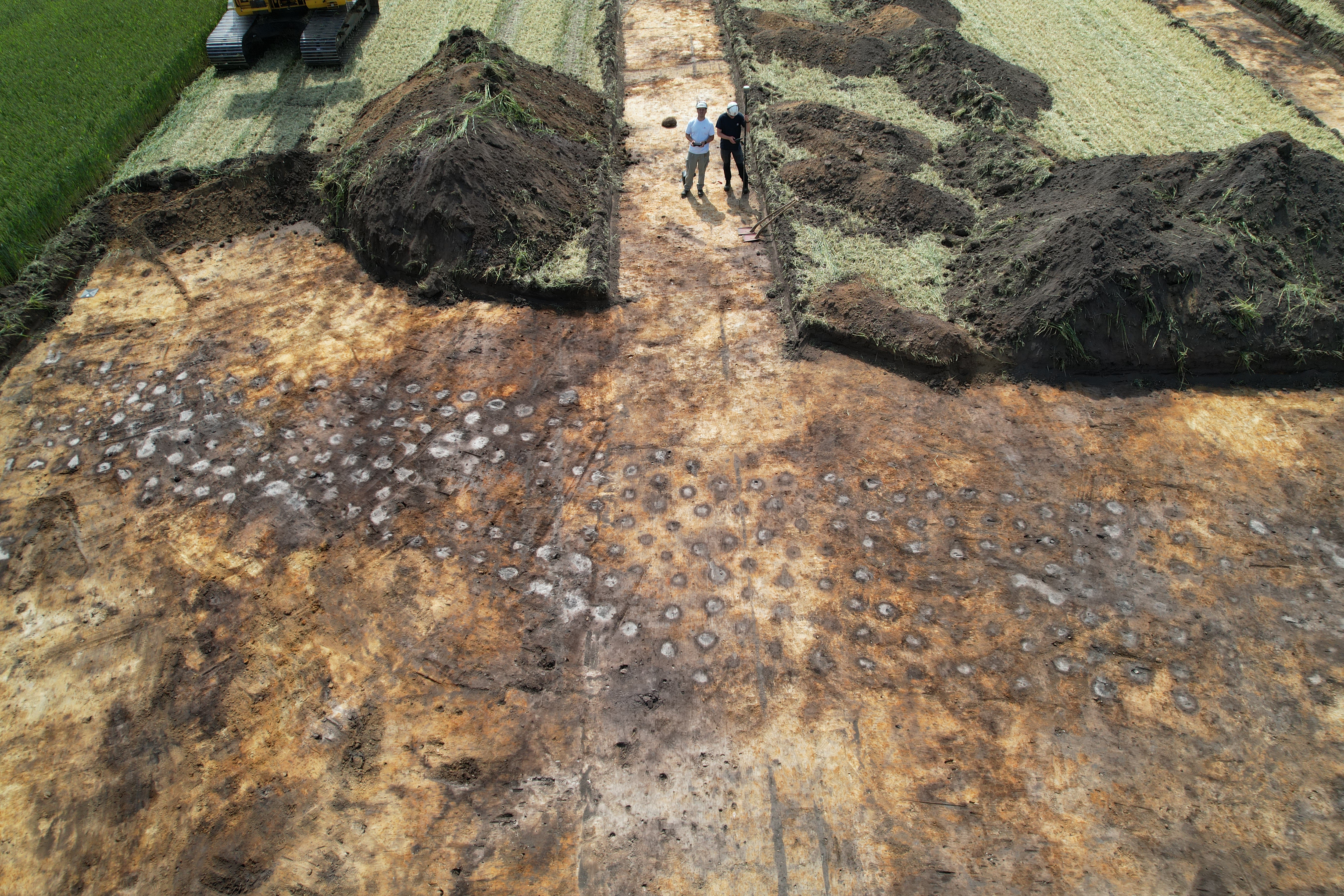
A team of archaeologists from the Museum Vest were investigating the site of planned road expansion when, in a field near Schæfergårde, they discovered a long stretch of closely-spaced postholes. They aren’t arranged as postholes for dwellings are. These were likely left by pointed wooden stakes that formed a defensive palisade. It crossed the Drivvejen, an ancient road that was the main artery through Western Jutland, and archaeologists hypothesize that it was built to stop an invading army coming from the north.
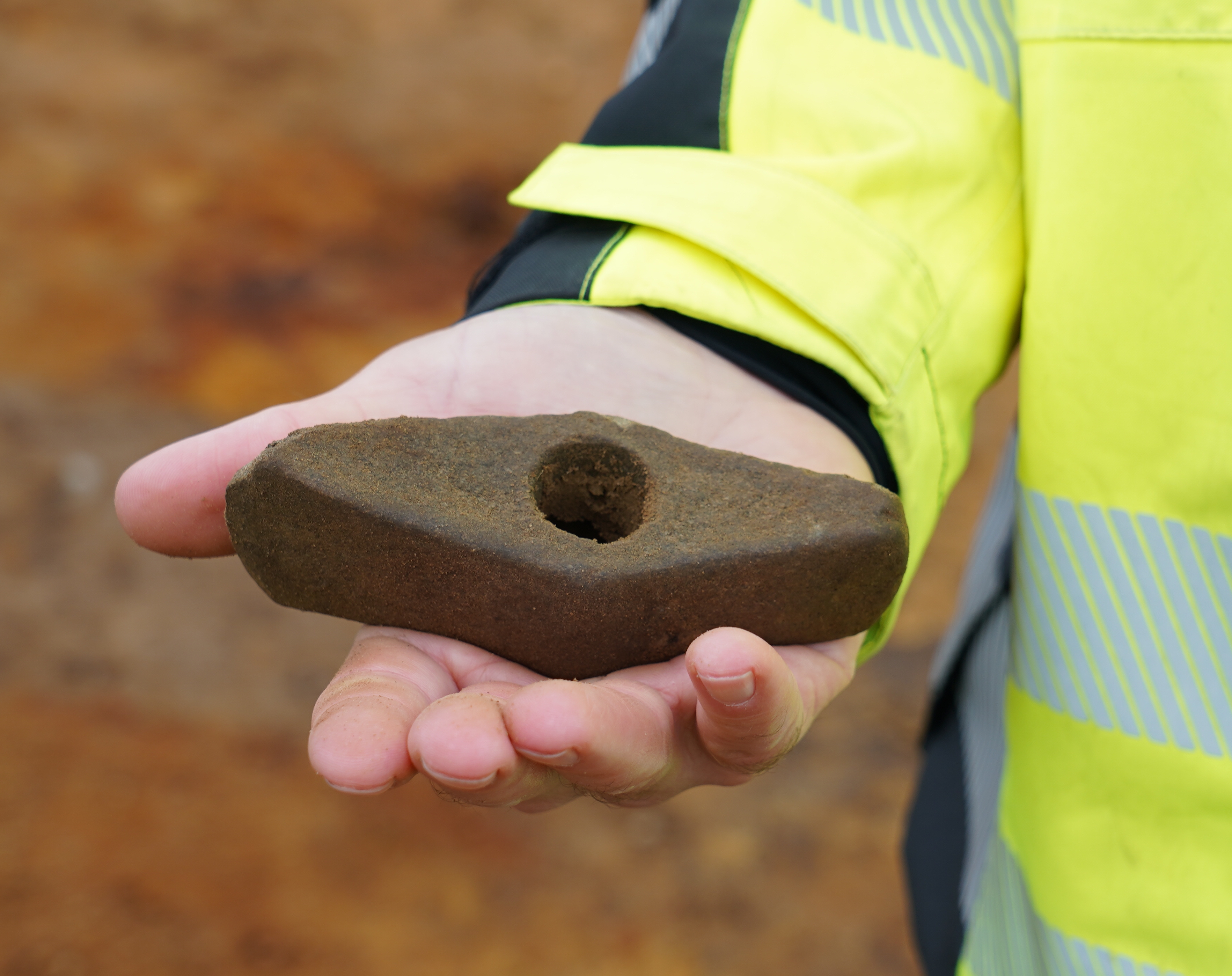
The team is still excavating the hole belt. They hope to find out more about who built it and who they were fending off.
Museum Vest will continue its investigations throughout the rest of the autumn, including at a number of burial mounds where archaeologists have also found several urns. They hope that the upcoming investigations can add even more pieces to the story of the area’s prehistory.
* This article was originally published here

No comments:
Post a Comment