
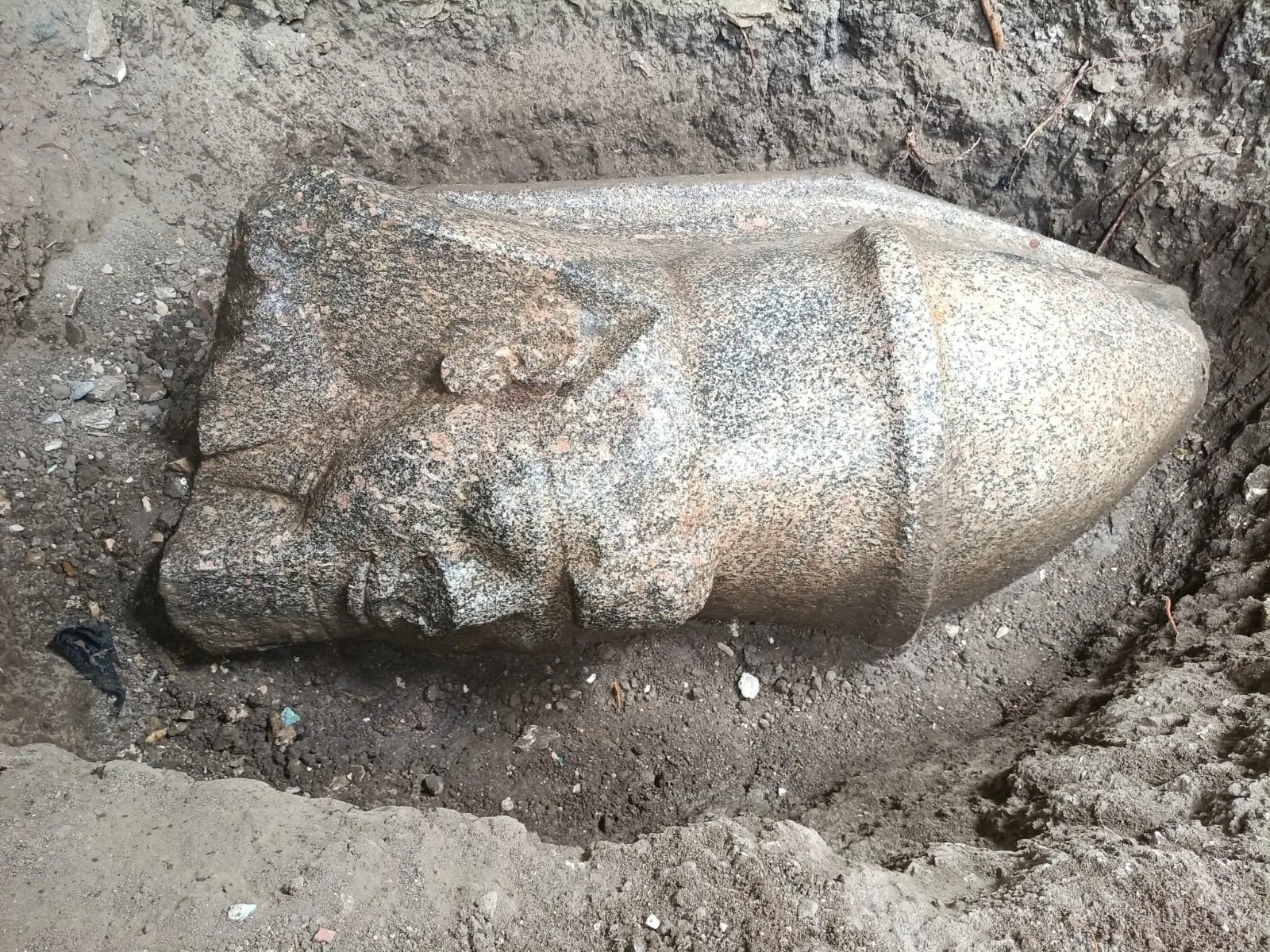
The farmer uncovered the pink granite block with hieroglyphic inscriptions at his property in Behbeit El Hagar, in the Gharbia Governorate. He reported the find and after local heritage officials confirmed it was of archaeological significance, Egypt’s Supreme Council of Antiquities arranged an emergency excavation.
The first artifact unearthed was a colossal head of Ramesses II. The pharaoh wears the double crown of Upper and Lower Egypt, but explicit confirmation of his identity came from a fragment of the dorsal pillar which was inscribed with the pharaoh’s Horus name “Horus Ka Nakht Mery Maat.” The head is 5.25 feet high, which suggests the full statue was approximately 28 feet high.
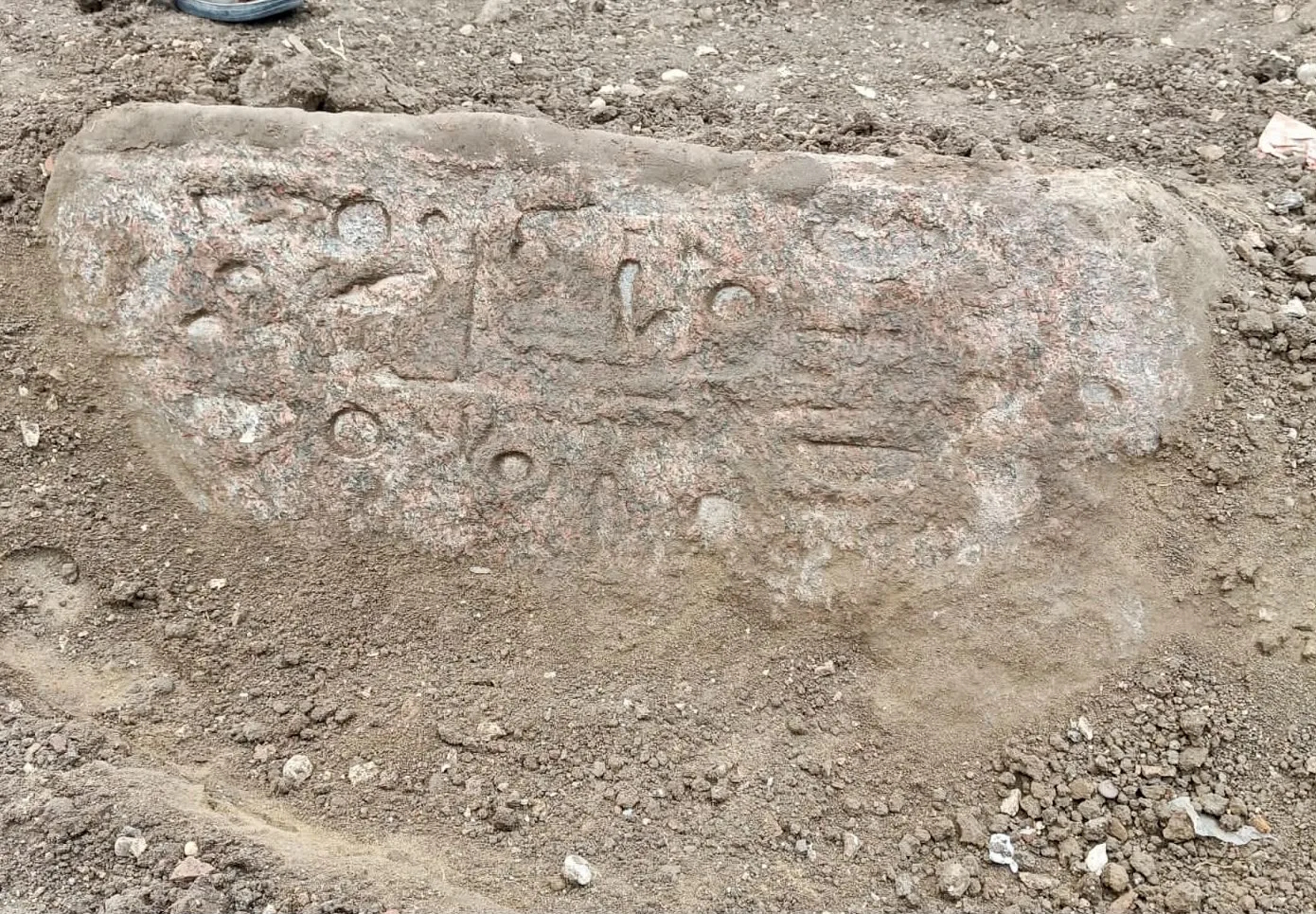
The finds are still being studied, and excavations are continuing. Archaeologists say further work could help establish how the statues relate to one another and to the site’s ancient buildings.
Behbeit El Hagar is already known for the remains of a major temple dedicated to Isis, as well as granite architectural blocks. The new discoveries add to evidence of the area’s importance in ancient Egypt, and began with one resident choosing to report a stone rather than leave it unnoticed.
* This article was originally published here

No comments:
Post a Comment