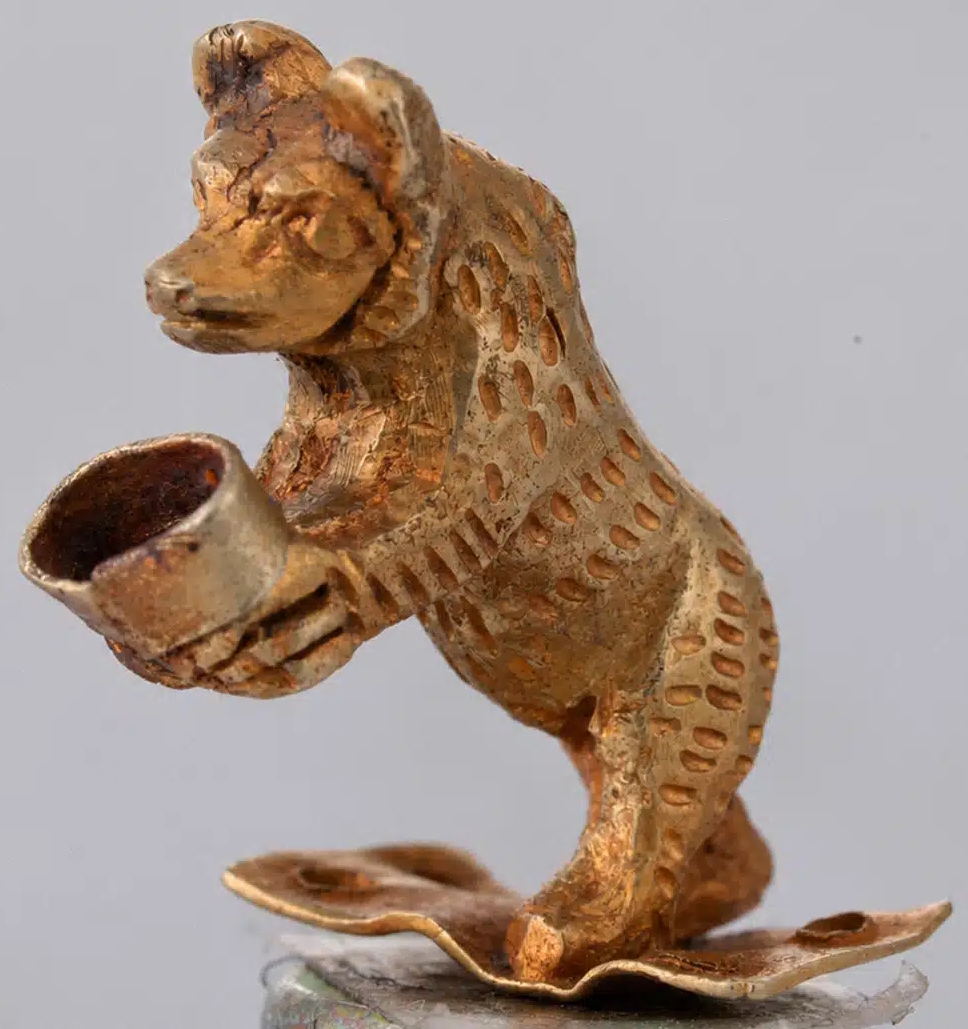
 A unique gold bear ornament has been discovered in a burial mound in Almaty, Kazakhstan, from the Saka period, dating back to the 4th or 3rd centuries B.C.
“The sculptural bear figurine is unique in the context of Kazakhstan. No comparable artefacts have previously been discovered. This find makes it possible to trace cultural parallels across the Eurasian region, stretching from the Black Sea region to the Altai,” said Lyazzat Sagyndykova, Director of the Almaty City Museums Association.
 The little bear is made of cast gold and stands on his hind legs, holding a vessel in both front paws. He is mounted on a plate with perforations on each corner suggesting it was originally attached to something. Archaeologists hypothesize that it was sewn into a headdress.
Comparable gold animal figurines have been found on ceremonial headdresses of the Saka culture, nomadic peoples who inhabited the Eurasian Steppe from the 9th century BC to the 5th century AD.. A gold argali (a wild sheep) was sewn to the headdress of the Golden Warrior, a Saka royal buried in ceremonial armor in the Issyk Kurgan 30 miles east of Almaty. A gold snow leopard found at the Kok-Kainar burial site in 2014 also decorated a headdress.
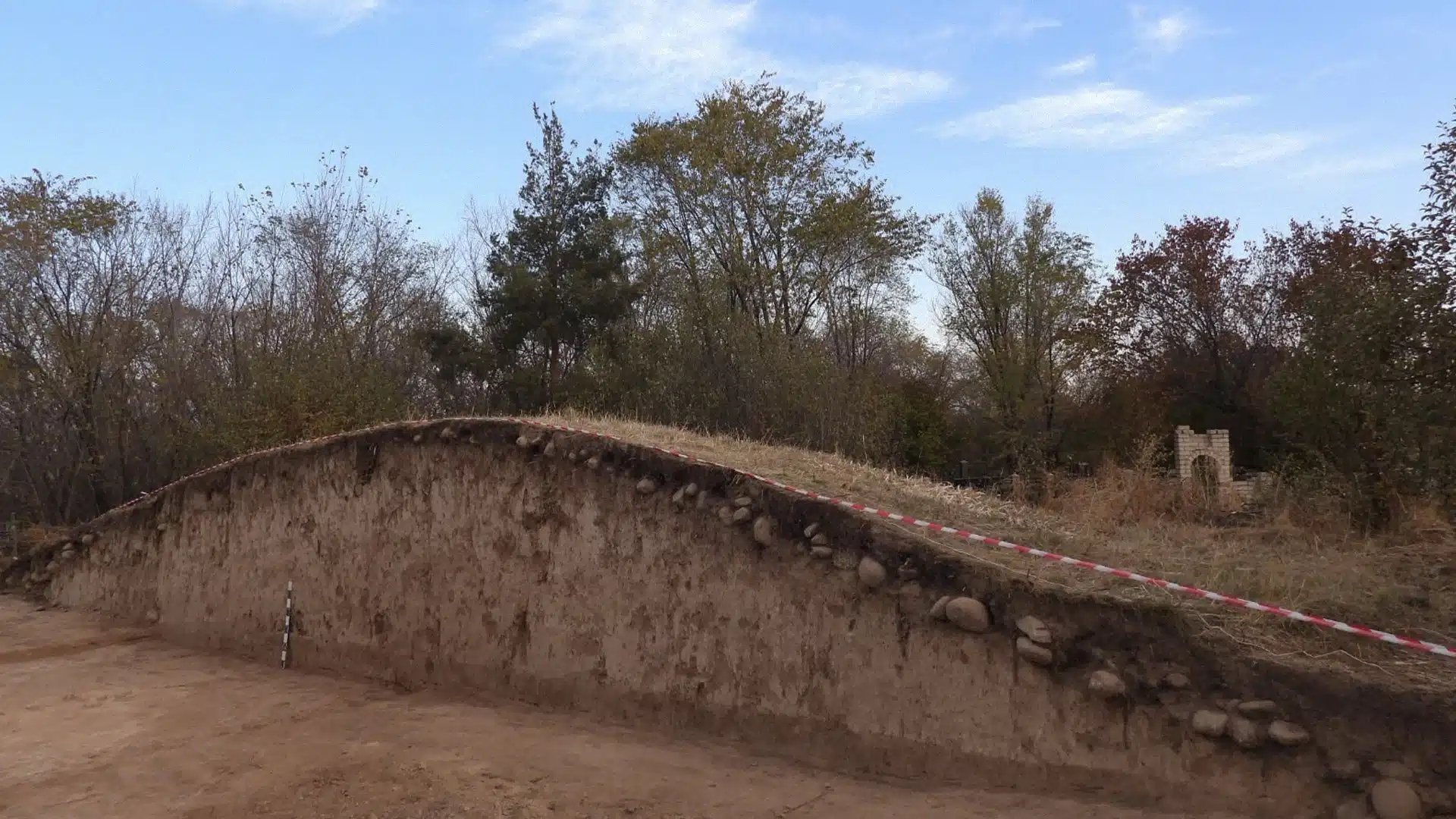
 The tumulus where the bear was found is in the Karagayly burial ground. It is about 25-26 meters in diameter and is currently 2.5 meters high at the highest point, but would originally have been larger. It was looted in antiquity, leaving behind a crater three meters wide, but the thieves missed the little gold ursine treasure.
 An unusually large number of human remains were found in the kurgan. Typically a tumulus this side would have contained the remains of one or two people at most, but bones from at least four adults and three children have come to light, and the excavation isn’t over yet. Archaeologists also found fragments of Saka-era pottery. The remains and objects were scattered around the burial site, presumably by the looters.
When the excavation is complete and all the artifacts documented, cleaned and conserved, a selection of the most significant objects discovered in the kurgan will go on display at the Almaty Museum.
* This article was originally published here




No comments:
Post a Comment