WHAT’S HOT NOW

GOPAL KRISHNA SAD SONGS 003

GOPAL KRISHNA SAD SONGS 002

GOPAL KRISHNA SAD SONGS 001

ಗುರುವಾರ ಕೇಳಿ ಶ್ರೀ ರಾಘವೇಂದ್ರ ರಕ್ಷಾ ಮಂತ್ರ

Wednesday, 18 November 2026

Update: Northern Ireland bog body was a woman

The body that was discovered in a bog in Bellaghy, County Derry, Northern Ireland, in 2023 has been subjected to a coroner’s inquest. In a first of its kind investigation, Coroner Joe McCrisken examined a 2,000-year-old bog body at the Ulster Museum in Belfast. The archaeological inquest has revealed that the deceased, originally believed to have been a teenaged boy, was a young woman between 17 and 22 years old when she died. She has been officially named Ballymacombs More Woman.

In a first of its kind investigation, a coroner’s investigation of a 2,000-year-old bog body has been held at the Ulster Museum in Belfast. The archaeological inquest has revealed that the deceased, originally believed to have been a teenaged boy, was a young woman between 17 and 22 years old when she died. She has been officially named Ballymacombs More Woman.

The remains were discovered by a commercial peat extraction crew who reported it to authorities. The police Body Recovery Team were unable to determine whether it was a recent death under their purview, so the Archaeological Unit did a full excavation of the site. Working under a tent to prevent contamination, they recovered leg and arm bones, ribs, shoulder bones, fingers, toes, plus soft tissues including partial skin, fingers, toenails and a kidney.

The initial examination by a forensic anthropologist identified the deceased as a male between 13 and 17 years old. Two years of further investigation and analysis followed, enlisting the expertise of researchers from Ireland, England and Denmark and techniques including micro-CT scanning, digital mapping, 3D imaging and radiocarbon dating.

The expert evidence and results of the two-year study were presented at the coroner’s investigation. They found that the initial assessment was wrong about her sex. Cut marks on her cervical vertebrae show that she was intentionally decapitated in the bog. No skull was found, so her head was likely removed after she was killed. Estimates of her height before decapitation indicate she was about 5’6″ tall.

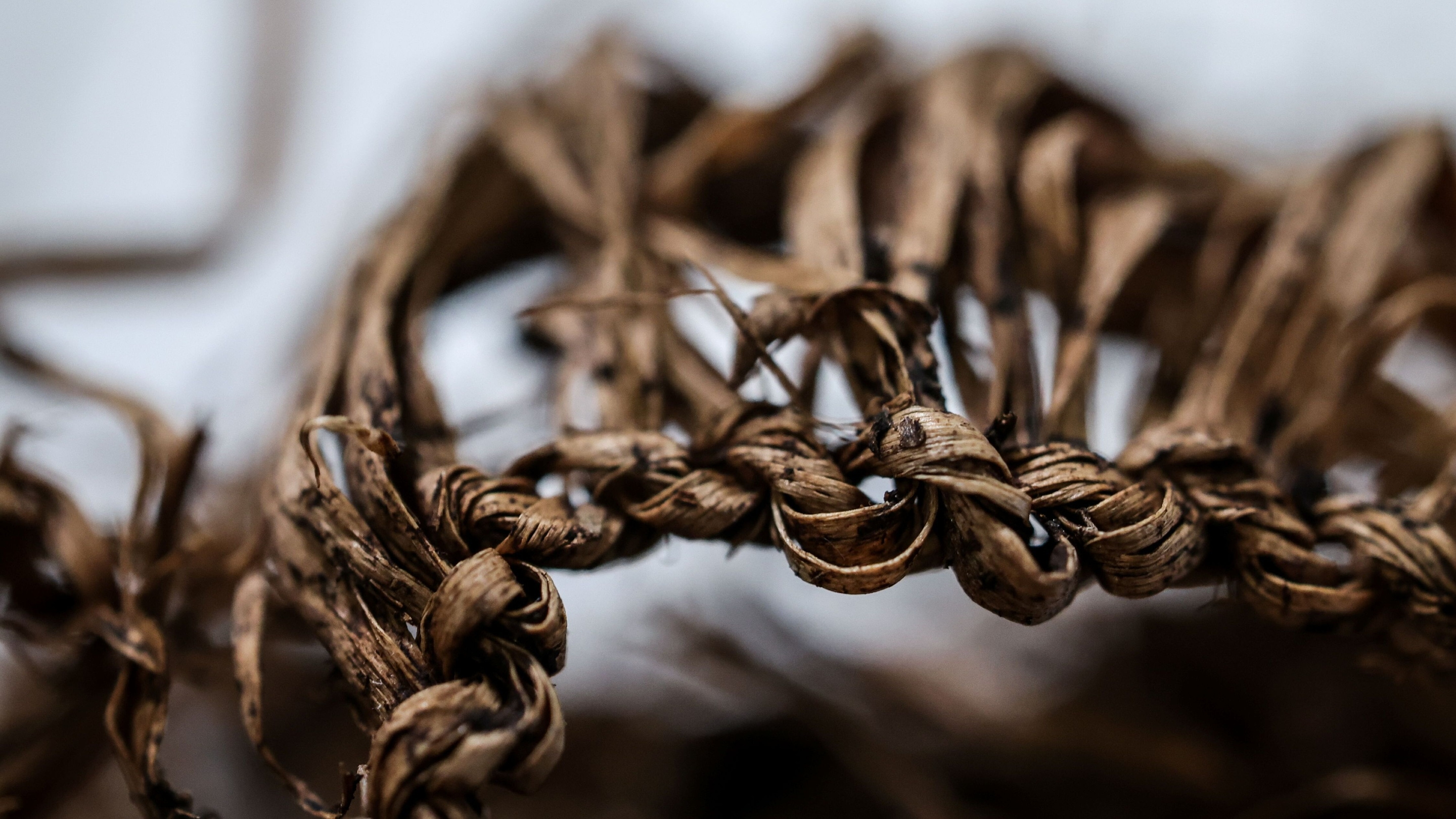
Isotope analysis found that her diet was seasonal. She ate what was available at any given time of the year. Peat samples taken at the find site revealed that 2,000 years ago there were woods around the bog. She was found with a woven plant fiber that suggests certain plants were farmed in the area

Archaeologists believe this was a ritual killing or sacrifice, examples of which have been found in Denmark, Germany and Ireland. Methods of dead include beheading, poisoning and garrotting. The victims have almost always been men, however, which makes this find exceptional. It is also the first bog body discovered in Northern Ireland.

The coroner’s investigation was attended by more than 60 people, many of them experts in fields related to the find, plus 20 members of the Bellaghy Historical Society. The members of the Bellagy Historical society have given her a more personal appellation: Áine. They gathered to witness the investigation not just out of scientific curiosity, but to pay their respects to an ancestral member of the community.


* This article was originally published here

Tuesday, 17 November 2026

Copper scepter head found in Armenia

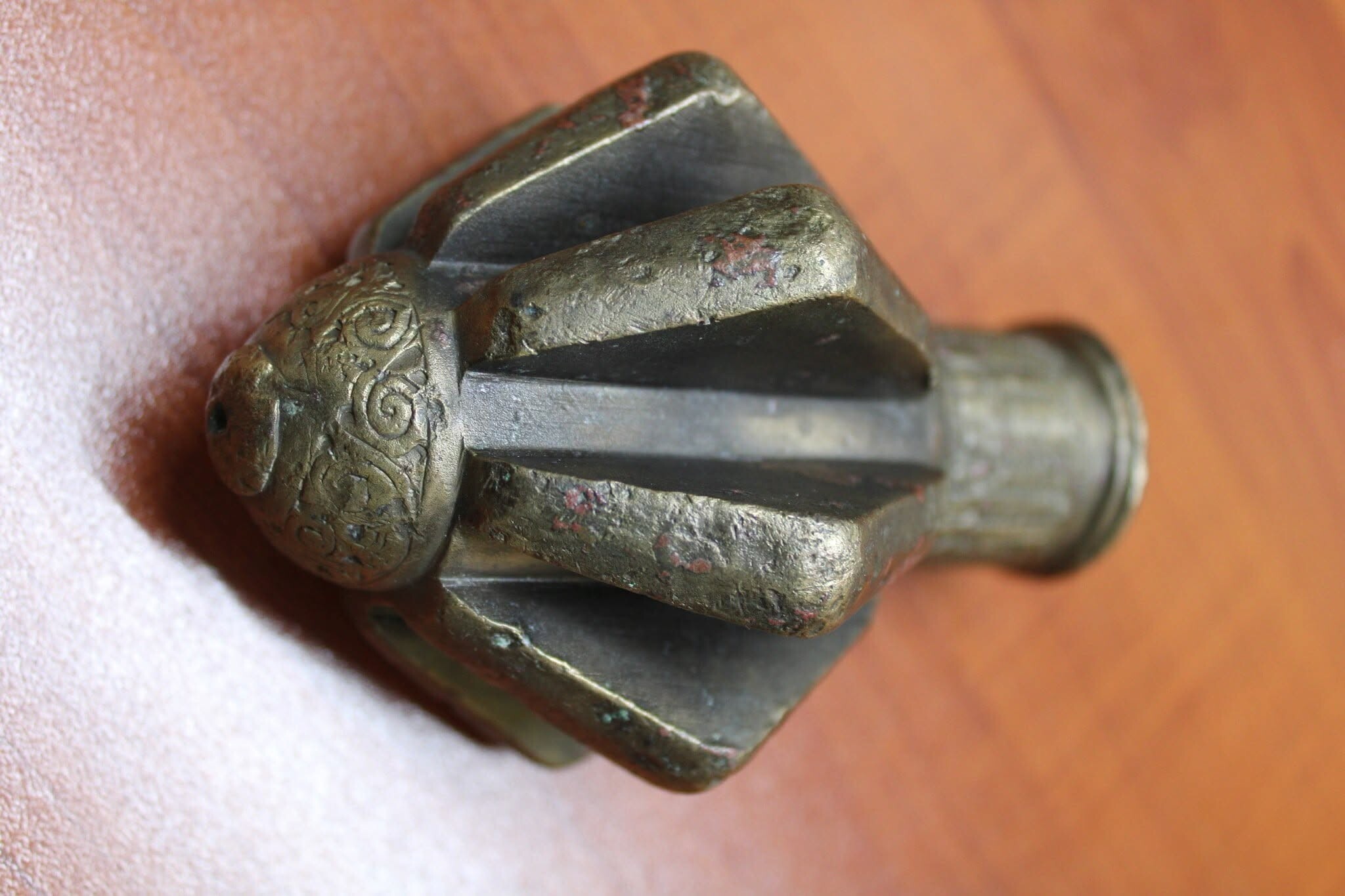
A rare medieval copper scepter head has been discovered in Kapan, southeast Armenia. Similar to a modified mace, the scepter is decorated with swirl patterns on the top and eight flattened blades. It was a symbol of royal power from a time when Armenia had vassal kingdoms under the central monarch. It dates to the 10th or 11th century.

The Kapan area was part of the territories of the princely Siunia dynasty. There was a small settlement at the site of what would become Kapan by the 5th century, and a fortress was built nearby in the 4th century. Kapan rose to major prominence in the 10th century when it became the capital of the self-style Kingdom of Kapan. It was a vassal of the Bagratid dynasty rulers of Greater Armenia, and survived a little more than 100 years, from 987 to 1170.

According to Stepanos Orbelian, a medieval Armenian historian, bishop, and a prominent member of the noble Orbelian dynasty, the capital of the Kingdom of Syunik was destroyed in 1126 under the command of Amir Harun as a result of Seljuk invasions, but the kingdom, thanks to the already impregnable fortress of Baghaberd, survived until 1170, being the last independent Armenian kingdom of Greater Armenia.

The first systematic archaeological investigations at the site of Old Kapan an environs began only in 2024. They found evidence of powerful fortifications, double-layered walls and a larger defensive tower near the entrance to the fortress.

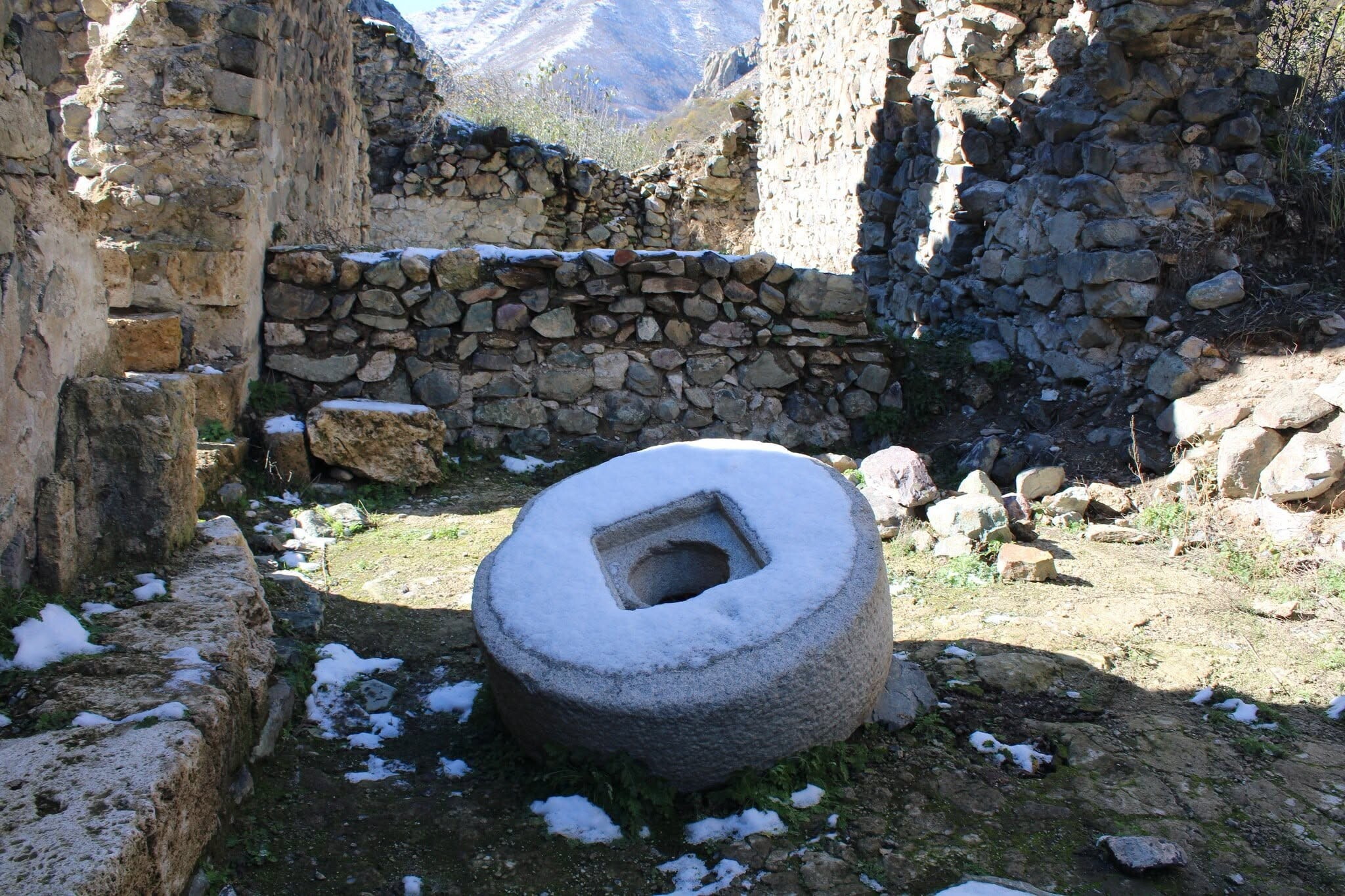
Last year’s excavation uncovered the remains of foundations and column bases from a three-aisled basilica dating to the 4th or 5th century. Near the church, archaeologists found a stone oil press four feet in diameter. This year the team uncovered a furnace of polished stone that likely heated the water of a public bath at the site.

The scepter has been transferred to the Kapan Geological Museum for conservation and display.


* This article was originally published here
Monday, 16 November 2026

‘The Sound of Music’ premieres on Broadway

On November 16, 1959, “The Sound of Music” opens on Broadway, becoming a smash success from the first night.

Did a young Austrian nun named Maria von Trapp really take to the hills surrounding Salzburg to sing spontaneously of her love of music? No, but nearly all of the particulars of her 1949 book, The Story of the Trapp Family Singers, were ignored by the creators of the Broadway musical her memoir inspired. And while the liberties taken by the show’s writers, Howard Lindsay and Russel Crouse, and by its composer and lyricist, Richard Rodgers and Oscar Hammerstein II, caused some consternation to the real von Trapp and to her stepchildren, those liberties made for theater gold.

With a creative team made up of Broadway legends and a star as enormously popular and bankable as Mary Martin, it was no surprise that “The Sound of Music” drew enormous advance sales. But audiences continued to flock to “The Sound of Music” despite sometimes tepid reviews, like the one in The New York Times that said the show “lack[ed] the final exultation that marks the difference between a masterpiece and a well-produced musical entertainment.” Reviewer Brooks Atkinson did, however, single out the “affecting beauty” of the music from “The Sound of Music” as saving it from a story verging on “sticky.”

Sticky or no, “The Sound of Music” was an instant success, and numerous songs from its score— including “Do Re Mi,” “My Favorite Things” and “Climb Every Mountain”—quickly entered the popular canon. Indeed, the original cast recording of “The Sound of Music” was nearly as big a phenomenon as the show itself. Recorded just a week after the show’s premiere on this day in 1959 and released by Columbia Records, the album shot to the top of the Billboard album charts.

The musical was adapted for the screen six years later. Julie Andrews turned in an Oscar-nominated performance as Maria for the 1965 film, which won five Oscars including Best Picture and Best Director for Robert Wise.

The post ‘The Sound of Music’ premieres on Broadway appeared first on HISTORY.


* This article was originally published here
Sunday, 15 November 2026

Iron Age frog mass grave explained

Scientists at Bournemouth University and Museum of London Archaeology have discovered the reason 8,000 frog and toad bones were found buried in a 45-foot-long trench at an Iron Age settlement near Cambridge in the UK.

The bones were unearthed during highway improvement works between 2016 and 2018. The trench was located near a Late Iron Age (400 B.C. – 43 A.D.) roundhouse, so the frogs were thought to have been buried between that range. It was a perplexing find. Frog bones had been found before in archaeological contexts, but only as an individuals. Mass burials of animal remains had been found before in archaeological contexts, usually from ceremonial feasting, but they were the usual food animals – livestock like cattle and sheep or chickens – not hundreds of tiny amphibians.

Archaeologists eliminated the possibility that they had been cooked in a feast because there were no cut marks or evidence of heating. Grain found nearby indicates the settlement grew crops that would attract amphibians, but it would take a Moses-level pestilence to explain the numbers. Another possibility was migrating frogs becoming trapped in the ditch on their way to breeding waters, or freezing to death in a sudden temperature drop while seeking shelter in the mud.

Well, it turns out all of those ideas were wrong. The frogs were eaten, but not by humans, and hundreds of years after the roundhouse was built.

After comparing the damage to the frog bones to previous studies, Dr Clarkson found they had been eaten by birds of prey, with short-eared owls and hen harriers being the most likely suspects.

But the story didn’t end there. Onsite archaeological evidence shows the ditch filled within a single year and therefore this still left the question of how so many bones appeared in such a short period of time. So, the Bournemouth team investigated further.

By measuring the size of the frog humeri (arm bones) – a pioneering new method of analysis – they discovered most of the frogs died young, having been eaten in the winter of their first year of life. Radiocarbon dating by the University of Vienna also showed the remains dated back 1700 years to Roman period.

The Fen waters were retreating in this valley in the Roman period, creating ideal conditions for the frogs to breed in – leaving an abundance for the birds to eat.

Humans were the owls’ accomplices in the mass slaughter. The area had previously been wooded, but in the Late Iron Age, people gradually felled the trees to make more land available for grazing their livestock. Short-eared owls hunt on grasslands, so the frogs were much more exposed with fewer trees to shelter them.

“We don’t often get an owl’s eye view of what it was like in the past from archaeological sites,” said Dr Paul Clarkson of Bournemouth University who led the study.

“The mystery of these frogs has been solved – a feast of frogs that were eaten and their bones left behind by a group of owls. These bones not only tell us about life for people living near the Roman Fens, but they also give insights into the natural world – what wild animals were getting up to in the past, and what life was like for them,” he added.


* This article was originally published here

Saturday, 14 November 2026

Rare artifacts from Viking double burial found on Isle of Man

A remarkable combination of rare and unique artifacts likely from a Viking double burial has been discovered on the Isle of Man. More than 1,100 years old, the objects attest to the lives and deaths of some of Man’s earliest Viking settlers.

The artifacts were discovered by a metal detectorist. They consist of three bronze brooches, a sword, a bronze ladle, an axe head and a set of trading weights and scales. While no human remains were found, the type of artifacts, particularly the jewelry and weapons, are characteristic of male and female burials from the Viking Age.

The brooches are beautifully decorated. Two of them are a matched pair of concave oval brooches decorated with interlocking animal motifs. Known as skålspænder (scoop brooches), this type of brooch was used to fasten apron dresses at the shoulder. They were found in women’s graves. Only one other pair has ever been found on the Isle of Man, and the newly-discovered pair is about 50 years older, so it’s evidence of the earliest Viking women’s grave on the island.

The third brooch is unique on the archaeological record of the Isle. It is round with a wide outer border, an inner band decorated with spirals and a central boss of colored glass. It was originally gilded, although only traces remains.

The sword found in the assemblage is also elaborately decorated. It is broken, likely deliberately as part of the funerary ritual, and about two thirds of it survives. The surviving hilt is decorated with silver inlay and twisted silver wire. Out of the 13 Viking swords found on the Isle of Man, only two others are so richly decorated.

The discovery also provides further evidence of trade and cultural connections across the Irish Sea. Decorated lead weights and fragments of bronze balance scales would have been used to weigh precious metals and coins during trading. The weights are the first of their type found on the Isle of Man.

One weight features a decorative bronze fitting, possibly reused from a small chest or religious object, with an artwork style typical of Britain and Ireland at the time. It offers a fascinating example of how Viking settlers adopted and reused objects from other cultures.

A bronze ladle, possibly used for feasting or ceremonies, is another type of object not previously recorded on the Island. […]

With several objects being the first of their kind found on the Island, the collection offers an important opportunity to learn more about Viking settlement, burial traditions and everyday life.


* This article was originally published here

Friday, 13 November 2026

Bronze Age casting moulds, hoard found in Bavaria

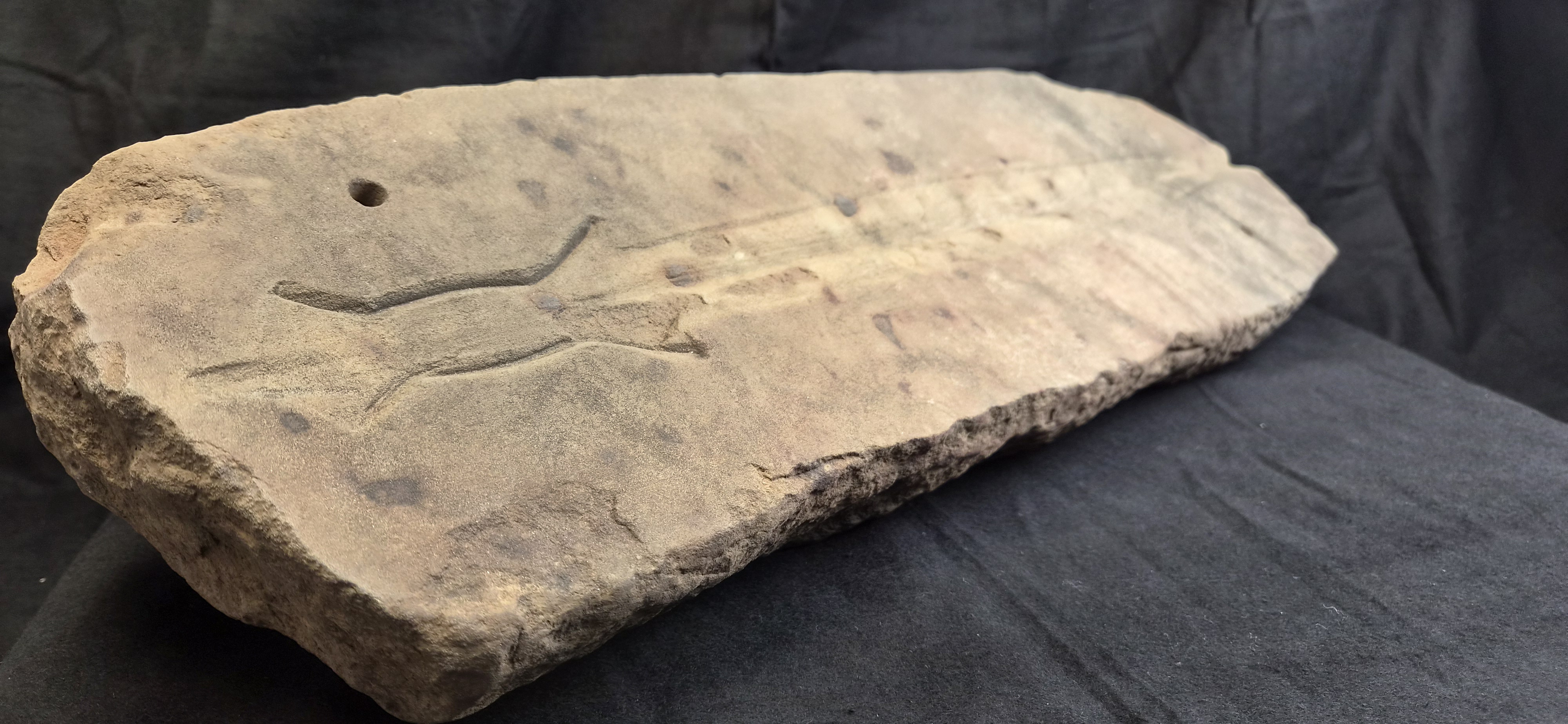
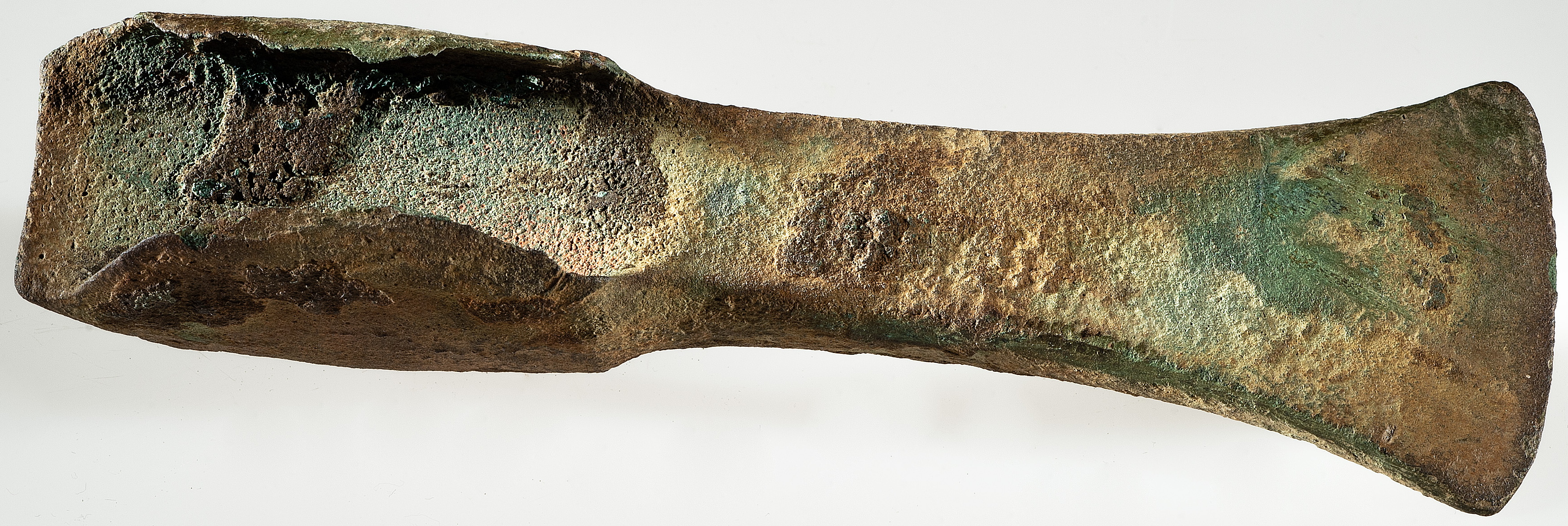
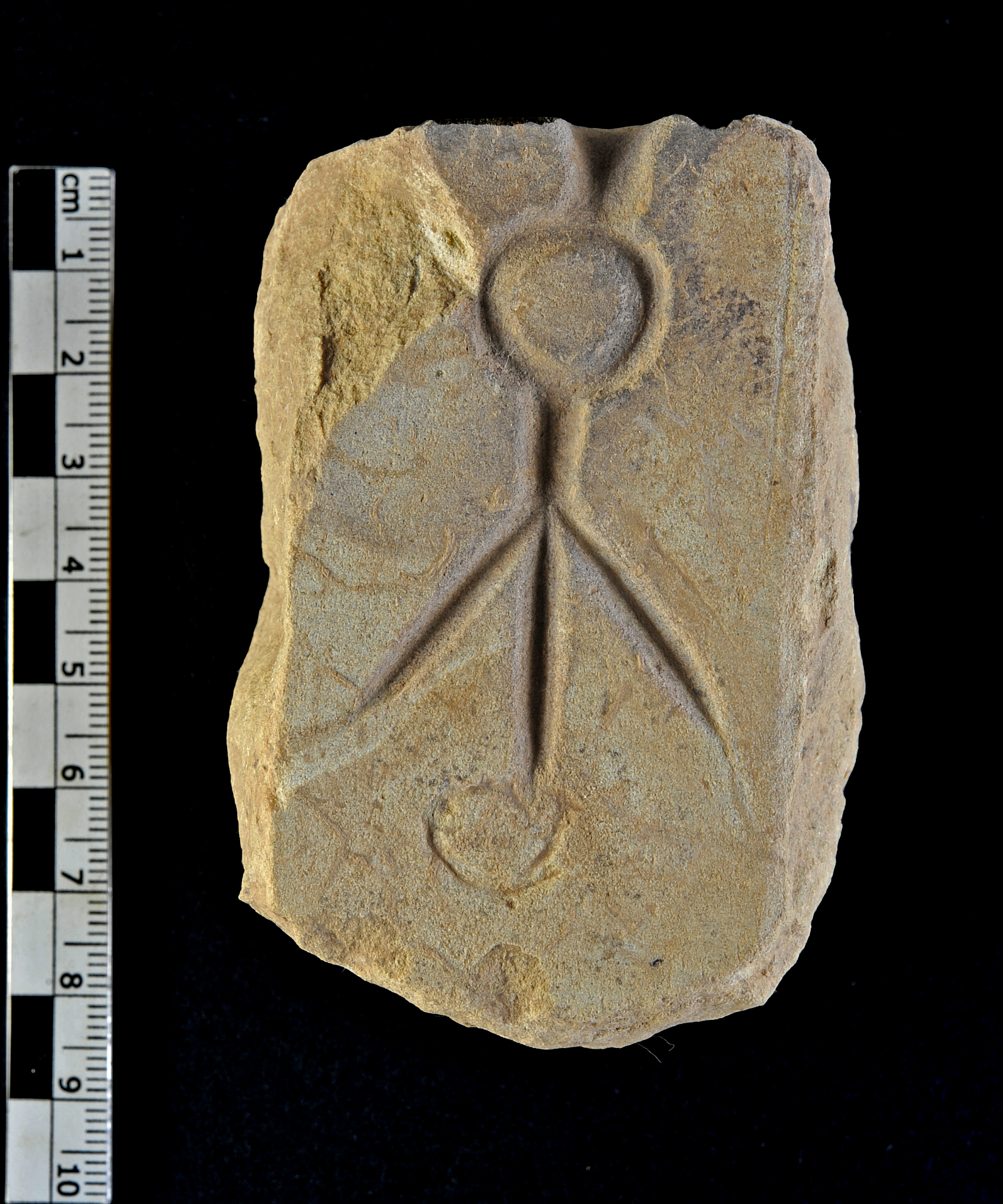
Two rare stone casting molds for a sword and a jewelry pendant from the Bronze Age Urnfield culture (1300-800 B.C.) have been discovered in Großeibstadt, Lower Franconia, Bavaria. The intact half of a mold for a tanged sword is unique on Bavaria’s archaeological record. The second is a mold for a pendant. The objects are evidence that a bronze caster worked his trade at the site around 3,000 years ago.

The casting molds are among the most significant finds reported since the amended Bavarian Monument Protection Act went into effect on July 1, 2023. Before then, any archaeological artifact found in Bavaria was subject to “Hadrianic division,” meaning objects belonged 50/50 to the finder and the landowner. Protection of Bavaria’s cultural heritage had no role in this arrangement.

Under the new law, all archaeological artifacts belong to the state. Finders and landowners are entitled to a reward if the market value exceeds 1000 euros and the object was recovered in keeping with the law. Regional institutions are given the opportunity to apply for transfer of the items based on predetermined criteria.

A second major discovery begun in October 2024 also attests to the success of the new law. A metal detectorist found several bronze objects in a field near Grabenstätt in the Chiemgau region of Upper Bavaria. He followed the law, documenting each find in detail and then reporting them to the Bavarian State Office for Monument Preservation (BLfD).

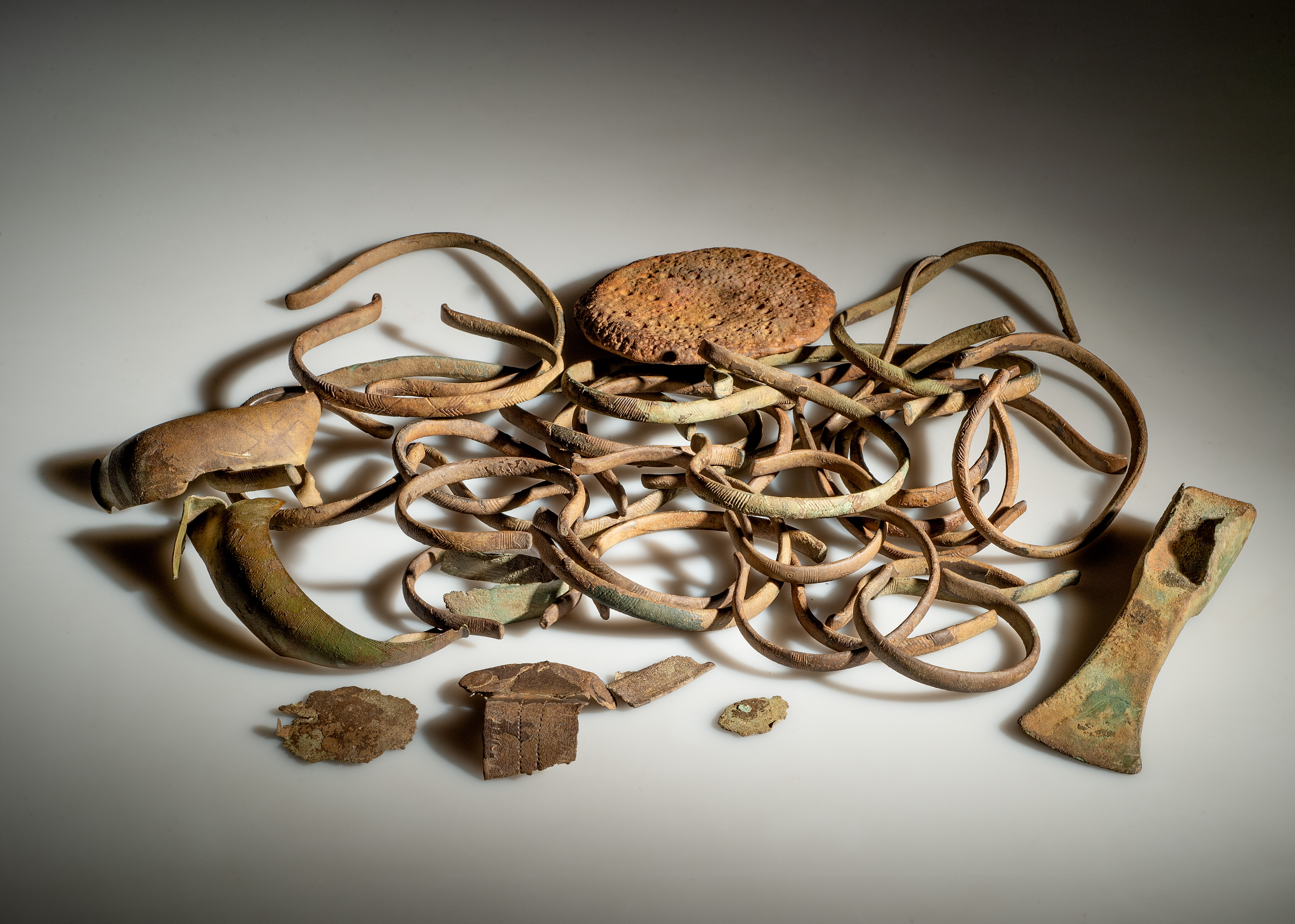
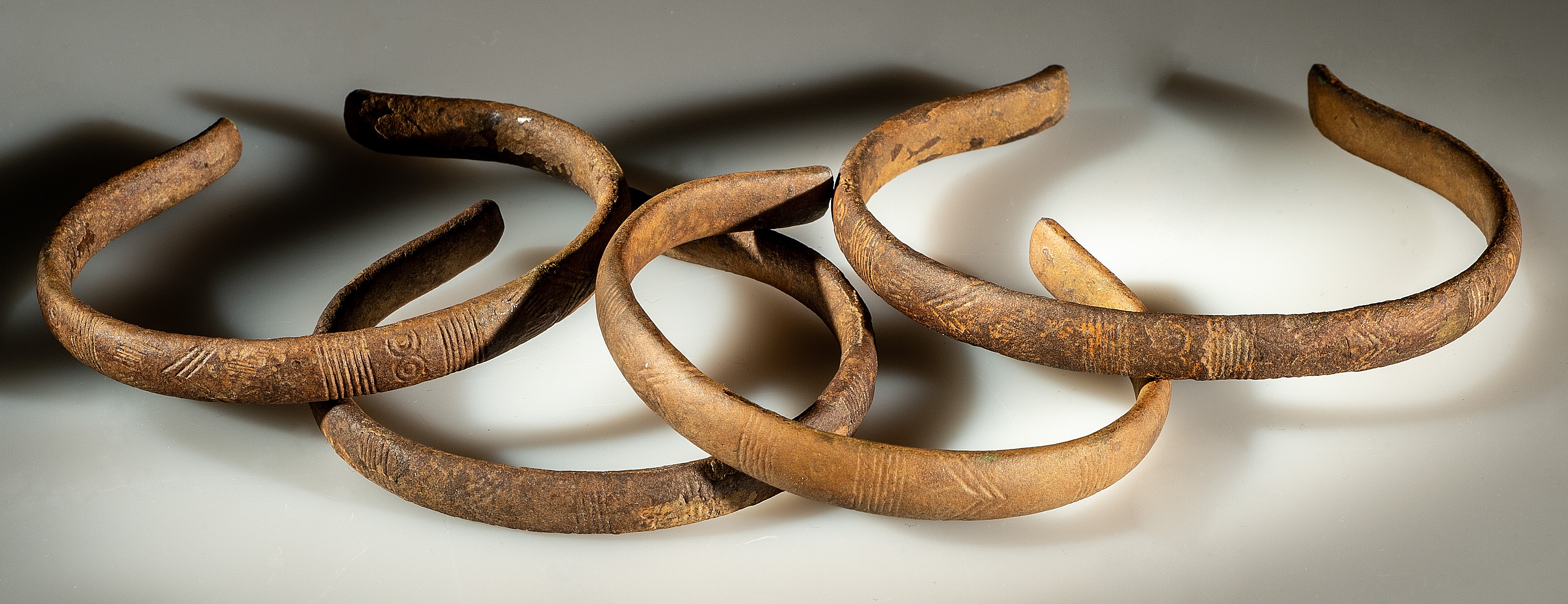
The objects were part of a late Urnfield period (ca. 880–800 B.C.) hoard that was likely scattered by later agricultural work. Throughout 2025 and 2026, the finder, coordinated by the BLfD, surveyed the site, discovering more pieces. The final tally was 52 solid arm and leg rings, two flanged axes, fragments of a sheet-bronze arm ring, parts of at least one bronze cup, and a plate-sized cast ingot (a “cake” of raw metal) were recovered. It was one of the largest and most varied hoard of the period found in southern Bavaria.

Taken together, the casting molds and the hoard attest to the skills of Bronze Age metalworkers in the production of weapons and adornments in Bavaria during the Urnfield period.


* This article was originally published here

Thursday, 12 November 2026

Vandal warrior grave weapons given to museum in Poland

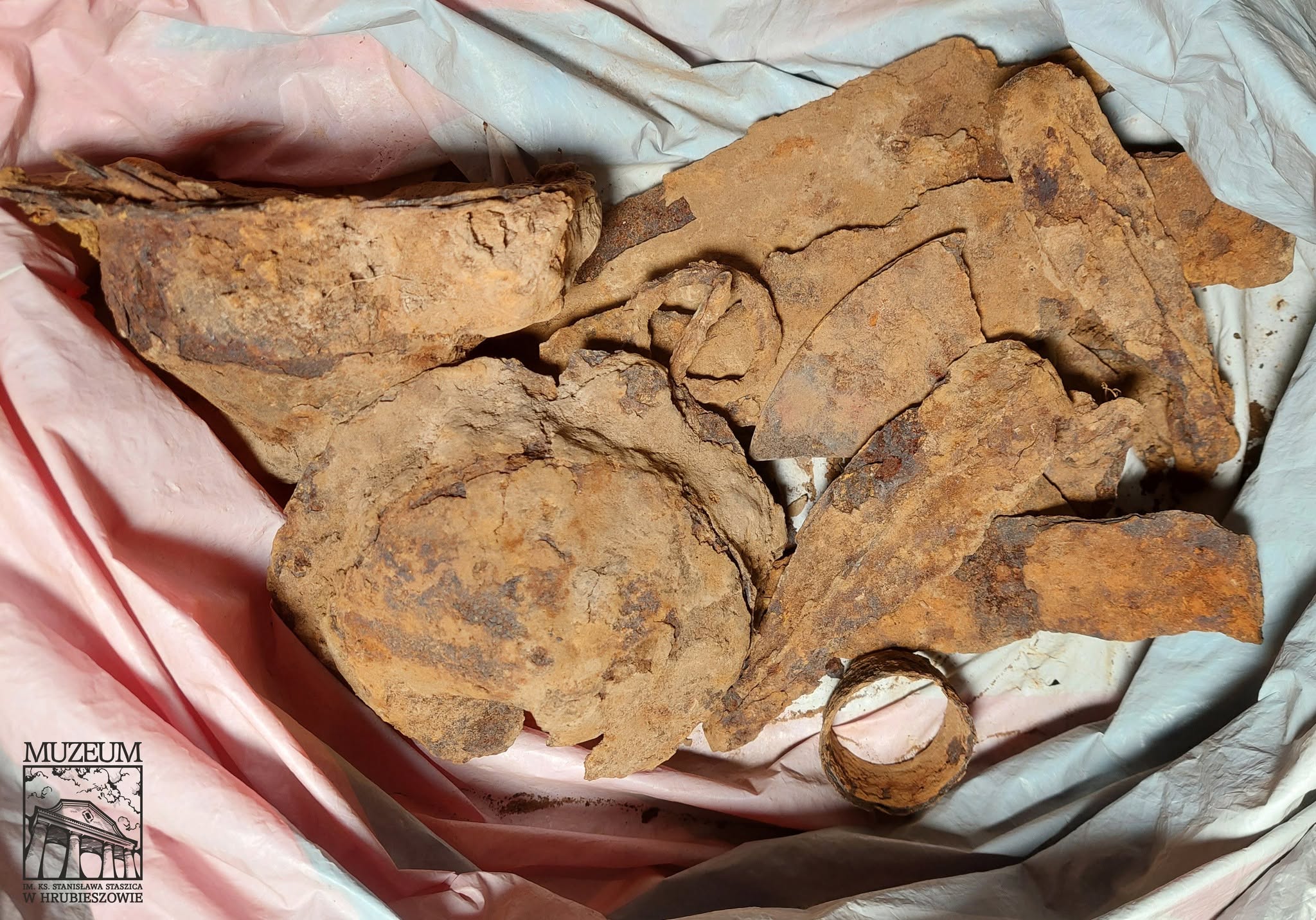
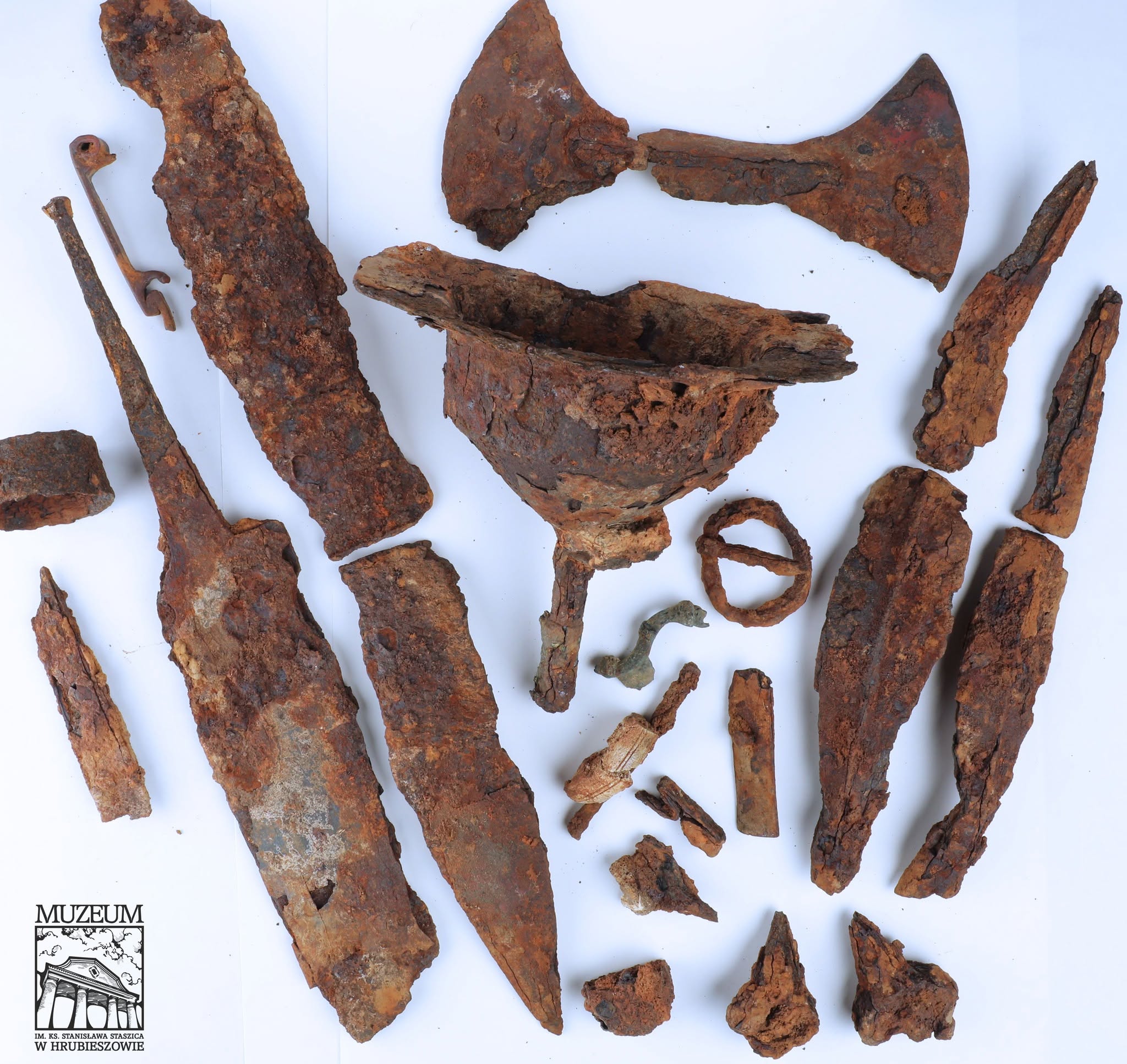
The Father Stanisław Staszic Museum in Hrubieszów, Poland, has received an complete set of Vandal weapons, likely from a cremation burial, that is one of the richest Vandal warrior burials ever found in the region. The assemblage includes a sword, spearpoints, shield fittings, spurs and a bronze fibula.

Buried approximately 2,000 years ago, the group consists of an iron sword deliberately broken into three parts, plus pieces of its scabbard, two spear points, one intact made of iron and the other broken, a shield boss with a sharp protrusion, a shield handle, a helmet with a collar, a dagger, two spurs, a belt buckle, a bronze fibula for closing a cloak. All of these elements, especially the presence of the rare scabbard and spurs, indicate that the deceased was a high-ranking cavalry warrior.

The origin of the find is murky. The collection was delivered anonymously, and the only thing museum officials know is that the artifacts emerged on farmland in a few years ago in the municipality of Werbkowice. They were not recovered at that time, and since then the contents were exposed to damage.

The objects are in poor condition, heavily corroded, and in need of urgent intervention to prevent further deterioration. Specialists have been engaged to conserve the pieces. The process is expected to take months.

The museum plans to verify the location with an excavation next year. For now, researchers believe the objects came from a single grave. There may be others at the site, which would shed light on the assemblage that has been removed from its context.


* This article was originally published here

Wednesday, 11 November 2026

Colleges student finds ancient spear point on field trip

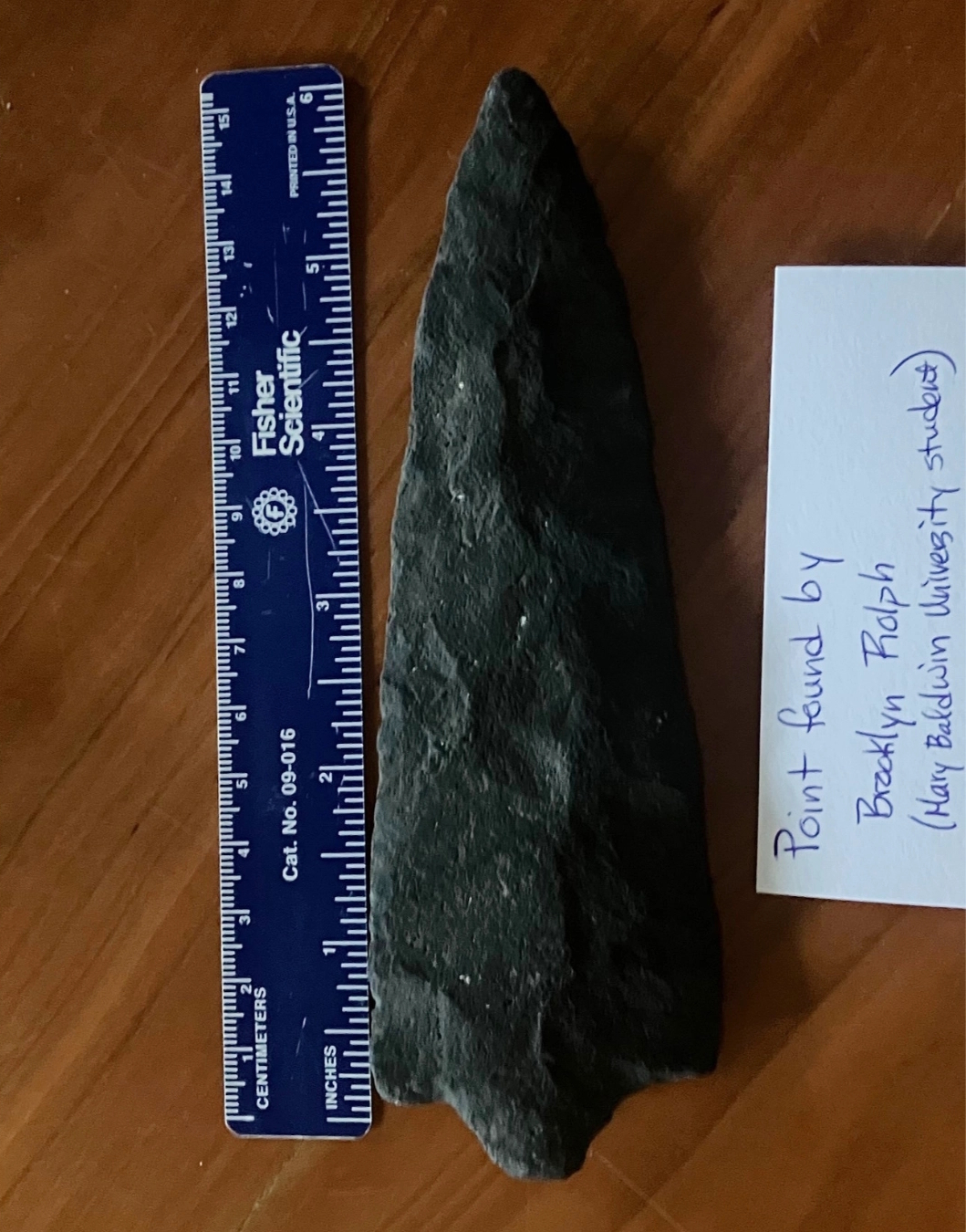
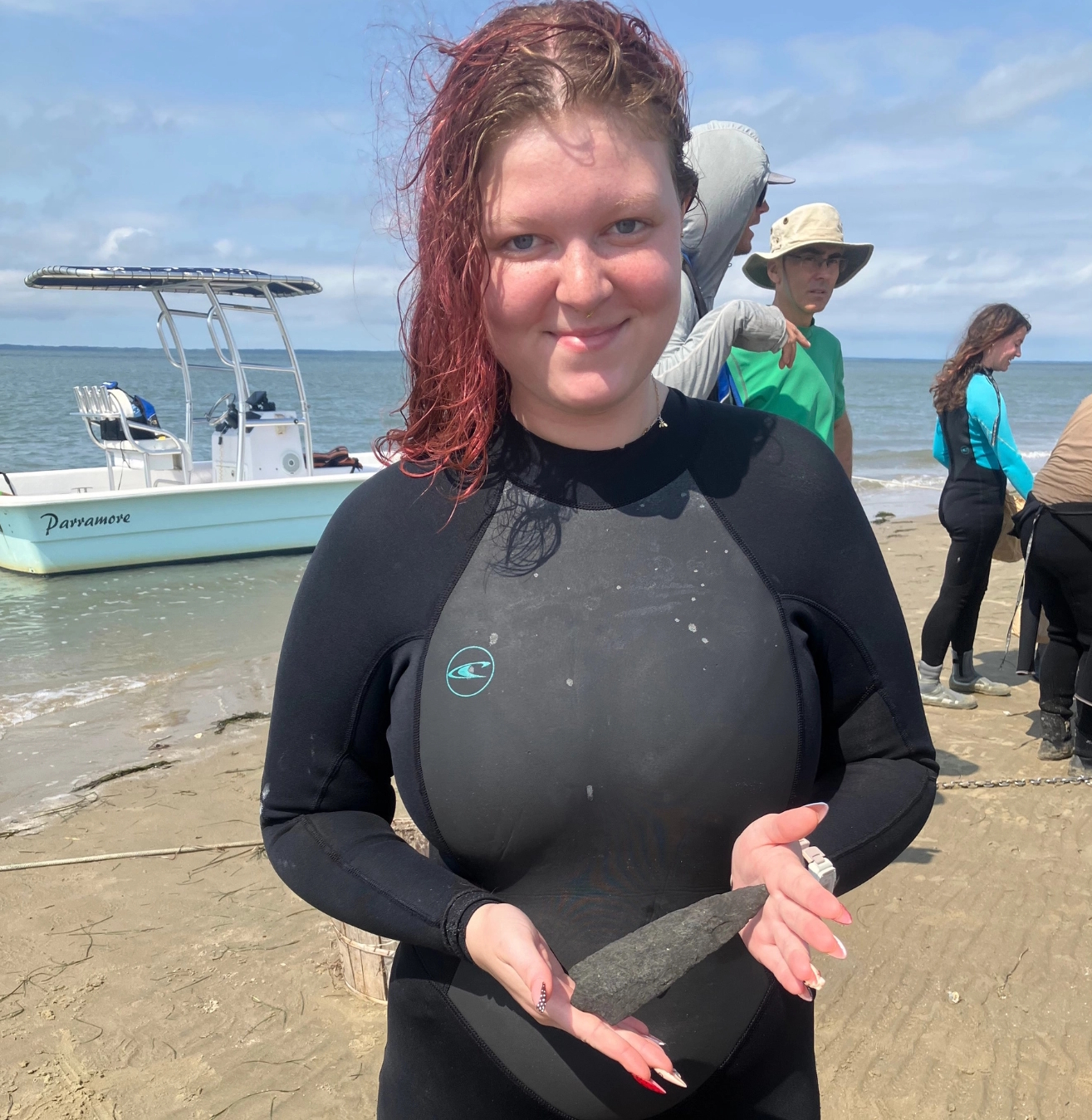
A biology student from Mark Baldwin University in Virginia has discovered a rare Native American spear point while on an ecology field trip to Virginia’s Eastern Shore. The stone tool is about six inches long and is of a type known as a Lehigh/Koens-Crispin point, used by East Coast Native Americans between 3,000 and 4,500 years ago. It is in exceptional condition.

Brooklyn Rolph found the weapon while looking for shark teeth on a barrier island the last day of the trip to the University of Virginia’s Anheuser-Busch Coastal Research Center. High winds delayed the outing, so she only had 40 minutes or so to explore the island.

In the water on the shore of an inlet with the tide coming in rapidly, she spotted a pointy thing she’d be looking for. When she picked it up, she realized there was a lot more of it below the point. She showed it to her professors and they recognized it as an ancient spear point.

Their excitement at the find was tempered by the understanding that Rolph was probably not going to be able to take it home. The island they were exploring is part of a nature preserve owned by the Virginia Department of Conservation and Recreation. She showed the point to the research center’s site director and he confirmed that everything found on the preserve was owned by the state.

The point was transferred to the Virginia Department of Historic Resources for further study.


* This article was originally published here

Tuesday, 10 November 2026

Brewery acquires historic 1832 tipstave

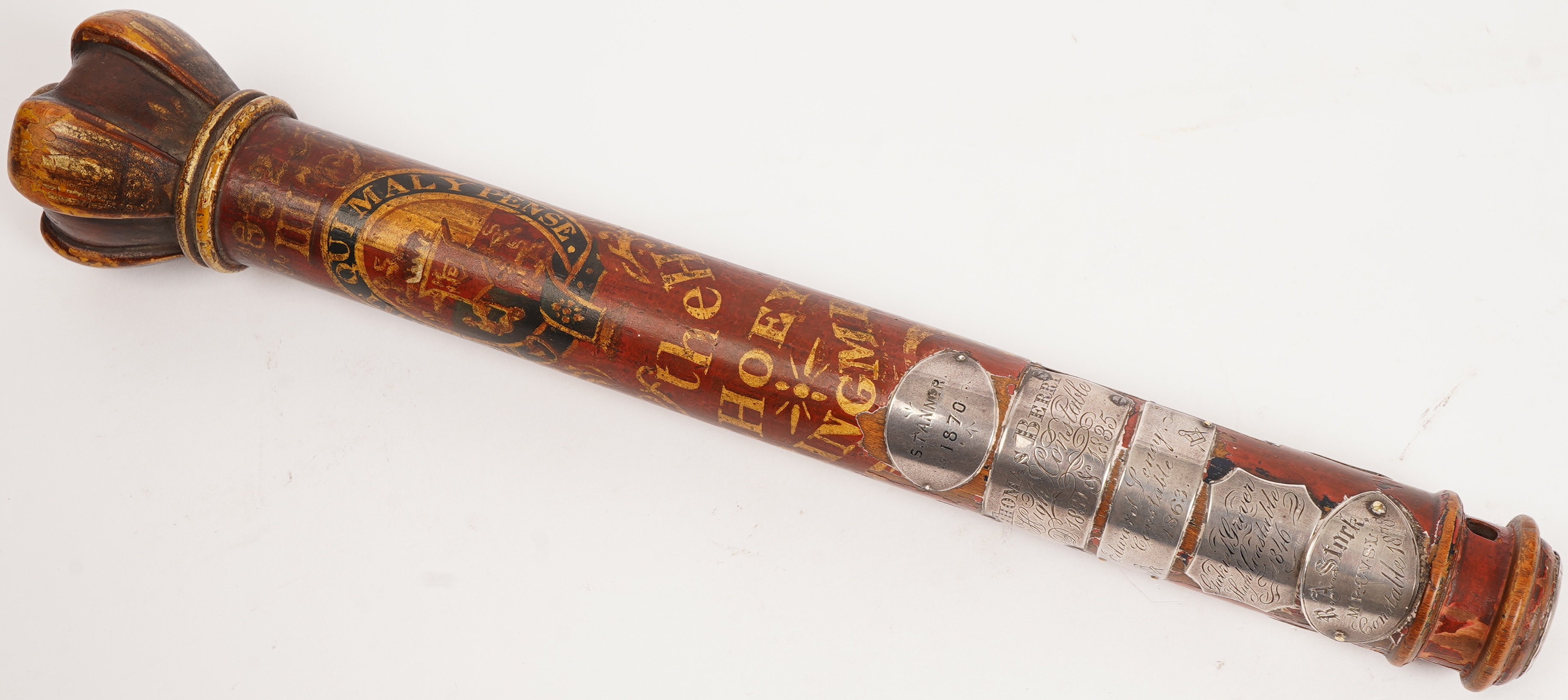
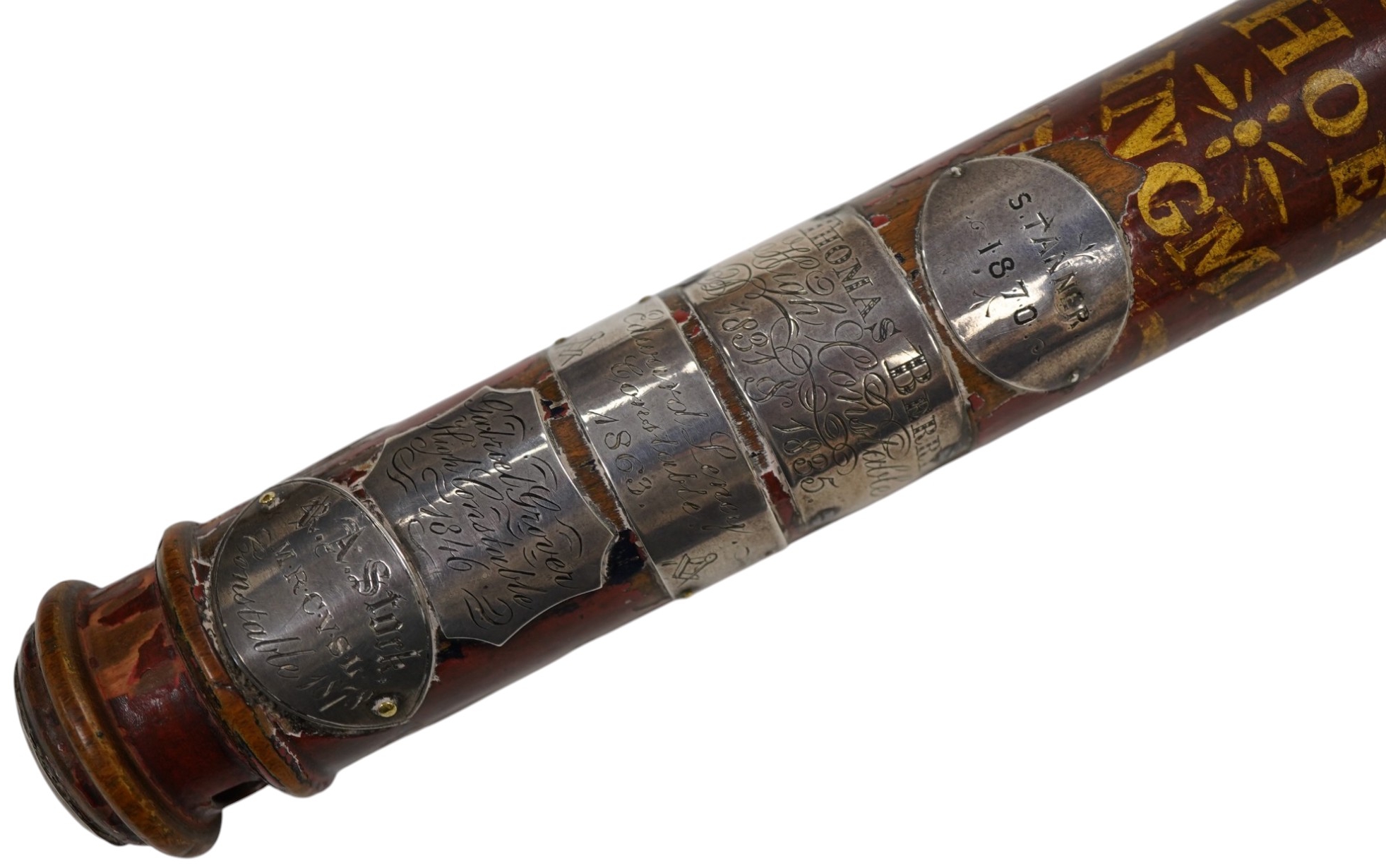
A turned wooden painted tipstave, a ceremonial truncheon created for the High Constable of the Hundred of Ringmer in Sussex in 1832, has sold at auction for £16,000 ($21,500),16 times the pre-sale estimate, at Gorringe’s in Lewes. It is one of the highest prices ever paid for a tipstave.

The High Constable was the most important official of the Anglo-Saxon county division known as a hundred court. High Constables were charged with maintaining order and managing administrative affairs of the parish. Turned, carved and elaborately painted truncheons were emblems of their authority, used in ceremonies.

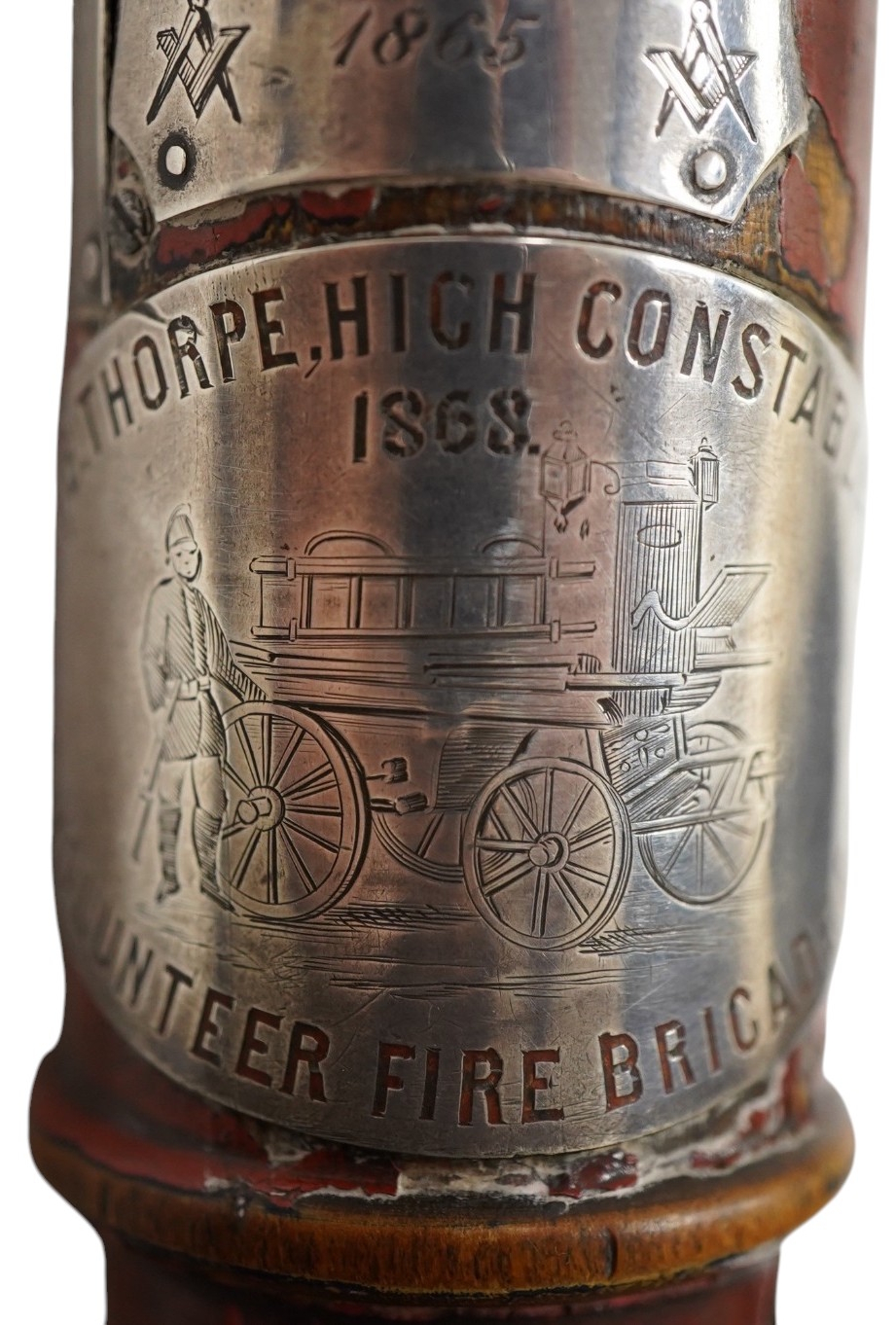
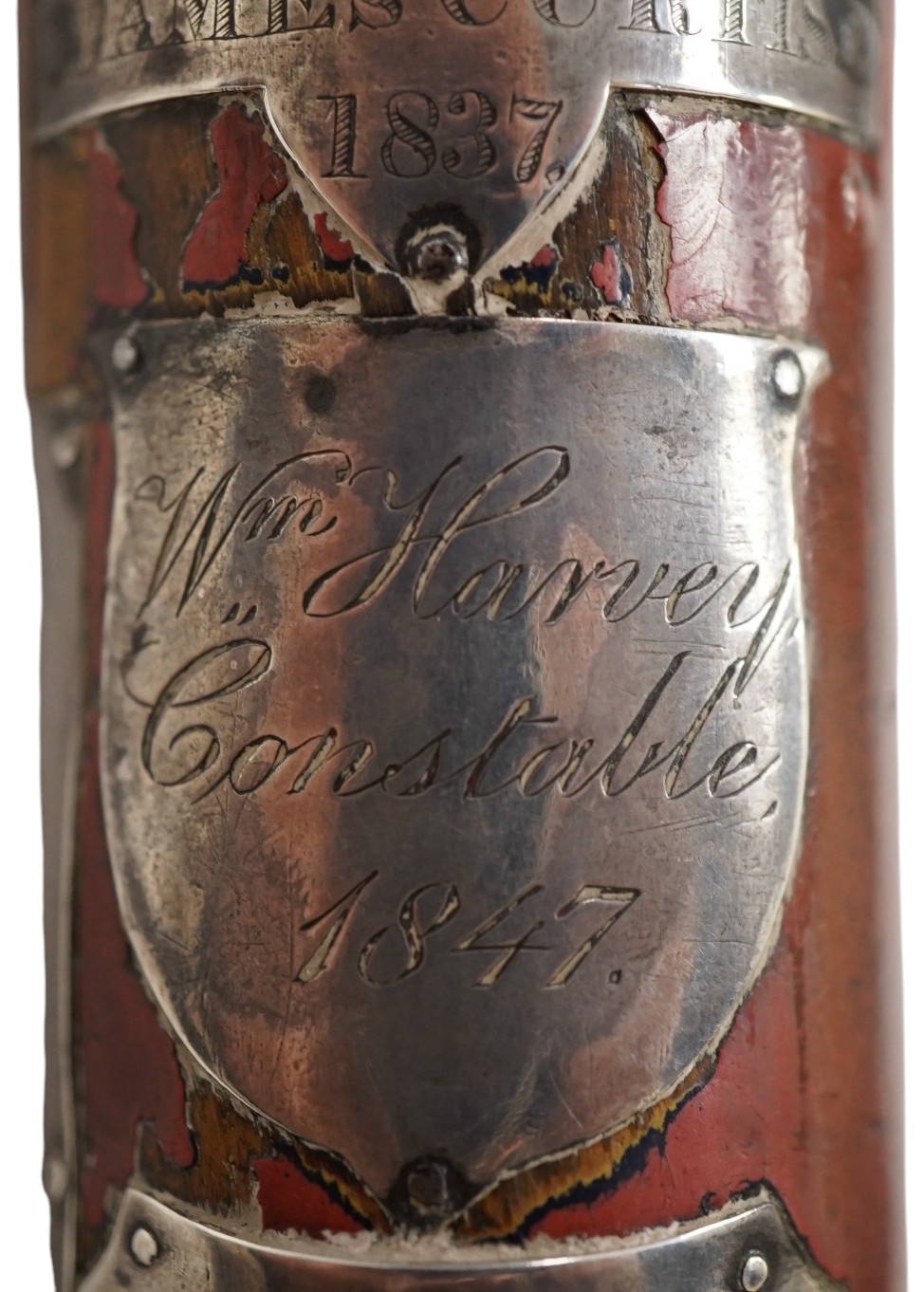
This tipstave was made during the reign of William IV and is inscribed with the name of the first High Constable who wielded it: G Hoey. The names of another 15 other locals of influence who held the positions of constable and high constable are included on silver labels. The largest and most decorative of these is engraved “B Thorpe High Constable 1868 – Cliffe Volunteer Fire Brigade Estd 1864.” It features an engraving of a fireman with his fire engine.

The last one, engraved for Thomas Reader White, headmaster of the Lewes Grammar School, is dated to 1879. That was the last gasp of the High Constable of the hundred courts. The County Courts Act, passed in 1867, had eliminated their judicial powers. The Local Government Act of 1894 ended the position altogether.

The name of greatest local import was John Harvey, whose High Constable plaque is engraved with the date 1838. Harvey was the founder of Harvey’s Brewery, the oldest independent brewery in Sussex. In 1838, he built a brewhouse and hung out his shingle for the first time as Harvey & Sons. It was the brewery that bought this lot at auction.

Miles Jenner, joint managing director of Harvey’s Brewery, said: “The hammer price reflects how unique this item is. It relates to an historic area of the town, the parish of Cliffe, that had an independent system of local government until 1881. It was the commercial heart of the community and the names on the tipstaff are those of local tradesmen.

The fact that these include the founder of Harvey’s Brewery, John Harvey, and his son William bears witness to their prominence at that time. We felt it was essential that it should remain within the parish and are delighted to have secured it.”


* This article was originally published here
Russell Brand's ex Jemima Goldsmith accuses him of violence and abuse against her

Goldsmith accuses the disgraced entertainer of "violence, coercive control and abuse" while the two were together.

from BBC News https://ift.tt/Eu95zid

'Baffling but brilliant' post-apocalyptic novel The End of Everything wins Booker Prize

M John Harrison becomes the oldest ever winner of the prestigious literary award at the age of 81.

from BBC News https://ift.tt/FlOd8sQ

Ioan Gruffudd in AI warning after fan claimed they had been in year-long affair

The Aberdare actor urged fans not to send money, saying "explicit and disturbing" images are "not me".

from BBC News https://ift.tt/STmq9Hi

Maya Jama steps down as host of reality TV show Love Island

The presenter tells fans it is "time to throw myself into something new" after recent Celebrity Traitors success.

from BBC News https://ift.tt/N6lxm1n